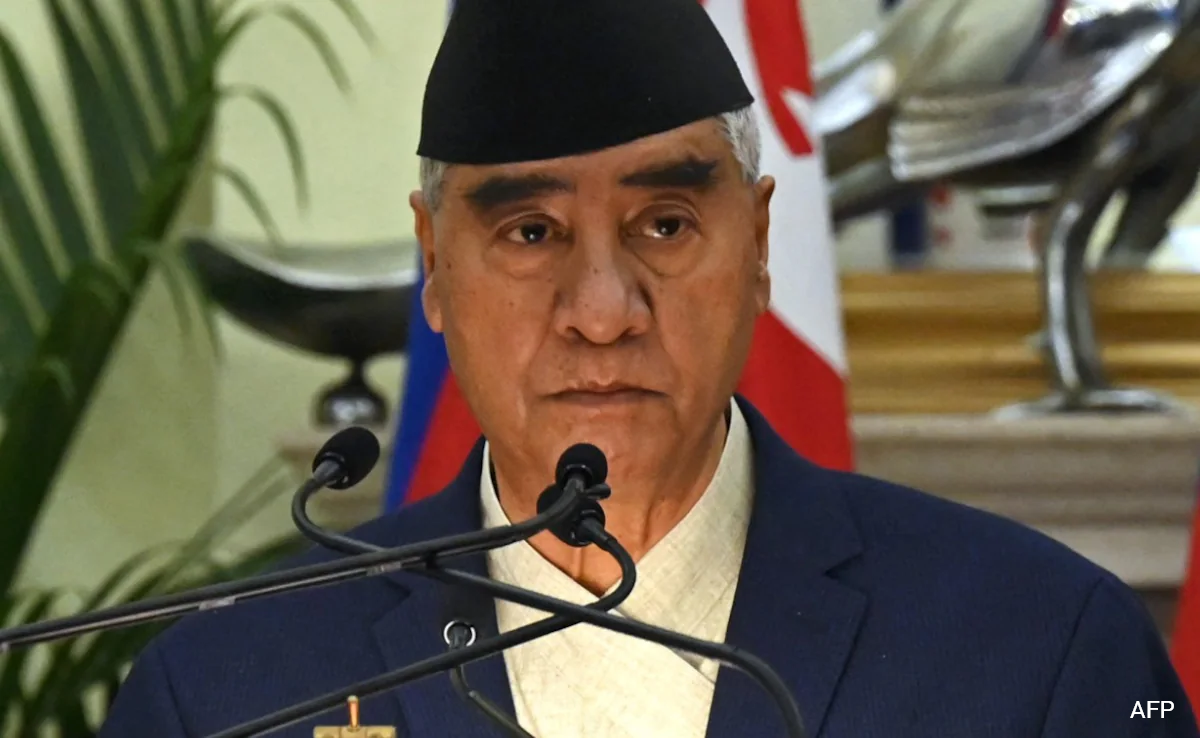
Sher Bahadur Deuba did not come from a dynasty, something that often paves the way to ministries or big political offices in Nepal. Deuba, though, was not your ordinary politician. He rose from nowhere to become a five-time prime minister and one of the most trusted leaders of the Nepali Congress (NC).
For three decades, Deuba survived party splits, royal dismissals, electoral defeats and internal rebellions. In January, after decades of comebacks, he announced he would not contest elections again. His long political arc, which witnessed repeated returns to glory, has hit a pause.
About Sher Bahadur Deuba
Born on June 13, 1946, in Dadeldhura in Nepal's far-western hills, Deuba entered student politics in the 1970s as president of the Nepal Student Union, the NC's sister organisation. After the restoration of multi-party democracy in 1990, infighting hit NC, with Girija Prasad Koirala and other senior leaders such as Krishna Prasad Bhattarai and Ganesh Man Singh not getting along. As Koirala consolidated control, Bhattarai and Singh looked for a counterweight. They backed Deuba.
He became Home Minister from 1991 to 1994. From this platform, he built his faction.
First Rise To Power In 1995
In 1995, amid a bitter internal power struggle between Koirala and Ganesh Man Singh, Deuba came up as a compromise candidate and became prime minister for the first time. It was a breakthrough for a second-rung leader from the far-west.
He already secured a stronghold in Dadeldhura. Since 1991, he has won every parliamentary election from the district. In the region, no local leader could challenge him.
2001-2005: Turbulent Years
Deuba returned as prime minister in 2001 and again in 2004. These were unstable years. Nepal was facing Maoist insurgency, political instability and rising tensions with the monarchy under Gyanendra.
In 2002 and again in 2005, King Gyanendra dismissed Deuba, questioning his competence. His tenures were marked by controversy. It saw accusations of corruption, a controversial treaty with India, party division and deep instability. His decision to dissolve parliament also drew criticism.
Later, when the monarchy lost absolute power after the 2006 movement, Deuba returned to mainstream politics.
The Split And Return
In 2002, amid differences with Girija Prasad Koirala, Deuba split the Nepali Congress and formed Nepali Congress (Democratic). Around 40 per cent of leaders and cadres joined him.
In 2006, he reunited with the parent party, securing a 40 per cent share in party organisations.
At the 10th General Convention in 2001, Deuba contested the party presidency but lost to Koirala.
In 2001, Deuba led coalition governments. His marriage to Arzu Rana Deuba expanded his political reach. She helped him build links with the monarchy during the 1990s and with the international community.
He returned as prime minister in 2003 just before the 14th General Convention.
After Girija Prasad Koirala's death in 2010, the anti-Deuba faction weakened. Successor Sushil Koirala failed to keep rivals united. Leaders like Krishna Prasad Sitaula did not align fully with other camps. Internal divisions helped Deuba.
In 2016, Deuba finally became party president. He failed to secure 51 per cent in the first round but won 58 per cent in the runoff after securing Sitaula's backing.
After the Nepali Congress suffered a heavy defeat in the 2017 parliamentary elections, pressure mounted on him to retire.
He also consolidated his position after leaders such as Bijaya Kumar Gachhadar returned to the party in 2017 and backed him.
His fourth term as PM lasted from 2017 to 2018.
In 2020, Sunil Bahadur Thapa, son of veteran leader Surya Bahadur Thapa, joined the NC and sided with Deuba.
Deuba's fifth term as prime minister, from 2021 to 2022, came after a political crisis. The House of Representatives had been dissolved, but the Supreme Court ruled the move unconstitutional and ordered his appointment, bringing him back to power.
The 2026 Exit
In January this year, at a special general convention in Kathmandu, younger leaders pressed Deuba to step back from active politics.
Deuba had hoped to contest one last time from Dadeldhura. Negotiations over ticket distribution dragged on.
Eventually, Deuba announced he would not contest. The Dadeldhura candidacy went to former Nepal Student Union president Nain Singh Mahar.
For the first time since 1991, Sher Bahadur Deuba will not be in parliament.
Track Latest News Live on NDTV.com and get news updates from India and around the world


