





- Chief Economic Advisor suggests reintroducing E10 petrol for older vehicles alongside E20
- Older vehicles face compatibility issues with E20 ethanol blend affecting fuel-system parts
- CEA highlights energy penalty of E20 as about 6-7%, lower than some exaggerated claims
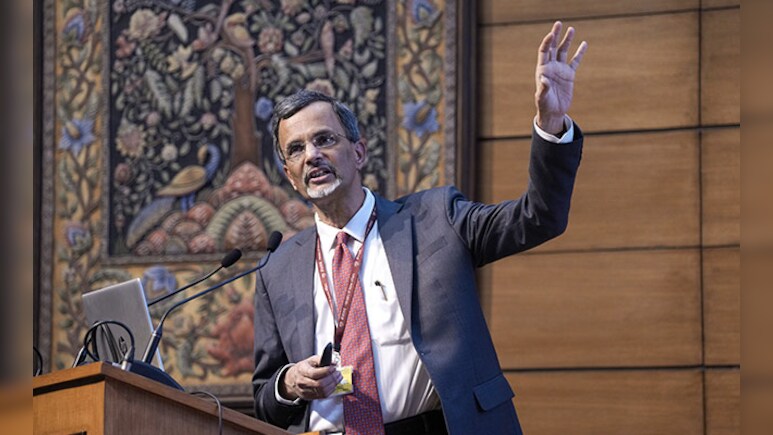
Chief Economic Advisor to the Government of India, V Anantha Nageswaran, has made a case for bringing back E10 petrol for older vehicles. The suggestion comes as India has already moved to E20, or petrol blended with 20 per cent ethanol, across the country.
In an op-ed published in The Indian Express, Nageswaran and co-author Akash Poojari argue that older vehicles need a different approach even as the country continues with its broader ethanol programme. The two have proposed to give owners of older vehicles the option of buying E10, while newer vehicles continue to use E20.
Nageswaran said India has around 75-80 million two-wheelers built for E10. Many of these vehicles were not designed to run on higher ethanol blends. The issue, he argued, is not simply about mileage. Older engines can face compatibility problems because ethanol can affect components such as rubber seals and fuel-system parts. Carburettor-based vehicles can also struggle with higher ethanol blends.
Nageswaran wrote: "Restoring a lower blend at the pump, say, E10, alongside the option to buy E20, would calm public concern, lower total ethanol use instead of raising it, and protect the existing fleet while the retrofit programme catches up." This, he said, could offer a practical bridge while older vehicles are gradually replaced or retrofitted.
The CEA also pushed back against some of the more extreme claims surrounding E20. "Ethanol is only a fifth of the blend, so the energy penalty is around 6 to 7 per cent, not the 30 per cent doing the rounds," he wrote. However, he acknowledged that older vehicles present a genuine problem. "Older rubber seals that are not rated for ethanol are a separate problem, as they degrade on contact with the fuel, regardless of engine temperature."
The Bigger Question: E20 or E10?
The debate is now less about whether India should use ethanol. It is about how quickly the transition should happen, and who should bear the cost.
India's ethanol-blending programme is aimed at cutting dependence on imported crude oil. It also creates a domestic market for ethanol produced from sugarcane, maize and other feedstocks.
But consumers with older vehicles have a different calculation. For them, higher ethanol content can mean lower fuel efficiency and concerns over the long-term impact on vehicle components.
Nageswaran argues that policy should take this reality into account. He also raised the larger food-versus-fuel question, pointing out that increasing demand for ethanol feedstock can have implications for land, water and food availability.
Newer vehicles are increasingly designed to handle higher ethanol blends. But millions of older cars and two-wheelers are still on the road. Replacing them will take years. Retrofitting them will also take time. This is why the CEA's suggestion is notable. He does not call for abandoning E20 altogether. Instead, he proposes keeping E10 available for vehicles that were designed for it.
The CEA's article also drew a political reaction. Former Delhi Chief Minister Arvind Kejriwal shared the article on X and wrote: "Chief Economic advisor of Modi government advocates E10 for older vehicles. Will Modi ji listen? Or will he replace the Chief Economic Advisor as he always does to dissenting voices?"
Ethanol Industry Pushes Back
The suggestion to bring back E10 for older vehicles, however, has not gone unchallenged. Kushal Mittal, Vice President of the All India Distillers' Association (AIDA), said India should not roll back a policy based on sentiment or perception.
"As a confident and forward-looking nation, we should not consider rolling back a carefully evaluated policy merely on the basis of sentiment or perception," Mittal said. "Scientific evidence, extensive testing and objective data must guide our energy policy."
Mittal argued that the move to E20 was not rushed. According to him, the government began pilot trials as early as 2016, followed by comprehensive evaluations in 2022 in consultation with automobile manufacturers.
"The transition to E20 is a strategic imperative for India's energy security and national security... India should focus on resolving genuine technical and operational concerns rather than going back to a lower blend," Mittal said. He added that E20 can reduce India's dependence on imported fossil fuels while strengthening the domestic biofuel ecosystem.
Mittal also pointed to the wider economic benefits of the ethanol programme. Higher ethanol blending creates demand for domestic feedstocks. That, in turn, supports farmers, distilleries and other parts of the biofuel ecosystem.
"E20 significantly strengthens India's energy security by reducing dependence on imported fossil fuels and building a strong domestic biofuel ecosystem," Mittal said. "It provides an important shield against global energy price volatility and external supply shocks, while also creating opportunities for farmers, industry and the broader economy."
Track Latest News Live on NDTV.com and get news updates from India and around the world

