Noida Turns 50: How The Planned City Outgrew Its Initial Brief
Noida's growth has been steady. This created trust. And trust attracted capital. Today, Noida is no longer just a supporting player in the NCR story.
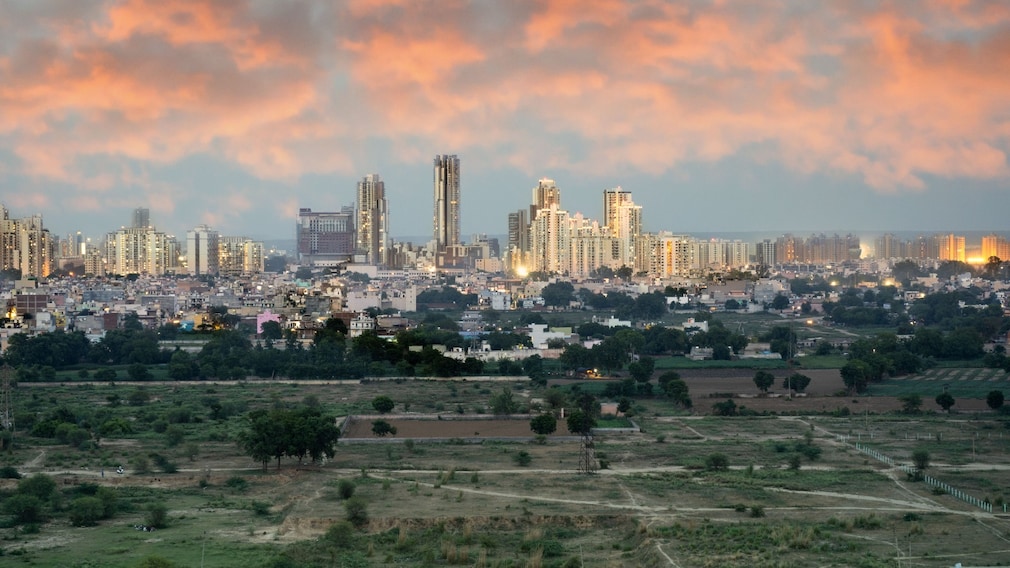
On April 17, 1976, Noida (New Okhla Industrial Development Authority) was officially notified as an industrial township under the Uttar Pradesh Industrial Area Development Act.
An initiative by late Congress leader Sanjay Gandhi during the Emergency period (1975-1977), his initial brief for Noida was modest -- take pressure off Delhi; create space for factories.
Fifty years later, that brief feels outdated. Noida is no longer an extension of Delhi. It is a self-sustaining economic centre. A real estate heavyweight. And a corporate destination.
Noida's evolution has been steady, not spectacular. And that is precisely what makes it significant.
The Early Years: Farmland, Factories & A Framework
In the late 1970s and 1980s, Noida was largely agrarian. Scattered villages defined the landscape. Industrial sheds came up slowly.
What set Noida apart was planning. Wide roads. Sector-based zoning. Dedicated industrial belts.
That discipline held. Vishal Datt Wadhwa, Founder & CEO, CoWorkZen, captures this turning point: "Noida was never meant to be a corporate address. The 1976 brief was industrial absorption. What changed it was consistency in policy and planning."
This consistency created trust. And trust attracted capital. The first wave of transformation came from manufacturing. Large companies took early bets.
"LG set up manufacturing in Greater Noida in 1997 and stayed. Samsung followed with one of its largest global facilities. That's when Noida stopped being an experiment and became a location thesis," Wadhwa added.
The second wave was technology. Microsoft, HCL, Adobe, Barclays, and Sapient established a strong presence. The ecosystem deepened. Talent followed. Housing demand rose.
Noida was no longer industrial. It was economic.
The Geography Of Transformation
Perhaps the most visible change is spatial. Villages did not disappear. They transformed. Ashish Agarwal, Director, AU Real Estate, explains: "Chhalera and Sorkha evolved into IT corridors, while Sarfabad became a commercial hub around Sector 18 and Sector 62."
This shift is central to Noida's story. It is not just growth. It is conversion of land use at scale.
Noida In Numbers
| Indicator | Current Estimate |
| Office stock | 43.4 million sq ft |
| Grade A+ office | 26.6 million sq ft |
| Industrial units | 10,000+ |
| Contribution to UP GSDP | around 10% |
| Flexible workspace | 2+ million sq ft |
The city's per capita income is estimated at over Rs 8 lakh annually. In comparison, India's average per capita is pegged at Rs 2.35-Rs 2.45 lakh annually. The wide gap reflects concentration of high-value jobs.
As Yash Garg, Director, M3M Noida, puts it: "Noida's contribution of nearly 10 per cent to Uttar Pradesh's GSDP shows the scale of its economic transformation." According to the UP Economic Survey (2025), Noida's GDP was twice the size of Lucknow's economy, and larger than the entire GDP of Himachal Pradesh.
Viewed through a purchasing power parity (PPP) lens, Noida's per capita income matches that of Japan, placing it in a league far above the rest of the state. Meanwhile, Lucknow's per capita income was Rs 2.16 lakh, close to India's national average. Ghaziabad stood at Rs 2.11 lakh - in PPP terms, the district is equivalent to Morocco.
Real estate: The Clearest Indicator Of Change
If one sector tells Noida's story best, it is real estate. Prices have not just risen. They have skyrocketed.
Harshal Dilwali, Director & CEO, Clarissa Group, says: "Land that once sold for Rs 500-Rs 1,000 per square yard now commands Rs 12,000-Rs 25,000 per square feet in prime locations."
That is not appreciation. That is a shift in category.
Price Evolution
| Year | Average Price |
| 2020 | Rs 4,795/sq ft |
| 2025 | Rs 9,200/sq ft |
| 2026 | Over Rs 10,000/sq ft |
Ashish Agarwal adds context: "Average home prices rose 92 per cent between 2020 and 2025."
The last five years have been decisive. Low interest rates, infrastructure push, and pandemic-led housing demand drove growth. Aman Trehan, Executive Director, Trehan IRIS, notes: "Between 2019 and 2024, property prices in some pockets surged by 121 per cent." He also points out that commercial yields now range between 6 and 9 per cent. That has brought institutional investors into the market.
Office Market: No Longer A Secondary Choice
For years, Noida played second to Gurugram. That equation is also changing.
Suvrat Jain, Co-Founder & CEO, Onward Workspaces, explains: "Noida today has 43.4 million sq ft of office stock, with a 40 per cent rise in investment-grade assets in five years. This is transformation, not incremental growth."
The Noida Expressway has emerged as the key corridor. Sectors 132, 135, and 142 now house global firms and Global Capability Centres (GCCs). Leasing by GCCs grew 18 per cent year-on-year in 2024.
In Q4 2025, the Expressway accounted for 26 per cent of NCR leasing. Every phase of Noida's growth has been infrastructure-led.
- Metro expansion improved connectivity.
- Expressways opened new corridors.
- Policy supported both.
On the other hand, issues like flooding after every rain spell, and long traffic snarls during peak hours in Gurugram are prompting entrepreneurs and employees to turn towards Noida.
Mohit Mittal, CEO, MORES, explains Noida's rise simply: "When policy puts real money into infrastructure, the market translates that into capital values." That pattern is visible across Noida.
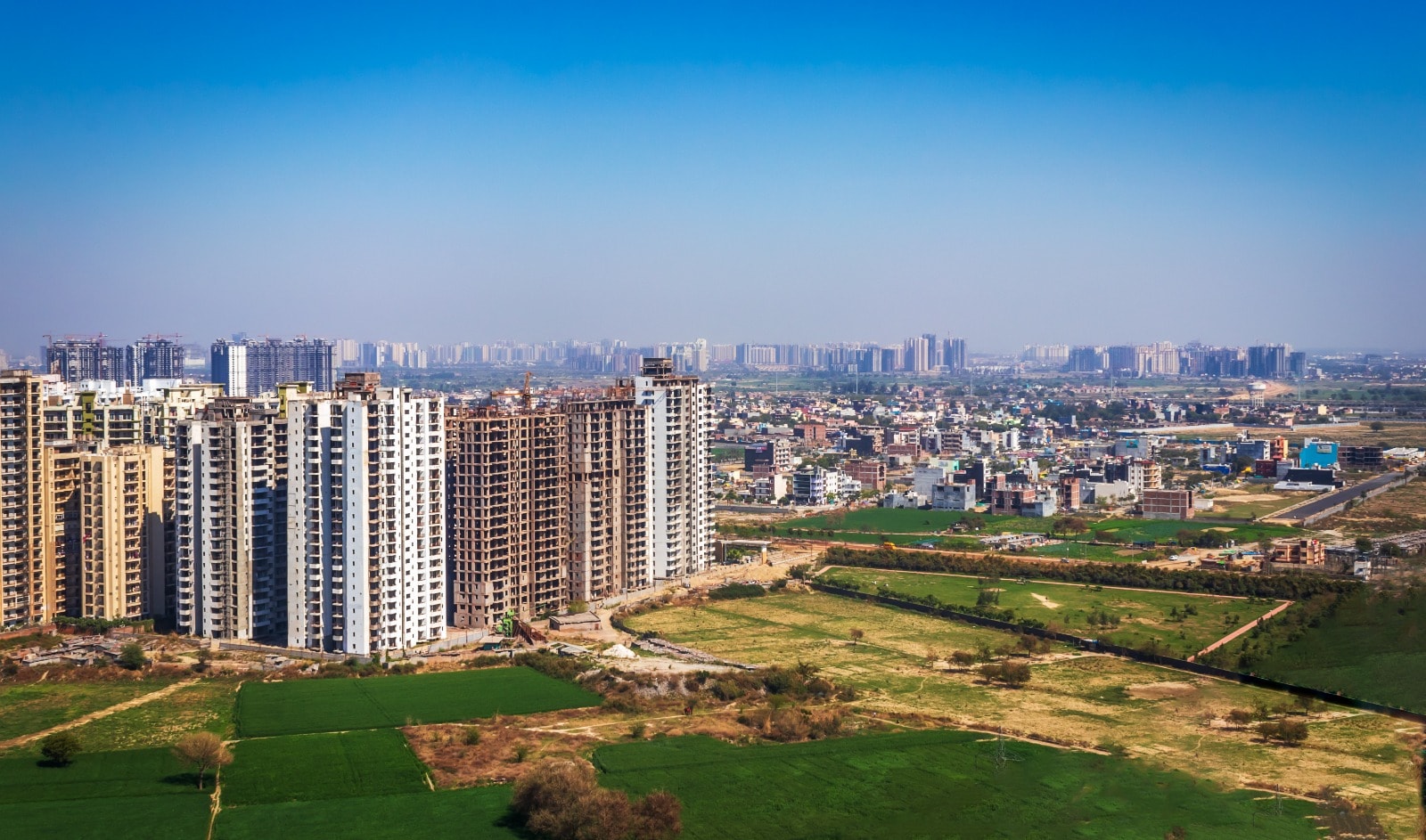
Every phase of Noida's growth has been led by an infrastructure push.
However, if one project defines Noida's future, it is the Noida International Airport. Ashish Agarwal says: "Property values in the region have risen 40-60 per cent following the airport announcement."
The Yamuna Expressway belt has already reacted. "The Yamuna Expressway corridor has logged nearly 95 per cent appreciation as infrastructure investments gained momentum," adds Mittal.
Noida: A City Of Multiple Markets
Unlike Gurugram, Noida has evolved in layers. Premium, mid-income, and affordable housing coexist.
Harshal Dilwali identifies the segments:
- Premium: Sectors 44, 47, 50, 93, 150
- Affordable: Greater Noida West, sectors 73-74
- Investment corridors: Expressway and Yamuna belt
Pyush Lohia, Managing Director, Lohia Worldspace, adds: "Established sectors retain their premium positioning, while newer corridors like Sector 150 are shaping a more lifestyle-driven market."
One reason Noida has sustained growth is balance. End-users continue to drive demand. "Mid-income housing in sectors 73-78 and Greater Noida West remains crucial to the city's growth," notes Lohia. This has prevented extreme volatility.
Noida vs Gurugram: A Quiet Shift
For years, Gurugram dominated NCR's corporate landscape. Now, companies are reconsidering. Lower costs, better planning, and improving infrastructure are working in Noida's favour.
Suvrat Jain says: "Multinationals are increasingly choosing Noida over Gurugram for the combination of talent, infrastructure, and value." It is not a replacement yet. But it is a credible alternative.
Besides, Noida's housing market is also evolving. From plotted developments, it has moved to:
- Luxury apartments
- Branded residences
- Integrated townships
Yash Garg points out: "The emergence of branded residences reflects a market that has entered a new phase of maturity."
Noida: The Next Decade
The growth drivers are already visible.
- Jewar Airport
- Data centres and AI hubs
- Metro expansion
- Expressway connectivity
Suvrat Jain estimates: "Real estate prices could rise 20-47 per cent through 2026-27." Yash Garg adds that infrastructure and global collaborations will define the next phase.
Noida was built to absorb Delhi's excess. It now generates its own demand. Mohit Mittal sums it up well: "A city becomes an asset class when planning meets execution. That is what Noida has achieved."
At 50, Noida is no longer a supporting player in the NCR story. It is one of its central characters.
-
"Dagnabbit, We Got Hormuzled": Jimmy Kimmel Prods Trump On Iran Deal

The US got "Hormuzzled", Jimmy Kimmel said after Donald Trump announced an Iran peace deal to cap four months of war and to return the US to status quo in its nuclear programme throwdown with Iran.
-
US-Iran Peace Deal Drops Netanyahu Into A Box As Election Deadline Nears
Benjamin Netanyahu is constrained by Donald Trump's peace push on Iran and Lebanon. Here's what Israel can do now - and how it plays out domestically as elections loom.
-
A Tale Of Two Tigers On Shiv Sena's Foundation Day
For Uddhav Thackeray, this is the most challenging time. The latest rebellion has put in question his ability to hold on to his party
-
Maharaja Ranjit Singh To Bhagwant Mann: Inquisitions By Akal Takht
While for centuries, rulers and netas have visibly bowed to its authority, Bhagwant Mann is probably the first to directly confront the Akal Takht
-
Ringside View | FIFA World Cup 2026: Magic Of Cristiano Ronaldo Missing — But Why?
On a day when Lionel Messi found the net, Kylian Mbappe delivered again and Harry Kane added his name to the scoresheet, Cristiano Ronaldo's was conspicuously absent.
-
Public Assets, Private Capital: India's Next Reform Step
That gap between what India's sovereign assets are worth and what they currently earn is central to India's location in the low-middle income bracket.
-
Why Meta Is Suddenly Charging For Facebook, Instagram And WhatsApp
Facebook, Instagram and WhatsApp have long been free. So why is Meta suddenly asking users to pay? The answer may lie in Mark Zuckerberg's expensive AI ambitions.
-
US-Iran Peace Deal Could Save India Billions On Oil Import Bill
US-Iran peace deal finalised after 107-day war in which 10,000 were killed. Brent crude dropped 4.76% to $83 after deal -which includes reopening of the Strait of Hormuz - was announced. India set to save up to $15 billion on cheaper oil imports and shrink current account deficit.