12 Years Of 'Modinomics': What Changed, What Worked, What Didn't
There is no single Modinomics textbook or formula. Instead, the term has come to describe a collection of choices made during the PM Modi years.
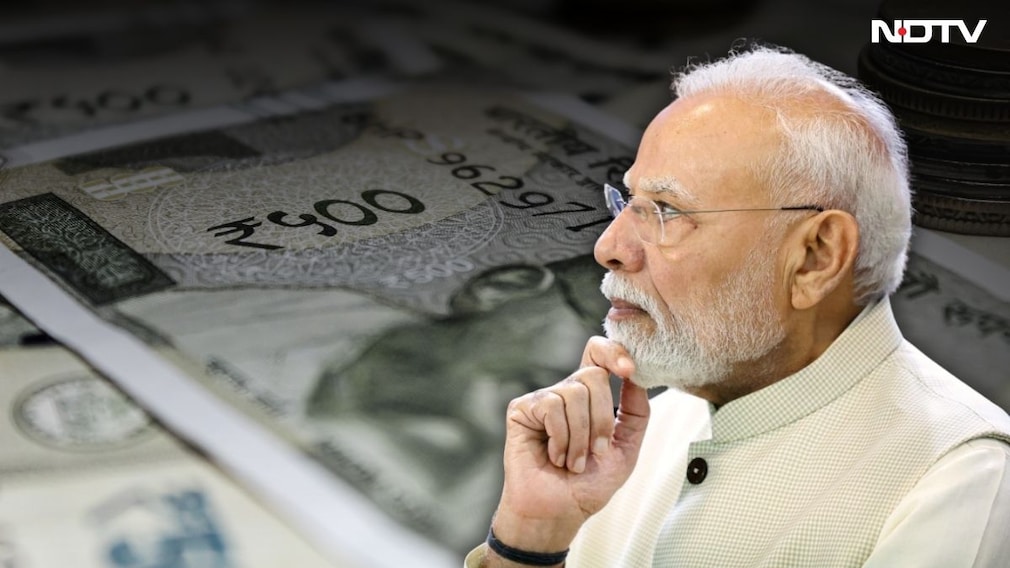
In 2014, India was a very different economy.
The rupee was under pressure. Inflation was high. Banks were struggling with bad loans. Infrastructure bottlenecks were a daily reality. India was clubbed with the so-called "Fragile Five" emerging markets.
Twelve years later, the picture looks markedly different.
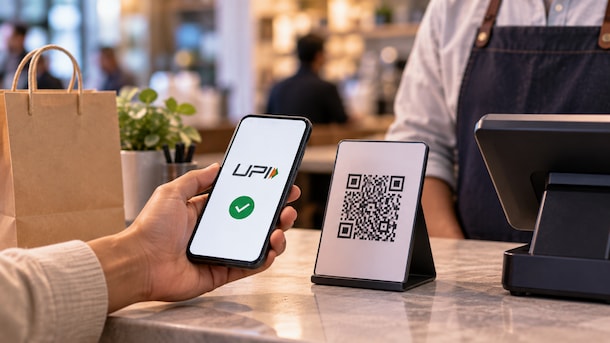
A small shopkeeper can accept a payment from a customer with a QR code. A government benefit can land directly in a bank account. A highway can take a journey that once meant hours of traffic. India's airports, expressways and metro networks have expanded rapidly. Mobile phones are increasingly made in India rather than simply imported.
And the economy itself has more than doubled in dollar terms since 2014. The term often used to describe this transformation is "Modinomics" -- the fundamental economic principles of Prime Minister Narendra Modi, who turned 76 on September 17.
It is not a formal school of economics. There is no single Modinomics textbook or formula. Instead, the term has come to describe a collection of choices made during the PM Modi years: aggressive public spending on infrastructure, economic formalisation, digital payments, tax reform, financial inclusion, manufacturing incentives and technology-driven welfare delivery.
From "Fragile Five" To A $4 Trillion-Plus Economy
One of the simplest ways to understand the Modi years is to look at the size of the economy.
India's nominal GDP was around $2 trillion when Modi became prime minister in 2014. It has since crossed the $4 trillion mark and is estimated at around $4.15 trillion currently.
Real GDP growth has also remained strong. India grew 7.8 per cent in the April-June quarter of FY27, with manufacturing and services providing support. Investment grew 11.9 per cent, while household consumption rose 7.1 per cent, according to government data.
The World Bank said India's economy grew 7.6 per cent in FY26, up from 7.1 per cent in FY25, making India the fastest-growing major economy during that period.
The State Became A Bigger Investor
If there is one feature that clearly stands out in the Modi-era economic model, it is the government's emphasis on capital expenditure.
Instead of relying only on subsidies or government consumption, the government spends on roads, railways, ports, airports, logistics and other productive assets. The expectation is that better infrastructure will lower costs and encourage private investment.
Government capital expenditure has risen sharply. The Economic Survey 2025-26 said central government capital outlay increased from Rs 5.92 lakh crore in FY22 to a budgeted Rs 11.21 lakh crore in FY26, an increase of nearly 89 per cent.
The broader infrastructure push can be seen on the ground. The national highway network expanded from roughly 98,000 km in FY15 to more than 1.44 lakh km by FY22, while the number of airports increased from 74 to 149 over the same period, according to government budget data.
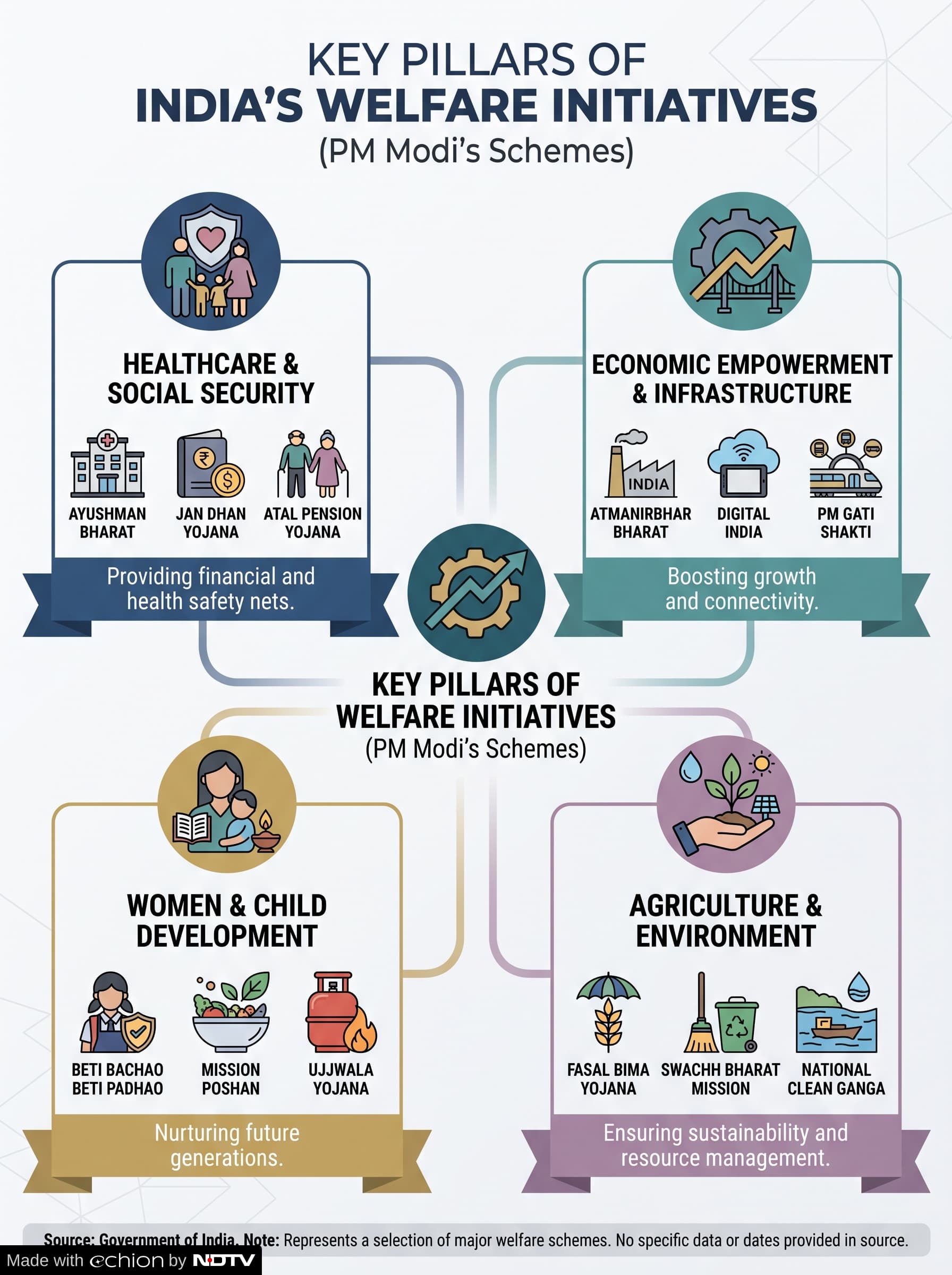
The government has also expanded metro networks, railway electrification and multimodal connectivity. This is where PM Gati Shakti fits into the larger picture. The objective is not simply to build individual roads or railway lines, but to connect different modes of transport and reduce logistics costs.
GST Changed The Way Businesses Pay Tax
The Goods and Services Tax was perhaps the biggest tax reform of the Modi era.
Before GST, businesses faced a maze of central and state-level indirect taxes. GST attempted to replace that system with a common indirect tax framework.
The rollout in 2017 was far from smooth. Businesses faced technical problems, changing rules and multiple rate revisions.
But over time, GST has become an important part of India's formal tax system. Its larger economic significance goes beyond tax collection.
A more unified tax structure makes it easier for businesses to operate across state borders. It also creates a larger digital trail of economic activity.
The 'JAM Trinity'
Another central idea of Modinomics is formalisation.
Perhaps the most visible change for ordinary Indians has been financial and digital inclusion. The Jan Dhan-Aadhaar-Mobile architecture (JAM) brought bank accounts, identity and mobile connectivity together.
Then came UPI.
Today, scanning a QR code to pay a shopkeeper is routine. A street vendor, taxi driver or small retailer can receive digital payments without setting up a traditional card-payment infrastructure.
India's digital public infrastructure has therefore become an economic tool, not just a technology project.
According to an OMMCOM report citing government data, UPI processed nearly 2,300 crore transactions worth around Rs 30 lakh crore in March 2026 alone. India accounted for 49 per cent of global real-time payments, the report said.
The same digital infrastructure has also been used for welfare transfers. The argument behind the model is simple: if the government can identify beneficiaries digitally and transfer money directly into bank accounts, the scope for leakages can be reduced.
This has made digital public infrastructure one of the defining ideas of the Modi economic model.
Welfare And Growth Not Treated As Opposites
Modinomics is also not simply about markets and infrastructure. A large part of the economic strategy has focused on welfare delivery.
Free foodgrains, housing, cooking gas, bank accounts and direct transfers have remained important parts of government policy. The government has also tried to link welfare with formalisation. A bank account is not only a welfare tool. It can bring a person into the formal financial system.
A digital identity is not only about identification. It can make government transfers easier. This combination of welfare and technology has been one of the more distinctive features of the model.
Manufacturing: The Next Big Test
The Modi government's economic strategy has increasingly moved towards manufacturing.
"Make in India" was launched in 2014. Later came the Production Linked Incentive, or PLI, schemes aimed at encouraging companies to manufacture products in India.
The focus has expanded from mobile phones and electronics to semiconductors, pharmaceuticals, automobiles, batteries and other sectors.
Government-backed reports point to a sharp rise in electronics production and mobile-phone exports over the period.
India's electronics production, according to an OMMCOM report citing government data, rose to Rs 11.3 lakh crore in 2026 from Rs 1.9 lakh crore in 2014. Mobile-phone exports rose dramatically over the same period.
The semiconductor push is even more strategic. The aim is not merely to assemble imported components but to build a domestic ecosystem covering design, fabrication, packaging and related industries.
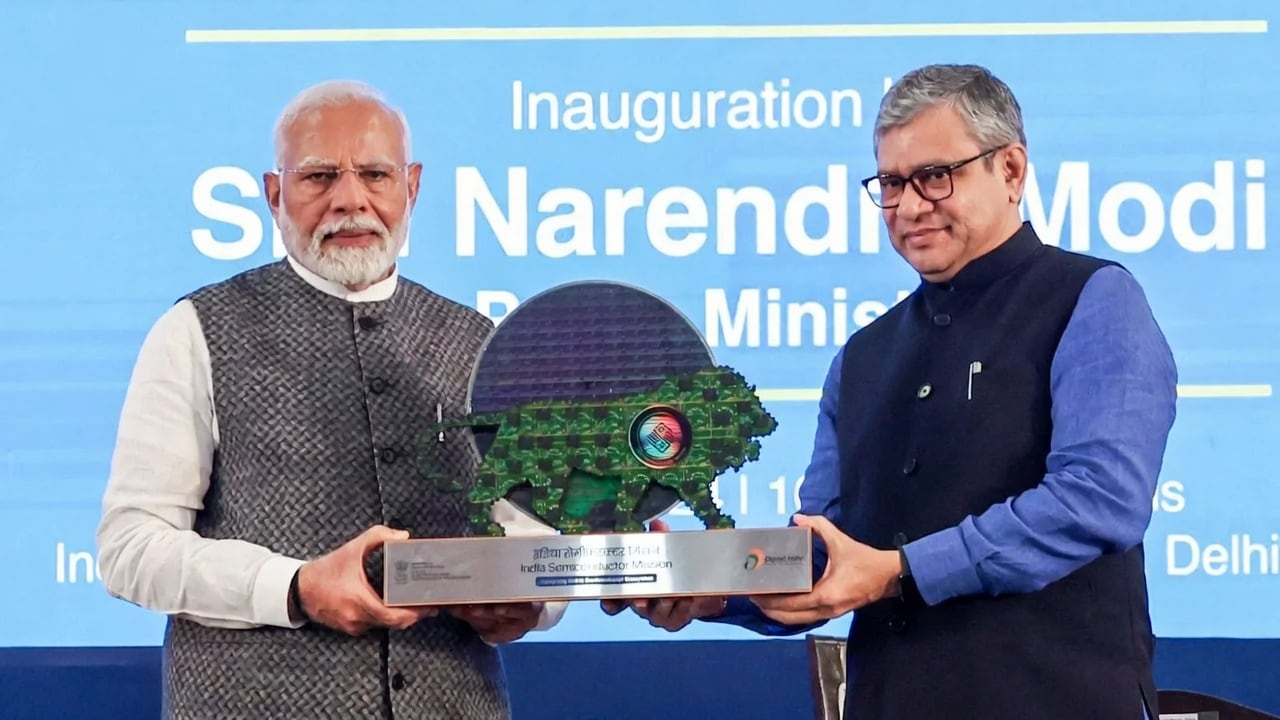
In his August 2026 Independence Day speech, PM Modi described manufacturing, technology, infrastructure, defence, green growth and the blue economy as key pillars of India's next growth phase.
Startups Became A New Growth Engine
The other major change has been India's startup ecosystem.
When PM Modi came to power, India's startup landscape was much smaller. Startup India, launched in 2016, attempted to make it easier for entrepreneurs to build businesses and attract capital.
The ecosystem has since expanded dramatically. India is now one of the world's largest startup ecosystems.
The important question, however, is what happens after the startup boom. Can these companies create large numbers of productive jobs? Can they become global businesses? And can technology-led companies generate enough economic value outside India's biggest cities?
The Banking System Also Went Through A Reset
Another less visible part of Modinomics has been the cleanup of the banking system.
Indian banks entered the Modi years carrying large amounts of bad debt. The Insolvency and Bankruptcy Code, introduced in 2016, changed the process for dealing with distressed companies.
At the same time, public-sector banks went through recapitalisation and balance-sheet repair. The result has been a substantial improvement in bank asset quality.
According to the government's 2026 review cited by OMMCOM, gross non-performing assets of public-sector banks fell from 4.4 per cent in 2014 to 1.93 per cent in 2026.
But GDP Is Not The Whole Story
This is where the Modinomics story becomes more complicated. High GDP growth does not automatically mean enough good jobs.
The World Bank has identified job creation as a central challenge for India. Over the next decade, India will add more working-age people to the global economy than any other country, making employment a crucial test of whether growth translates into broad-based prosperity.
The employment challenge is particularly important because agriculture still employs a very large share of India's workforce, while manufacturing has not absorbed labour on the scale seen in some other Asian economies.
The September 2026 IMF analysis also highlighted the jobs and productivity mismatch. It noted that agriculture accounts for about 15 per cent of GDP but nearly half of the workforce, while manufacturing accounts for roughly 13 per cent of GDP and about 11 per cent of employment.
That is perhaps the biggest unfinished part of the economic transition.
The Next Chapter Of Modinomics
India's economy has grown rapidly, yet the country still faces a huge jobs challenge. Manufacturing has expanded, but its share of employment remains relatively modest. Government investment has surged, but private investment needs to play a bigger role. And higher GDP does not automatically mean that every Indian household feels equally prosperous.
That is what makes the PM Modi years interesting to decode. Modinomics is not just the story of a bigger economy. It is the story of how changes under the Prime Minister has touched almost every part of the system.
"The defining feature of India's economic trajectory during the 'Modi era' has been the combination of scale, formalisation and infrastructure-led transformation. India's foreign direct investment inflows has increased from $36.05 billion in FY2013-14 to $81.04 billion in 2024-25. Equally significant is the expansion of physical infrastructure. The national highway network grew from 91,287 km in 2014 to 146,145 km in 2024, alongside substantial expansion in airports, renewable-energy capacity and logistics connectivity. What distinguishes this period, however, is that economic expansion has been accompanied by a significant transformation in the architecture of the economy itself," Sohom Banerjee, founder of the advisory and research firm Quantive Advisory LLP, told NDTV.
At 76, Modi's economic legacy is no longer just about how much India's economy has grown. It is increasingly about whether the foundations built over the past 12 years can produce the kind of sustained, employment-rich growth that can take India from being a large and fast-growing economy to a Viksit Bharat.
-
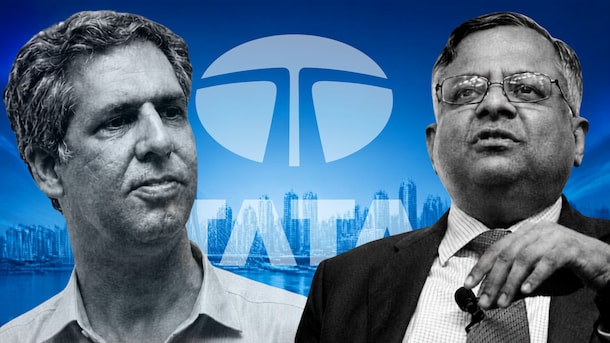
Tata Sons' Trust Issue: Two-Pronged Row Goes Beyond The Chair

NDTV Explains: Overtly, the latest conflict is whether N Chandrasekaran continues as executive chairman of Tata Sons. The controversy involves at least one more issue.
-
Opinion | US Has Institutionally Weaponised India's Russia Oil Dependence. Can New Delhi Cope?
A new legislation can connect India's Russian energy purchases to its access to the American market over a five-year period
-
Opinion | Saudi Allies Are Now Discovering The Cost Of 'Commitment' - And Not Liking It
The spectacular no-show by Saudi Arabia's two defence allies - Pakistan, a nuclear power, and Turkey, which has NATO's second-largest army - is astounding
-
Opinion | How A Tiny 0.4% UPI Fee Could Change How India Pays
The introduction of a fee can have a psychological effect beyond its immediate financial cost. Businesses that have come to view digital payments as free may begin to look for alternative - split payments, cash, and so on
-
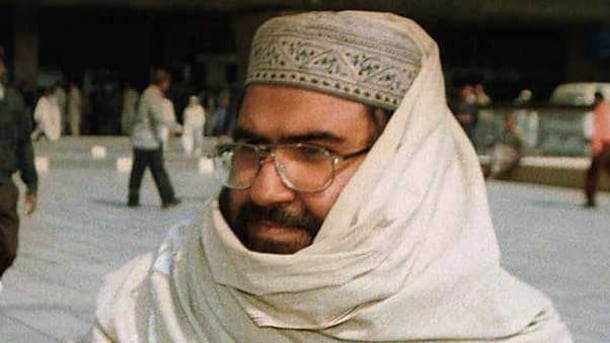
Opinion | Rs 75-Lakh Bounty, New Jaish Base, And The Case Of Pak's Ever-Missing' Terrorist
Pak's yearly act is back: finding Masood Azhar. But there are other questions FATF must be asking next month as it meets
-
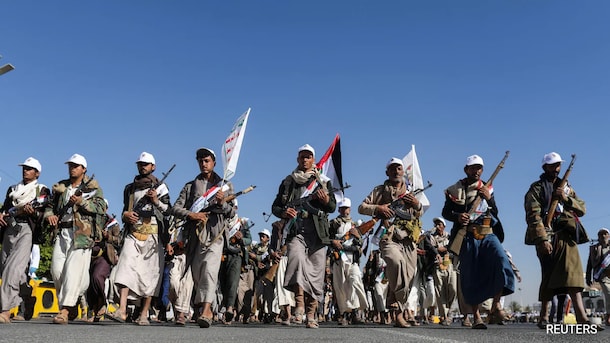
For Years, Saudi Saw Houthis As Yemen's Problem. Then, A Knock On The Door
Actual fighting between the Houthis and Saudi Arabia began late in the overall timeline of the conflict that now involves powerful belligerents
-
Lal Topi, Blue T-Shirt: Akhilesh Yadav's 'PDA' For Blue Has A Coded Message
The message is clear: the Samajwadi Party wants to talk to voters beyond its traditional Yadav-Muslim support base, particularly to Dalits.
-
The Day 600 Men Lay Siege To Islam's Holiest Site And How They Were Gassed Out
Nearly 47 years ago, on November 20, 1979, the Grand Mosque itself was seized by an armed group in one of the most extraordinary episodes in modern Saudi history.
-
New UPI Charges: If Digital Payments Save Money, Why Charge For Them Now?
UPI Payments Free For Years: The government has subsidised UPI adoption for years. Official figures show thousands of crores in payouts over years.