





A premium smartphone, a bigger car, a foreign holiday or dinner at an expensive restaurant. For many Indians, prosperity increasingly has a visible price tag.
But there is a catch. Owning more expensive things does not necessarily mean having more money. In an economy where credit cards, personal loans, easy EMIs and buy-now-pay-later options make purchases increasingly convenient, the line between being wealthy and feeling wealthy is getting blurred.
The question is whether Indians are actually becoming financially stronger or simply getting better at financing an aspirational lifestyle.
Also Read | Layoffs Are Rising In Tech, But These Skills Are Helping People Unlock Better Pay
When Spending Becomes A Status Symbol
For years, financial success was associated with savings, property ownership and the ability to build wealth over time. Today, it is increasingly reflected in what people buy and how they live.
The latest smartphone, an upgraded car, a larger apartment or an overseas holiday can become markers of social and financial progress. For younger consumers especially, lifestyle purchases can offer an immediate sense of achievement.
Easy access to credit has made this transition smoother. Consumers no longer need to accumulate the entire amount before making a purchase. They can spread the cost over months and enjoy the product immediately.
However, the convenience comes with a risk. A purchase that looks affordable because the monthly EMI is small may be expensive when viewed against the total cost of borrowing and the household's financial commitments.
Mukesh Pandey, Founder and MD of Rupyaapaisa.com, believes aspirational spending is not necessarily a bad thing. Rising incomes, improving confidence and access to opportunities can naturally encourage households to spend more on lifestyle upgrades.
The concern begins when consumers start measuring prosperity through possessions rather than their financial position.
The EMI Illusion: Can You Afford It Or Just Finance It?
An expensive purchase can create the impression of financial security even when the money behind it is borrowed.
A consumer buying a premium phone on EMI may feel financially comfortable because the monthly payment fits into the budget. But that does not automatically mean the purchase is affordable.
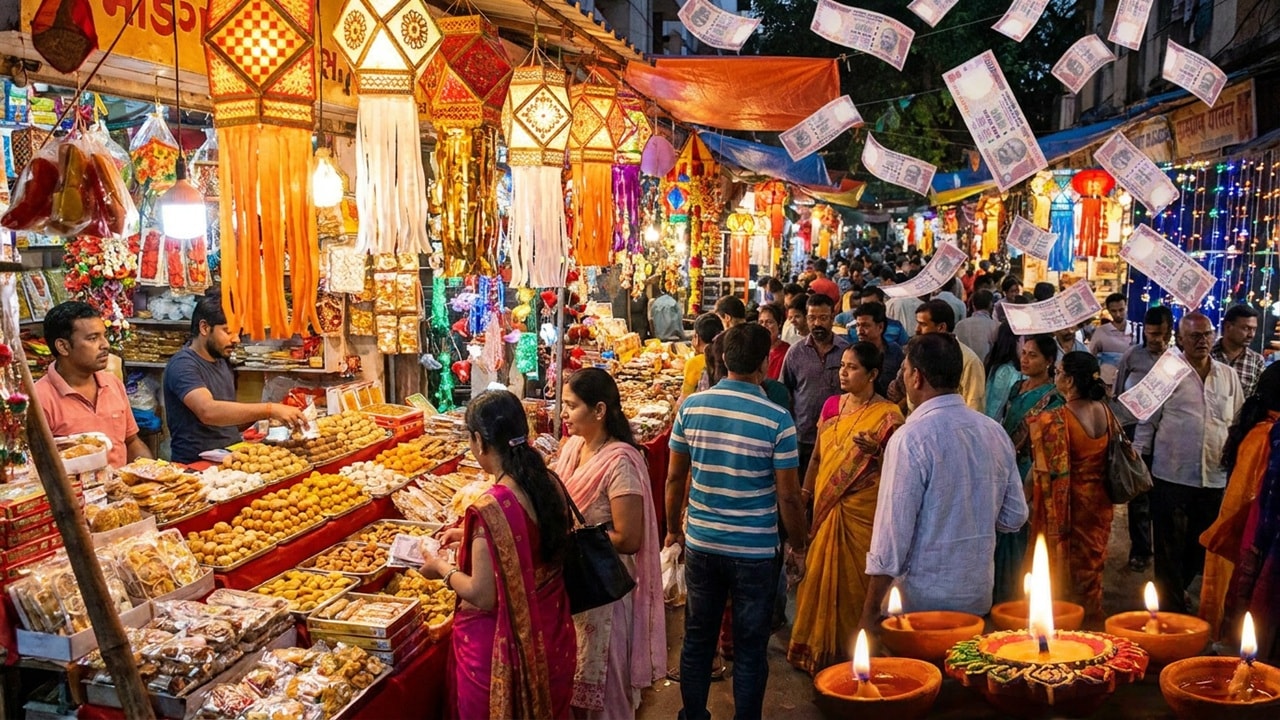
The same logic applies to cars, holidays and even everyday shopping. Several small EMIs can collectively consume a significant portion of monthly income.
The Reserve Bank of India's financial stability assessment has repeatedly highlighted the growing importance of non-housing retail borrowing in household debt. Such loans include personal loans, credit card borrowing and financing for consumption.
In its December 2025 Financial Stability Report, the RBI said non-housing retail loans accounted for 55.3 per cent of household borrowings from financial institutions as of September 2025. Their share had been rising faster than housing, agriculture and business loans.
This does not mean every borrower is financially stressed. But it does show why the source of spending matters as much as the spending itself.
Are Indians Getting Richer Or Just Spending More?
The picture is more complicated than a simple debt-versus-savings debate. India's growing consumption reflects genuine economic changes. Higher incomes for some households, better access to financial services and greater aspirations have opened up spending opportunities that were once out of reach.
At the same time, financial prosperity cannot be judged by consumption alone. The RBI's Annual Report for 2025-26 showed that net household financial savings rose to 7 per cent of gross national disposable income in 2024-25, from 5.8 per cent a year earlier. Financial liabilities also declined as a share of disposable income during the period.
This suggests that the broader household savings picture has its own nuances. Some families may be spending more while others are building investments, paying down debt or improving their financial position.
Mukesh Pandey told NDTV that the real challenge is ensuring that lifestyle upgrades are accompanied by sound financial decisions. Aspirational spending becomes problematic when consumers sacrifice emergency savings, long-term investments or essential financial security to maintain an expensive lifestyle.
What Does True Prosperity Look Like?
The answer may be less glamorous than a luxury car or an international holiday. True prosperity is the ability to afford a lifestyle without constantly worrying about the next salary, EMI or unexpected expense.
A financially secure household should ideally be able to:
- Meet monthly expenses without depending on fresh borrowing.
- Maintain an emergency fund for unexpected costs.
- Continue investing towards retirement and long-term goals.
- Pay EMIs comfortably without compromising essential savings.
- Upgrade its lifestyle without accumulating unsustainable debt.
Pandey argues that the ability to purchase something is not the same as the ability to afford it. A purchase should not come at the cost of financial independence or future security.
There is nothing inherently wrong with wanting a better phone, a bigger home or a more comfortable holiday. Aspirations are often what motivate people to work harder, earn more and improve their lives. But the price of prosperity becomes too high when consumers start spending to maintain appearances rather than improve their financial well-being.
A premium car may signal success. A foreign holiday may create memories. An expensive phone may offer convenience. Yet none of these can replace savings, investments or the freedom to make financial choices without depending on debt.
The real measure of wealth may therefore be much simpler. It is not how expensive your lifestyle looks to others. It is how comfortably you can sustain it when the next salary does not arrive on time.
Track Latest News Live on NDTV.com and get news updates from India and around the world

