





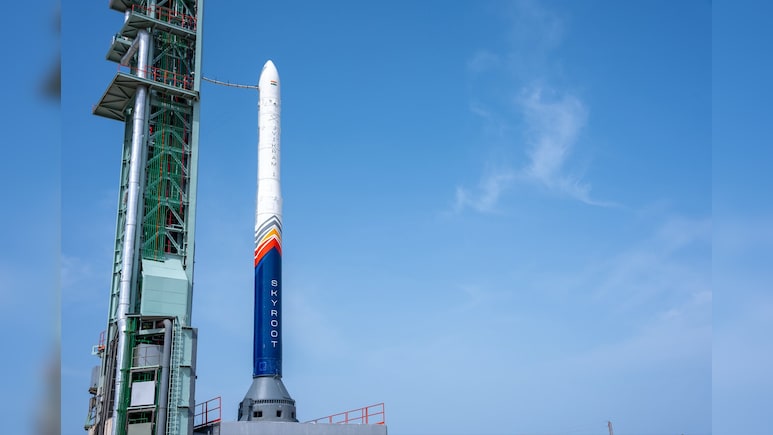
- India's first private rocket, Vikram-1, successfully reached orbit from Sriharikota on July 18
- Indian spacetech startups have raised $871 million across 285 companies, led by Skyroot Aerospace
- Government's 2020 policy opened space sector to private firms, granting access to ISRO resources
On July 18, a seven-storey rocket lifted off from Sriharikota. Vikram-1 climbed into a 450 km orbit and released four payloads. It was India's first privately built rocket to reach orbit. Skyroot Aerospace had just made history.
The moment mattered beyond the launch pad. It proved something investors had been betting on for years: Indian spacetech companies can build real hardware, not just pitch decks.
And the money is following. Indian spacetech startups have now raised $871 million across 285 companies, according to Tracxn. Skyroot leads with $150 million. Pixxel, Agnikul, and Digantara follow close behind.
🚨 Successful launch of India's 1st private company rocket, Skyroot Aerospace. 👏🏼🇮🇳 pic.twitter.com/8fUFvbh0ri
— Indian Tech & Infra (@IndianTechGuide) July 18, 2026
"Here's the thing about spacetech funding, though. It has always favoured seed stage. Investors love a good prototype. The real test comes later -- when a startup needs money to scale, build infrastructure, and compete globally. Skyroot's launch just answered that test," said Vikas Choudhury, Founding Partner at Playbook Partners.
According to Choudhury, three forces are driving the shift:-
First, public-private partnership. The government opened India's space sector to private players in 2020. That single decision changed everything. Companies now get access to ISRO's launch pads, testing facilities, and decades of technical know-how through IN-SPACe. Six years later, Skyroot reached orbit.
Second, economics work. India builds cheap and builds smart. The Mars Orbiter Mission cost about $74 million. NASA's comparable MAVEN mission cost $671 million. That same discipline shows up in the private sector today. Vikram-1 reached orbit on a fraction of what it costs elsewhere.
Third, space has grown up commercially. It used to mean satellites -- weather, navigation, earth observation. Not anymore. Defence, data centres, manufacturing -- space now touches all of it.
The numbers back up Vikas Choudhury's assessment. Funding stood at just $43 million in 2021. It crossed $200 million in 2025. This year alone, startups have already raised $113 million across 24 rounds.
'The runway ahead is long. India's space economy is projected to grow from $8 billion today to $44 billion by 2033. For investors, that's a rare mix -- sharp engineering, capital efficiency, and a market about to take off. Literally," added Choudhury.
Track Latest News Live on NDTV.com and get news updates from India and around the world

