





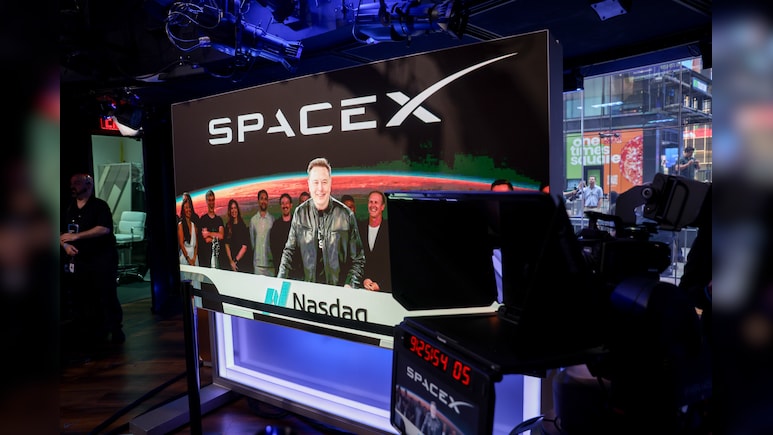
- SpaceX faces growing short selling due to concerns over its soaring valuation
- Short sellers have gained nearly $4 billion from secondary market price declines
- Short selling reflects valuation doubts, not loss of confidence in SpaceX's business
Elon Musk's SpaceX has long been viewed as one of the world's most valuable private companies. It dominates the commercial space industry, launches rockets at an unmatched pace, and runs the rapidly growing Starlink satellite internet business.
But even companies with such credentials are not immune to changing investor sentiment.
A growing number of short sellers are betting that SpaceX's valuation has run ahead of reality. According to a Bloomberg report, these investors have made paper profits of nearly $4 billion as SpaceX's secondary market share price has slipped from its recent highs.
The move does not necessarily mean investors are losing faith in SpaceX's business. Instead, it reflects concerns over whether the company's soaring valuation is justified.
Why Are Investors Betting Against SpaceX?
Short selling is a strategy where investors profit if an asset's price falls. It is common in public stock markets but relatively rare in private companies because shares do not trade freely.
SpaceX, however, has a vibrant secondary market where employees and early investors sell their holdings to eligible buyers. This has allowed some sophisticated investors to take bearish positions against the company's valuation.
According to Bloomberg, SpaceX's private market value climbed rapidly over the past few years as artificial intelligence, defence technology and space businesses attracted massive investor interest. But with valuations reaching record levels, some investors now believe expectations have become too optimistic.
The decline in secondary market prices has allowed these bearish bets to generate billions of dollars in paper gains.
Does This Mean SpaceX Is In Trouble?
Market experts say the answer is no.
Siddharth Maurya, Managing Director of Vibhavangal Anukulkara, believes the recent short-selling activity is more about valuation than the company's fundamentals.
"The increasing attention being paid to SpaceX by short-sellers demonstrates the increased level of expertise among international investors in uncovering valuation discrepancies," Maurya said.
He noted that while reported paper profits of up to $4 billion appear significant, they should be viewed in the context of elevated market valuations and changing investor sentiment towards technology and space companies.
"Short selling is more of a valuation exercise than an assessment of the technological leadership and soundness of business operations," he said.
In other words, investors betting against SpaceX are questioning how much the company should be worth-not whether it has built a successful business.
SpaceX Still Enjoys Major Advantages
Despite the recent pressure on its valuation, analysts believe SpaceX remains the global leader in commercial space launches.
The company continues to benefit from several powerful businesses:
- Its reusable Falcon rockets dominate the global launch market.
- Starlink has become one of the world's largest satellite internet networks, serving millions of users.
- The company continues to develop Starship, which could transform deep-space transportation if successful.
"SpaceX continues enjoying its competitive strengths via launch operations, Starlink business and innovation portfolio," said Maurya.
What Does It Mean For Investors?
The latest development highlights a broader trend across global markets.
Maurya said the trend shows that "even market leaders are not safe from shifts in risk preferences." He added that investors should distinguish between short-term trading activity and long-term value creation driven by business performance.
In a similar vein, Viram Shah, Founder and CEO, Vested Finance, said, "Four billion dollars sounds like a lot, but it's paper profit and nobody's booked it yet. And it's sitting on a really crowded short. Close to a third of the tradable stock is sold short, and the bears kept adding to it all the way down instead of taking money off the table. That's fine while the stock's falling. The problem is, when that many people are short the same name, it doesn't take much of a bounce to force them out, and then it can move up just as fast. So I wouldn't read this as 'the shorts have won.' A new listing that's this expensive and this argued-over is just going to be jumpy for a while. If you're investing, that's the part to plan for -- keep the position small enough that the swings don't rattle you."
Track Latest News Live on NDTV.com and get news updates from India and around the world

