





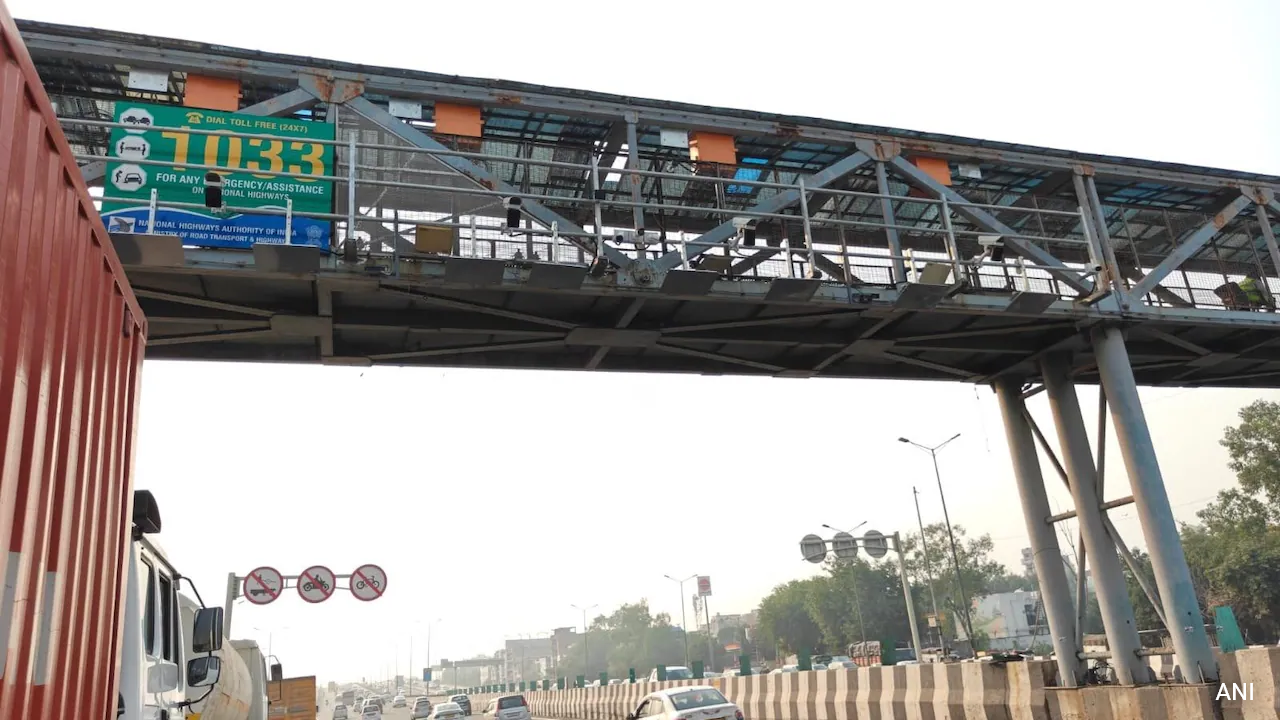
Vehicles entering Delhi may soon no longer have to stop at toll plazas, as the city prepares to introduce a Multi-Lane Free Flow (MLFF) toll collection system at its border entry points. The initiative is aimed at easing traffic congestion, saving commuters' time and fuel, and reducing vehicular emissions in the national capital.
The Municipal Corporation of Delhi (MCD) has expedited the process to install the electronic tolling framework, with one installed at the Ghazipur toll plaza. The system is expected to be rolled out at all the entry points across Delhi.
"It will benefit all the vehicles entering Delhi, especially during the rush hour. Car users won't have to stop, the system will ensure free flow of traffic," Amitabh Bachchan, MCD toll shift in-charge, told NDTV.
Here's the NDTV report on the new toll system:
Delhi to Roll Out Barrier-Free Tolling at Borders, MLFF System to Cut Congestion and Pollution @AaquilJameel shares more details https://t.co/DFEBLiuG5t
— NDTV (@ndtv) November 24, 2026
What Is The Multi-Lane Free Flow System?
MLFF is an electronic toll collection mechanism that allows vehicles to pass through toll points without stopping or slowing down to make payments at conventional toll booths. It builds on the FASTag ecosystem rather than replacing it.
Once installed, it will allow vehicles to drive through at highway speeds without stopping. Instead of booths or barriers, the MLFF equipment is mounted above the road.
It is equipped with high-performance Radio Frequency Identification (RFID) readers that can scan vehicle FASTags as cars pass at high speed.
The idea is to eliminate the bottlenecks that develop at busy toll plazas, particularly during morning and evening rush hours.
The Technology At Play
The MLFF framework will identify vehicles and maintain records of toll transactions, reducing the need for manual intervention.
The system is expected to offer several advantages:
- Less traffic congestion: Vehicles will no longer have to wait in long queues at toll booths, allowing smoother movement at Delhi's entry points
- Time saving: Commuters and commercial vehicle drivers can avoid delays caused by conventional toll collection
- Lower fuel consumption: Vehicles spending less time idling at toll plazas will consume less fuel
- Reduced emissions: Less idling and smoother traffic movement could help bring down vehicular emissions around busy entry points
- Better vehicle tracking: Electronic identification will make it easier to identify vehicles and maintain accurate records of toll transactions
First Installed In Gujarat
In May 2026, National Highway Authority of India (NHAI) successfully launched the MLFF-based tolling system at the Chorayasi Toll Plaza on the Surat-Bharuch section of NH-48 in Gujarat. Around 41,500 vehicles crossed the MLFF toll location on the first day after the implementation of the system.
For a seamless experience, NHAI has urged highway users to maintain sufficient balance in their FASTag accounts. In case of scenarios such as insufficient FASTag balance, invalid or non-functional FASTag, users will be issued an Electronic Notice (E-Notice) for non-payment of user fee. Such users will be required to pay normal user fee within 72 hours of the E-Notice.
In case of non-compliance after 72 hours, the user fee will be charged at twice the normal rate of the vehicle category, as per a Press information Bureau (PIB) release.
Track Latest News Live on NDTV.com and get news updates from India and around the world

