




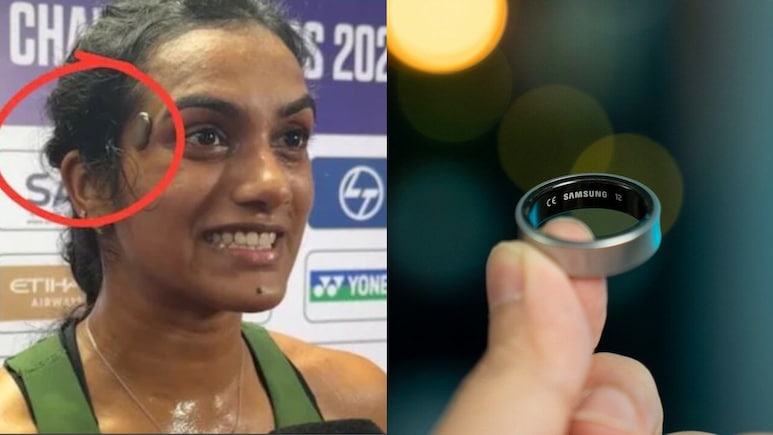
Indian cricket star Shubman Gill has sparked fresh interest in high-performance sports technology after being spotted wearing an innovative forehead device named Temple during a training session. His appearance with the gadget follows badminton champion PV Sindhu, who was seen testing the small wearable during international competition.
Backed by Zomato co-founder Deepinder Goyal, the health-tech innovation represents a major departure from traditional wearable monitoring.
Unlike common fitness gadgets worn on wrists or fingers, Temple sticks directly to the side of the forehead between the temple and the ear.
Also Read | Shubman Gill Impressed By 'Temple' Output, Tests Device In Auckland: Report
While popular smart rings measure peripheral signals like heart rate and surface skin temperature from blood capillaries in the hand, Temple focuses on central nervous system activity and continuous brain blood flow.
According to Dr Sanjay Pandey, Head, Neurology and Stroke Medicine, Amrita Hospital, Faridabad, the most interesting aspect of a brain-focused wearable is not simply the number it produces, but whether those measurements can provide meaningful information about how the brain performs under pressure.
"Badminton star PV Sindhu was seen wearing an experimental wearable called Temple that measures parameters like cerebral blood flow and cognitive load. This technology is attempting to measure how the brain responds to intense physical and cognitive demand, which is much harder than what your typical fitness tracker does," says Dr Pandey.
Also Read | PV Sindhu Spotted Wearing AI-Powered Temple Device: What Does It Monitor?
Traditional fitness trackers primarily monitor indicators such as heart rate, movement, sleep and sometimes blood oxygen levels. A device positioned near the forehead, however, attempts to gather information associated with cerebral physiology.
Why Athletes Need Brain Monitoring?
Sporting fatigue is not just about tired muscles. In fast-paced sports such as cricket and badminton, the brain works continuously to process visual information, anticipate opponents' moves, maintain balance, coordinate precise actions and make split-second decisions.
According to Dr Pandey, athletes may appear physically recovered based on traditional fitness measures while still experiencing significant cognitive and neurological fatigue. This hidden mental workload can affect performance and recovery. Tracking how the brain responds to repeated high-intensity activity could provide valuable insights into an athlete's overall fatigue levels, helping coaches and players better understand recovery needs and optimise training, performance and long-term wellbeing.
Temple vs Smart Ring: Key Differences
Placement
Temple: Worn on the side of the head using adhesive Grips.
Smart Ring: Worn on a finger like a ring.
Primary Focus
Temple: Tracks blood-flow-related signals around the head and generates metrics aimed at estimating physiological load, stress, fatigue and recovery.
Smart Ring: Focuses on heart rate, sleep, activity, recovery and temperature trends.
Purpose
Temple: Designed to provide insights into cognitive and physiological strain using its BrainFlow and Entropy systems.
Smart Ring: Designed for everyday health and wellness tracking.
Data Source
Temple: Uses sensors positioned near the temple region to monitor blood-flow-related signals.
Smart Ring: Uses finger-based optical sensors to monitor peripheral physiological signals.
Target Users
Temple: Users interested in deeper insights into workload, fatigue and recovery.
Smart Ring: General consumers seeking discreet, continuous health monitoring.
By capturing real-time brain blood flow and neural indicators, the device offers actionable insights into mental stamina. For top athletes like Gill and Sindhu, this high-precision monitoring helps refine training schedules and recovery strategies during intense competition.
Track Latest News Live on NDTV.com and get news updates from India and around the world

