





Five Congress members did not record dissent when a parliamentary panel pressed for charges on certain business transactions via UPI in August, sources said on Wednesday, even though the Opposition party is now opposing the government's move.
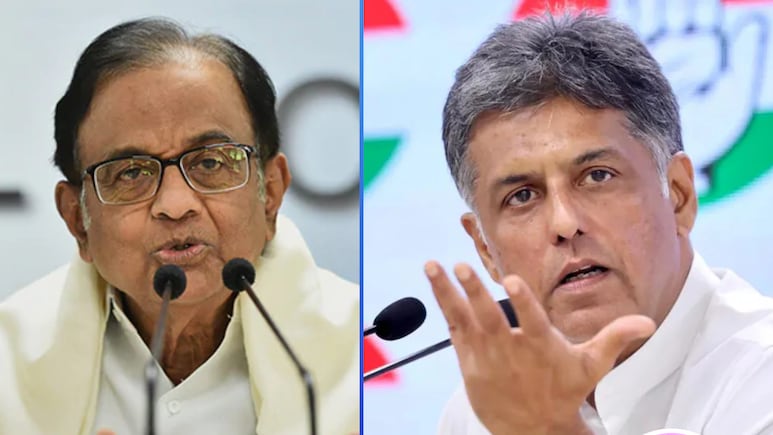
Former ministers P Chidambaram and Manish Tewari were among the five MPs who were on the Parliamentary Standing Committee on Finance that called for a tiered Merchant Discount Rate (MDR) framework on Unified Payments Interface (UPI) transactions.
Leader of the Opposition (Lok Sabha) Rahul Gandhi of the Congress has demanded that the new charge -- up to 0.04%, to be enforced from October 15 on merchants for transactions above Rs 2,000 -- be rolled back.
Sources said Chidambaram, Tewari, Gaurav Gogoi, Kishori Lal and K Gopinath attended the meeting at which the committee adopted the report in August. The committee's proceedings do not record dissent from any of them, the sources added.
On Wednesday, Gandhi posted a video on X saying Prime Minister Narendra Modi acted under pressure from the US to levy the charge - an allegation shot down by the finance ministry. The government has ruled out a rollback, and the Centre said MDR was neither a tax nor a charge collected by the government or the National Payments Corporation of India (NPCI), but was shared among payment ecosystem participants, including banks and payment app providers.
What Finance Committee Said
The parliamentary panel, chaired by Bhartruhari Mahtab of the BJP, said the tiered MDR framework should be notified and implemented without delay, in observations in its 44th report. The panel warned that if the tiered MDR structure for UPI and RuPay transactions was not rolled out soon, payment service providers could be left dependent on inadequate government support, affecting spending on cybersecurity, fraud prevention and network infrastructure. It flagged a gap between the Rs 2,000 crore allocated in the budget and the Rs 20,700 crore the industry estimates it needs to meet operational costs.
In an earlier report, the committee had asked the Department of Financial Services to consider a tiered MDR model under which street vendors and small businesses would stay exempt while larger entities would pay a fee.
The report was tabled on August 12, two days after the Rajya Sabha cleared the legislation that amends the Payment and Settlement Systems Act, 2007, to remove the legal bar on levying MDR on UPI and RuPay debit card payments.
The Charge, Explained
The government on Tuesday announced the 0.4% fee, effective October 15, on UPI payments above Rs 2,000 made to merchants, while keeping person-to-person transfers and small payments outside the charge. The fee will be paid by merchants and is capped at Rs 300 for transactions of Rs 75,000 or more.
According to the NPCI, payments above Rs 2,000 for railways, telecom, insurance, fuel, electricity distribution, municipal water and piped natural gas will carry a flat MDR of Rs 5, while capital-market payments, including to mutual funds and stockbrokers, will carry 0.02%, capped at Rs 300. UPI AutoPay and recurring mandates are excluded.
Track Latest News Live on NDTV.com and get news updates from India and around the world

