





India and China appear to be inching closer to talks on where their disputed border should run, a small but significant sign that both sides want to build on a thaw that has been taking shape after years of tension along the Line of Actual Control (LAC).
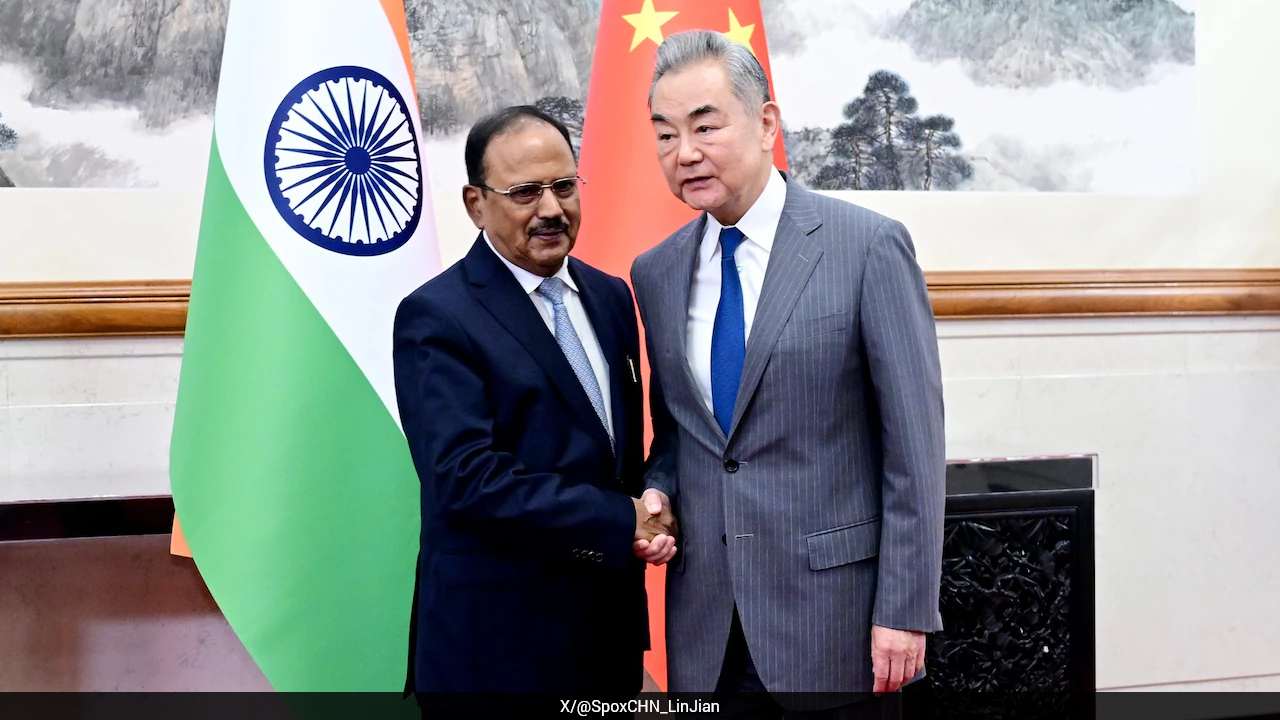
That effort was on display on Tuesday when National Security Advisor Ajit Doval met Chinese Foreign Minister Wang Yi in Beijing for the 25th round of Special Representatives' talks on the boundary question.
The agenda included expanding cooperation, maintaining peace along the border and pushing forward the delimitation process. The two sides also reviewed the functioning of existing border-management and cross-border cooperation mechanisms.
Neither side specified which stretches of the LAC could be delimited. But the very fact that delimitation featured prominently is significant. During last year's talks, the two countries agreed to set up a working group to pursue an "early harvest" approach, settling a few manageable sections of the border rather than attempting to resolve the entire dispute at once. This week's meeting suggests that effort is moving forward.
The timing is notable. Chinese President Xi Jinping is due in New Delhi next month for the BRICS Summit on September 12, his first visit to India in seven years, adding weight to the latest round of talks. Doval described bilateral ties as "steadily returning to normalcy", a reference to the sharp deterioration in relations following the 2020 military clash in eastern Ladakh. He also credited Prime Minister Narendra Modi and President Xi with providing "clear and positive direction" to the relationship.
Most of the discussions, according to Doval, focussed on preserving peace along the border and finding ways to reinforce and consolidate the stability achieved so far.
Wang struck a similar note, saying the two countries should draw lessons from history and not allow the boundary issue to derail the broader relationship. He emphasised the need to avoid "stagnating, backtracking or veering off course" and called for continued dialogue and consultation on the border question.
They held extensive discussions on Tuesday, beginning with a smaller meeting that lasted more than 90 minutes and followed by a longer delegation-level session that continued into the evening. Earlier, Doval also met with Chinese Vice-President Han Zheng.
The interactions are part of a broader revival in high-level engagement between the two countries after ties deteriorated following the 2020 standoff. Over the past year, several institutional mechanisms that had remained inactive have resumed meetings alongside efforts to maintain stability along the LAC.
Wang said progress had been made on commitments from the previous round of talks, including delimitation, border management, institutional exchanges and cross-border cooperation. Both sides reaffirmed the 2005 Political Guiding Principles, which remain the framework for boundary negotiations, and agreed to continue using the Special Representatives' mechanism to work toward a "fair, reasonable and mutually acceptable package solution".
The renewed focus on delimitation is significant because the boundary dispute remains unresolved despite negotiations spanning more than two decades. A comprehensive settlement remains unlikely in the near term. The current approach appears to favour incremental gains, using the "early harvest" model to secure progress in selected sectors while broader negotiations continue.
Any progress, however, will depend on what happens on the ground. Military disengagement and continued calm along the LAC remain the foundation on which the broader process is built.
Wang also framed the relationship in bigger terms too, saying India and China ties carry significance beyond the two countries and have implications for the global order. He called for greater communication, deeper mutual understanding and efforts to address remaining differences. He also urged two countries to become "good-neighbourly friends" and partners, invoking the phrase "Dragon-Elephant Dance" to describe cooperation despite differences.
For India, the priority remains clear: keeping the border peaceful, while using the improved political atmosphere to advance boundary talks. With Xi's visit only weeks away, Tuesday's meeting could help shape the next phase of engagement.
Track Latest News Live on NDTV.com and get news updates from India and around the world

