





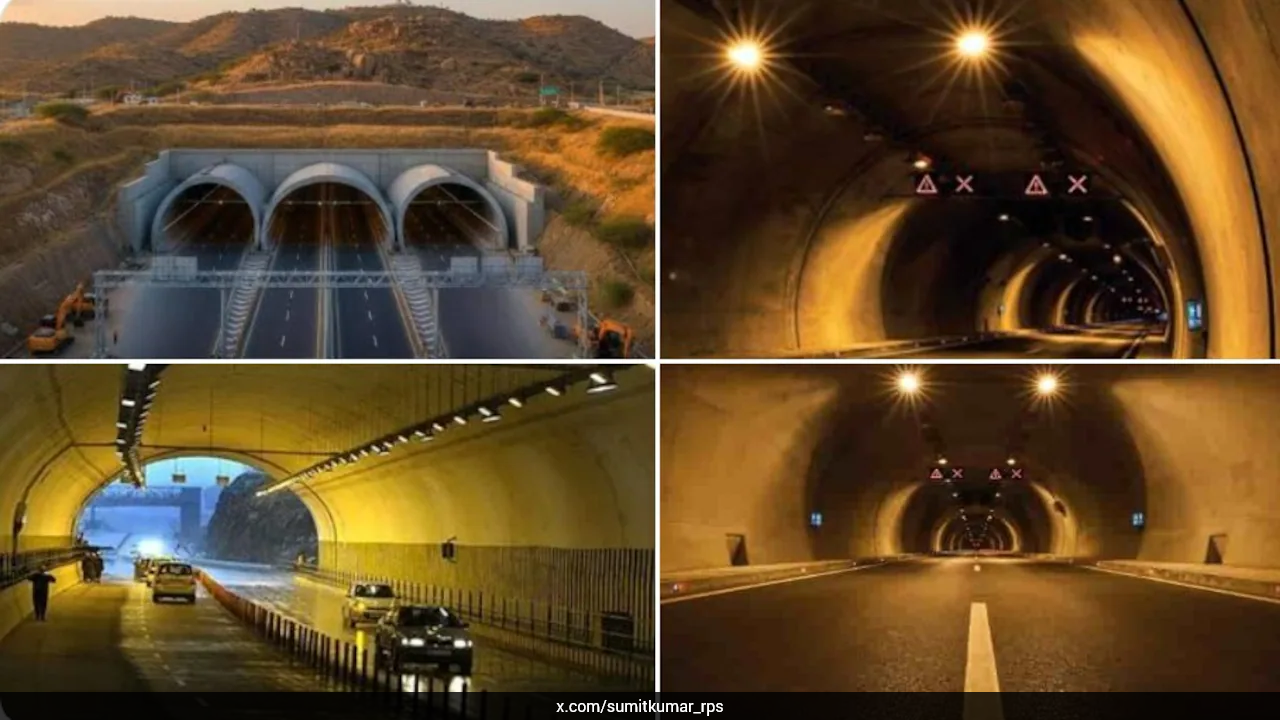
The highly anticipated Delhi-Mumbai Expressway is on the verge of becoming fully operational. Officials have indicated that the expressway could open to traffic any time after June 20, following the successful completion of a crucial 4.9-kilometre tunnel near Kota in Rajasthan.
The ambitious project was initially launched in 2019. While the extensive section connecting Delhi to Gujarat was completed earlier, the overall project faced minor delays due to land acquisition challenges. Built at an estimated cost of approximately Rs 1 lakh-crore, the expressway is now in its final stages of completion.
Why the 4.9-km Kota Tunnel Is an Engineering Marvel
The construction of the 4.9-kilometre tunnel near Kota is a monumental achievement for the project. For the first time, an eight-lane highway has been built directly underneath an ecologically fragile zone, specifically the Mukundra Hills Tiger Reserve.
This particular stretch represents a historic milestone in infrastructure development, as no other tunnel has ever accommodated an eight-lane road. The tunnel serves as a vital component of the 1,386-kilometre-long Delhi-Mumbai Expressway.
Slashed Travel Times and Economic Boost
Once this entire corridor becomes fully operational, the road travel time between Delhi and Mumbai will be drastically reduced to just 12 hours, a journey that currently takes more than 24 hours.
In addition to significantly cutting down travel times, the expressway is projected to substantially lower logistics and freight transportation costs. It will also vastly improve interstate connectivity between Haryana, Rajasthan, Madhya Pradesh, Gujarat, and Maharashtra.
Crucially, the subterranean design of the tunnel ensures the seamless movement of high-speed vehicles on the corridor without disrupting the local wildlife. The construction of this underground pass allowed engineers to bypass a long, winding route through the hills. This critical stretch in Kota was one of the last major missing links preventing the uninterrupted flow of traffic across the mega-expressway.
Track Latest News Live on NDTV.com and get news updates from India and around the world

