





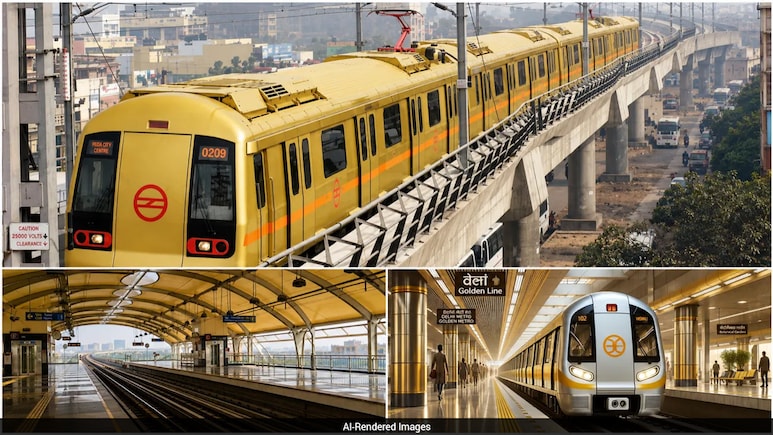
For decades, South Delhi has had one big problem despite being one of the capital's most sought-after residential belts -- getting around.
Traffic bottlenecks, long airport commutes and poor east-west connectivity have kept several neighbourhoods from realising their full real estate potential. That could soon change.
Delhi Metro's upcoming Golden Line, stretching from Aerocity to Tughlakabad under Phase IV, is expected to connect some of South Delhi's busiest residential and commercial pockets. Property consultants believe the line (slated to open later this year) could become one of the biggest catalysts for home prices and rentals in the region over the next few years.
The impact, however, will not be the same everywhere.
Areas located within walking distance of metro stations are expected to benefit the most, while premium neighbourhoods may see relatively modest gains because much of their value is already priced in.
Golden Line Metro: Neighbourhoods In Focus
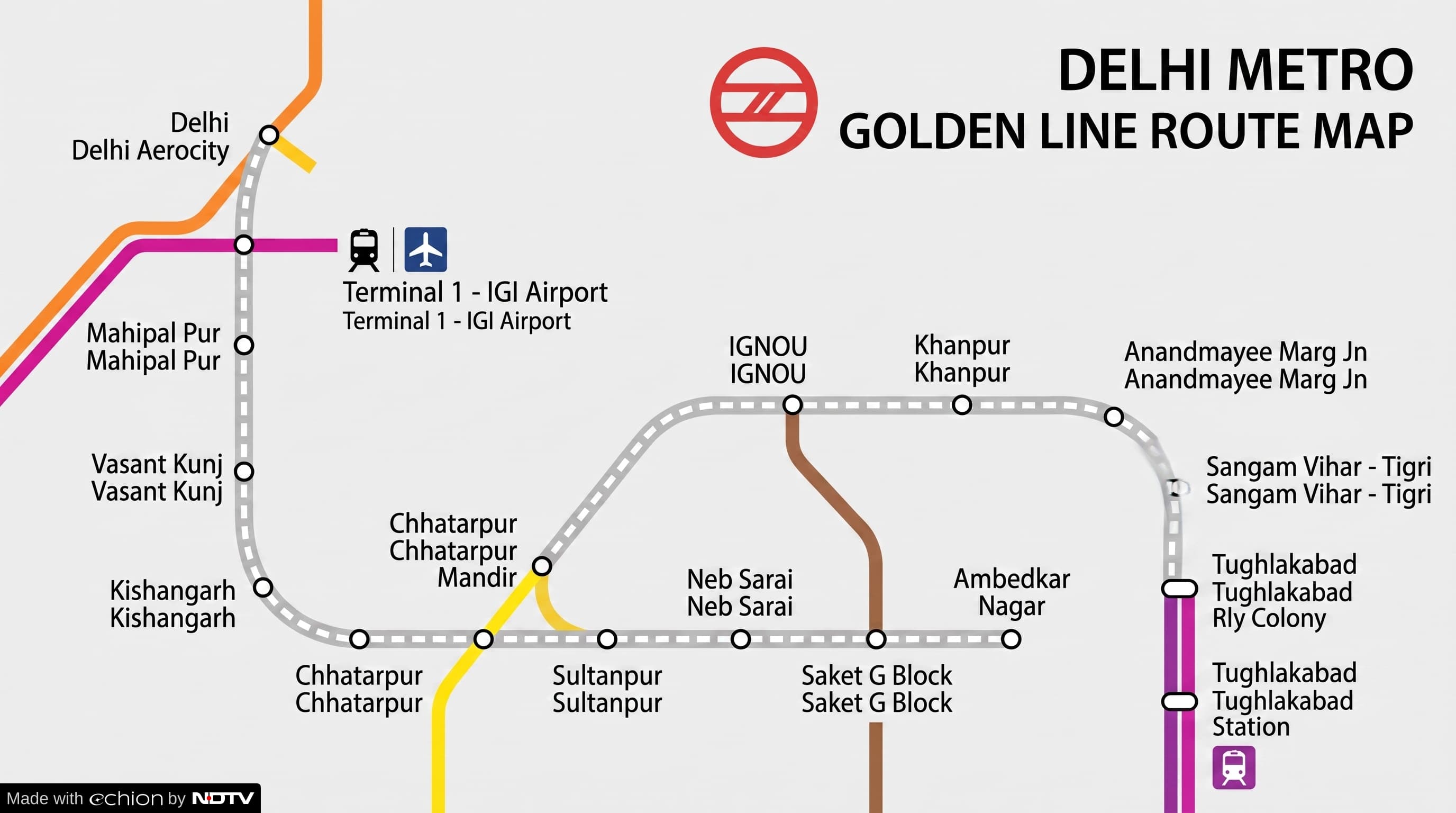
The Golden Line will connect Aerocity with Tughlakabad via Mahipalpur, Vasant Kunj, Kishangarh, Chhatarpur, IGNOU, Saket, Khanpur and Ambedkar Nagar before terminating at Tughlakabad. It will also provide key interchanges with existing metro corridors at Aerocity, Chhatarpur, Saket G Block and Tughlakabad.
For residents, that means easier access to the airport, Central Delhi and several business districts without depending entirely on road travel.
For the housing market, it means a fresh trigger.
Chetan Chichra, Partner at Grant Thornton Bharat, said, "The Golden Line is unlikely to create entirely new housing demand. Instead, it will remove what he calls the "connectivity discount" that has held back many established South Delhi neighbourhoods."
According to him, areas such as Chhatarpur, Neb Sarai, Saket, Ambedkar Nagar and Sangam Vihar already have strong social infrastructure, proximity to employment centres and sizeable housing stock. "Better metro access could finally allow these locations to command the prices they deserve," added Chichra.
Golden Line Metro: Where Homebuyers Stand Today
Current residential prices already show a sharp difference across the corridor. According to Nilesh Garg, Co-Founder of SouthDelhi1, apartments in Vasant Kunj are currently selling at around Rs 21,000-23,500 per sq ft.
Saket remains among the costliest residential markets on the route, with prices ranging between Rs 27,500 and Rs 31,500 per square feet, depending on the block and property type.
Chhatarpur continues to be relatively affordable, with homes available between Rs 12,400 and Rs 18,000 per square feet.
The rental market tells a similar story.
A typical two-bedroom apartment in Saket rents for nearly Rs 35,000 a month, while larger three-bedroom homes can fetch around Rs 1 lakh per month, Garg says.
Which Areas Could See Biggest Jump?
Industry experts believe affordable neighbourhoods stand to gain the most.
According to GT Bharat's Chichra, Chhatarpur, Neb Sarai and Saket are among the strongest candidates because connectivity has remained their biggest weakness despite mature civic infrastructure. He also expects Vasant Kunj and Kishangarh to benefit from their proximity to both the airport ecosystem and the upcoming metro corridor.
Lower-priced markets like Tughlakabad and Sangam Vihar may take longer to mature, but could eventually deliver stronger percentage gains because of their lower base prices.
Garg believes the first wave of appreciation will largely remain within one kilometre of metro stations.
Neighbourhoods like Chhatarpur, Neb Sarai, Khanpur and Sangam Vihar could become more attractive for buyers and tenants who currently sacrifice convenience because of long travel times. He estimates capital values in well-documented properties close to stations could appreciate 8-12 per cent over the next two to three years, while rentals may rise 5-8 per cent.
Metro Effect To Get Stronger After Operations Begin
Property markets usually move in phases around major infrastructure projects. Chichra says prices typically rise modestly after a project is announced before accelerating during construction. The biggest gains usually come 12 to 18 months after metro operations begin, when improved connectivity starts influencing end-user demand.
He believes cumulative appreciation along the Golden Line could eventually reach 20-25 per cent or more in select micro-markets. The rental cycle is expected to behave differently.
Unlike sale prices, rentals often remain flat during construction because additional housing supply comes into the market in anticipation of future demand.
The strongest rental growth generally begins once trains start running and daily commuting becomes easier. At that stage, Aerocity, Mahipalpur and Vasant Kunj are expected to attract airport, aviation and hospitality professionals, while Saket, IGNOU, Chhatarpur and Neb Sarai could emerge as preferred locations for students and young working professionals.
Metro Premium Is Already Visible Across Delhi
Ashok Nehlia, Founder and CEO of Nehlia Developers, says homes located near operational metro corridors in Delhi already command a 15-20 per cent premium over similar properties without metro access.
He expects a similar trend along the Golden Line. According to him, capital values in Chhatarpur, Vasant Kunj, Mehrauli, Sangam Vihar and Tughlakabad could increase by 15-20 per cent after the line becomes operational, while rentals may rise 10-15 per cent.
He says improved access to IGI Airport, Central Delhi and major interchange stations will make these neighbourhoods significantly more attractive for professionals, students and frequent travellers.
However, experts caution buyers against assuming every property along the corridor will appreciate at the same pace. Garg says the biggest winners will be homes with clear ownership titles, adequate parking, good water supply, wider approach roads and easy walking access to metro stations.
Simply being located in the same neighbourhood may not be enough. "The real premium will come from daily convenience," he says.
Faridabad May Get A Boost
Although the Golden Line does not extend into Faridabad, experts believe the city could benefit indirectly through the Tughlakabad interchange.
Aman Gupta, Director at RPS Group, says better connectivity between South Delhi, the airport corridor and Faridabad could increase demand for relatively affordable housing in areas such as Surajkund, Green Fields and Charmwood Village.
Similarly, Keshav Mangla, GM-Business Development at Forteasia Realty, says improved network integration could also attract Delhi professionals looking for larger homes at lower prices.
However, both experts caution buyers against investing solely on expectations of future appreciation. Long-term value, they say, will ultimately depend on construction quality, civic infrastructure and the credibility of developers.
Track Latest News Live on NDTV.com and get news updates from India and around the world

