





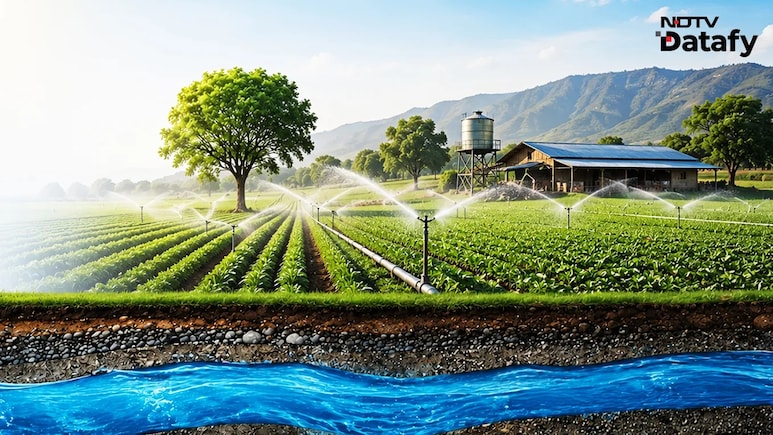
Every summer, large parts of India face water shortages. Reservoirs run low, rivers shrink, and many cities and villages rely heavily on groundwater for drinking and farming.
Months of continuous pumping also lower groundwater levels. This makes the annual monsoon more than just a rainy season. It is India's biggest natural source of groundwater recharge, helping refill underground aquifers that support millions of people.
This year, however, recharge may be weaker. The India Meteorological Department has forecast below-normal southwest monsoon rainfall (90 per cent of the Long Period Average), with a 60 per cent probability of a deficient monsoon due to El Nino conditions.
Who is extracting the most groundwater?
The pressure on groundwater is already evident.
According to the latest Lok Sabha reply, based on the National Compilation on Dynamic Ground Water Resources of India, 2025 prepared by the Central Ground Water Board (CGWB), Punjab continues to extract more groundwater than is naturally replenished each year. Its stage of groundwater extraction is well above 100 per cent, making it the most stressed state in the country.
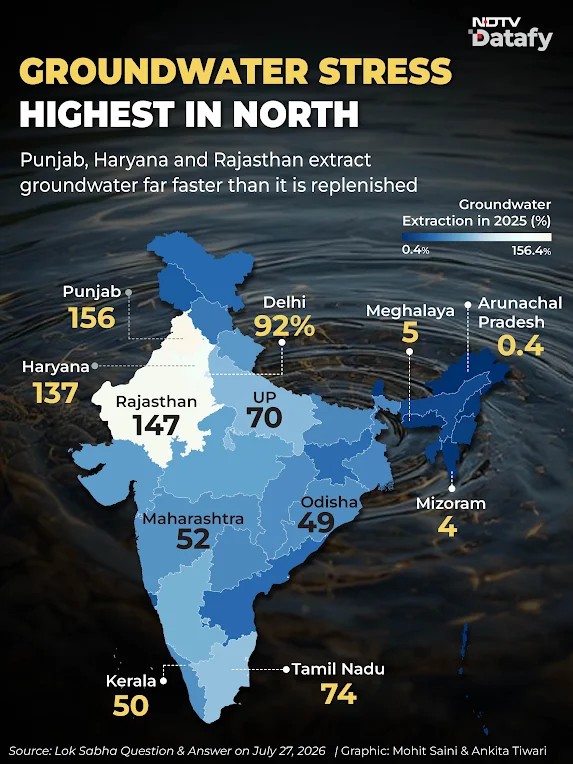
Rajasthan, Haryana and Delhi also report very high groundwater extraction, with withdrawal levels close to or above sustainable limits. In contrast, several northeastern and Himalayan states extract only a small share of their available groundwater.
The stage of groundwater extraction compares annual groundwater withdrawal with natural recharge. A value above 100 per cent means more groundwater is being pumped out than is replenished.
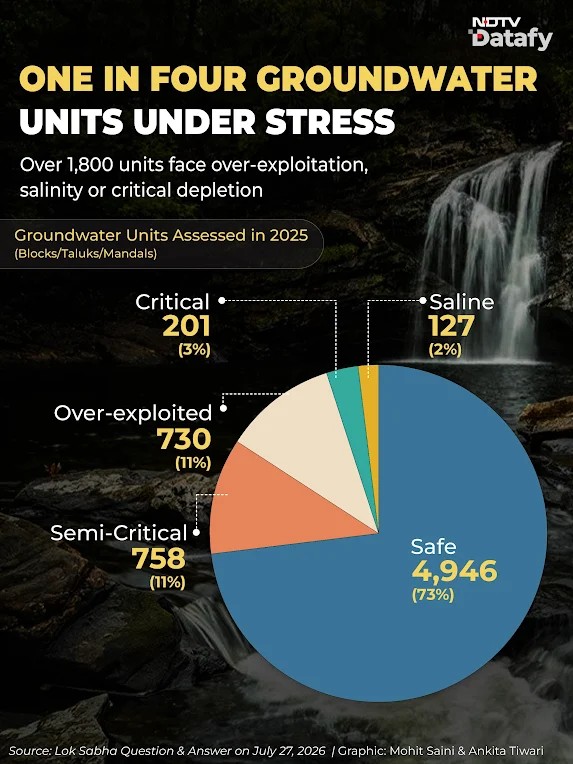
The latest CGWB assessment shows that most parts of India remain within safe limits. Of the country's 6,762 groundwater assessment units, 4,946 (73 per cent) are classified as Safe. However, 1,816 units (27 per cent) fall outside the safe category, including 11 per cent Semi-Critical, 3 per cent Critical, 11 per cent Over-Exploited, where extraction exceeds recharge, and 2 per cent Saline.
India is the world's largest groundwater user
India is also the world's largest groundwater extractor.
According to the United Nations World Water Development Report 2022: Groundwater - Making the Invisible Visible, India withdraws about 251 cubic kilometres of groundwater every year. China and the United States each extract around 112 cubic kilometres, less than half of India's withdrawal.
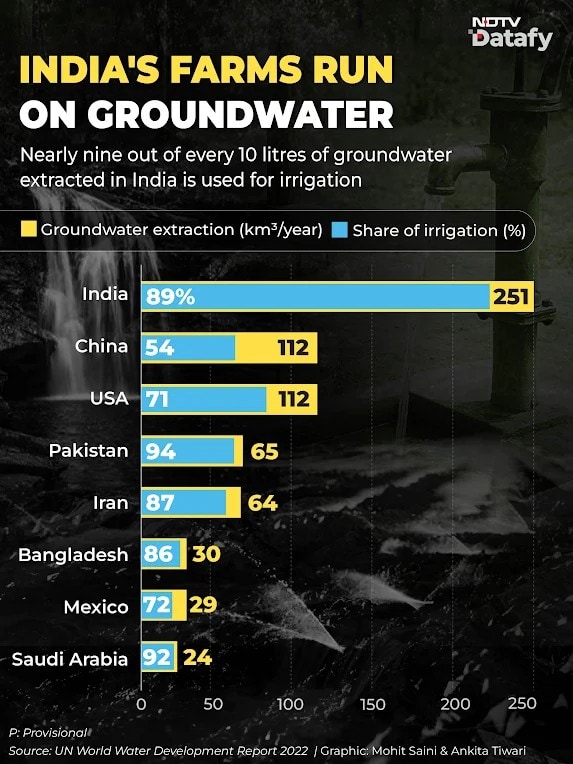
Nearly 89 per cent of the groundwater extracted in India is used for irrigation, highlighting agriculture's heavy dependence on underground water.
Farming's growing dependence on tube-wells
India's irrigation pattern has changed significantly over time. Official Land Use Statistics show that tube-wells now irrigate nearly half of the country's net irrigated area, while the share of canal irrigation has declined to around 21 per cent.
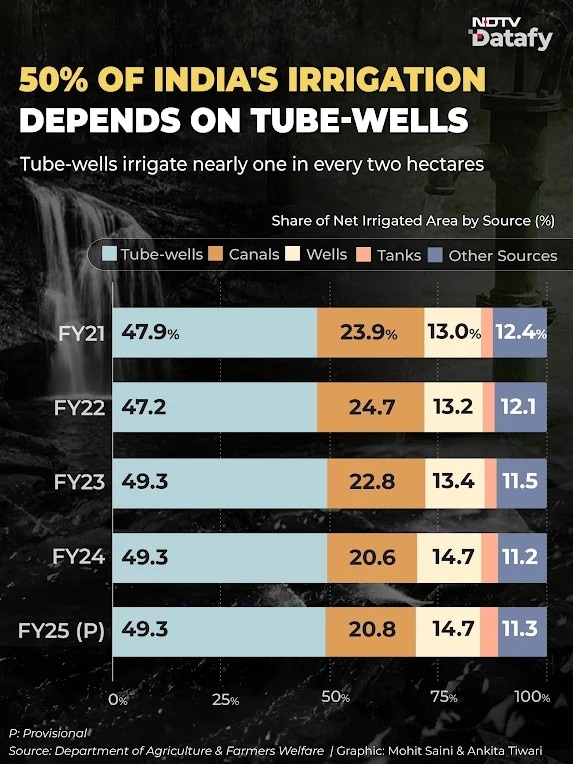
As electricity, diesel pumps and borewell technology became widely available, farmers increasingly shifted from canals and other surface water sources to tube-wells, allowing them to access groundwater whenever needed.
Why this year's monsoon matters
Groundwater depends largely on rainfall for replenishment. Before the monsoon, water tables are generally at their lowest after months of extraction for irrigation, drinking water and industry. Once the rains arrive, rainwater seeps into the ground and recharges aquifers, making groundwater levels shallower across much of the country.
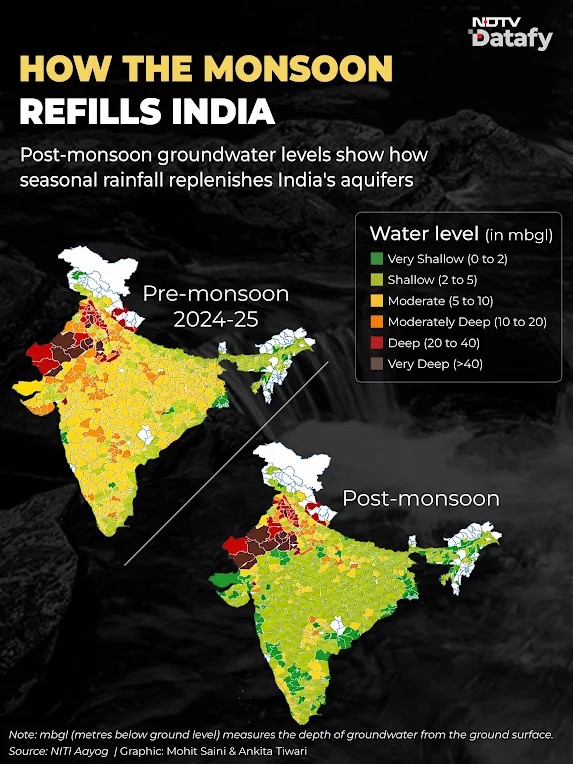
With a below-normal monsoon forecast this year, groundwater recharge could be weaker than usual, leaving already stressed aquifers with less opportunity to recover.
Track Latest News Live on NDTV.com and get news updates from India and around the world

