






- Generation Z is influencing public discourse and government policies across India
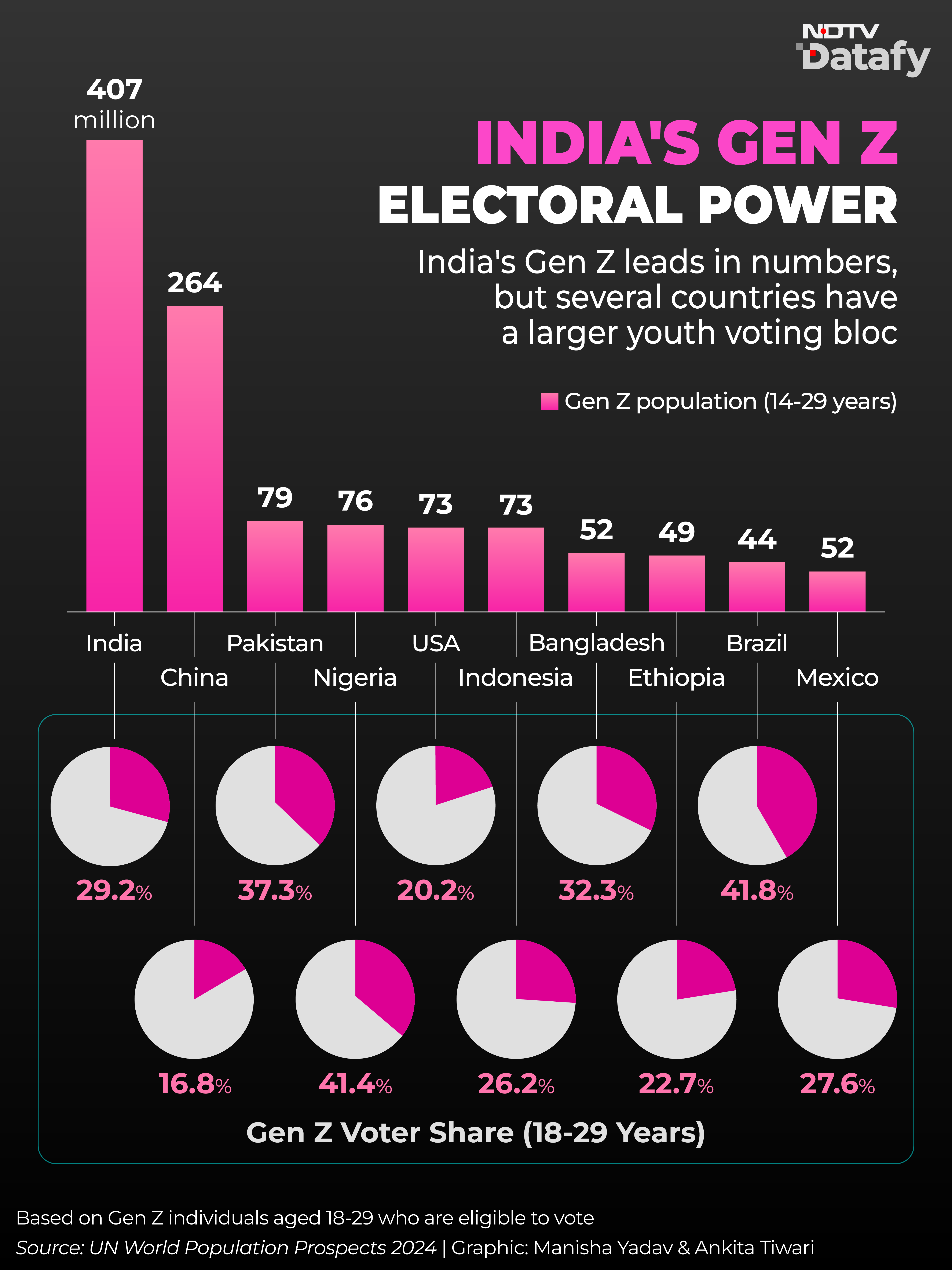
- India will have the world's largest Gen Z population with 407 million by 2026
- Gen Z will comprise 29.2% of India's eligible voters in 2026, nearly one in three
Generation Z is no longer just setting internet trends or popularising new slang. Across India, it is increasingly shaping public discourse and forcing governments to respond. From protests over examination irregularities and demands for greater transparency in education to debates on employment, climate action and even E20 ethanol-blended fuel, Gen Z has emerged as one of the country's most vocal groups.
Recent student-led protests have reinforced one political reality that Gen Z is becoming a constituency that governments and political parties can no longer afford to ignore.
That growing influence is also reflected in India's changing demographics. By the 2029 Lok Sabha election, Generation Z is projected to become the country's largest adult generation, making it one of India's most influential electoral blocs. But the story is not just about India's numbers.
The World's Largest Gen Z Population
According to the UN World Population Prospects 2024, India has the world's largest Gen Z population, with around 407 million people aged 14-29 years in 2026, ahead of China (264 million), Pakistan (79 million) and Nigeria (76 million). That, however, is expected given that India is the world's most populous country. A more important question is whether India also has the largest share of Gen Z among its eligible voters.
Big Numbers, But Not The Biggest Youth Electorate
An analysis of Population Projections (2026) India shows that people aged 18-29 years account for 29.2 per cent of India's eligible (18+) population in 2026.
In other words, nearly one in every three eligible voters in the country belongs to Generation Z. However, India does not have the youngest electorate among countries with the largest Gen Z populations.
Ethiopia (41.8 per cent), Nigeria (41.4 per cent), Pakistan (37.3 per cent) and Bangladesh (32.3 per cent) all have a higher share of Gen Z among eligible voters, reflecting their younger demographic profiles.
Where India's Gen Z Vote Is Strongest
The demographic picture also varies sharply across India. Bihar has the highest Gen Z voter share among major states in 2026 projected population, with 36.8 per cent of its eligible population aged 18-29 years, followed by Uttar Pradesh (33.9 per cent), Jharkhand (33.8 per cent), Rajasthan (32.3 per cent) and Madhya Pradesh (31.4 per cent).
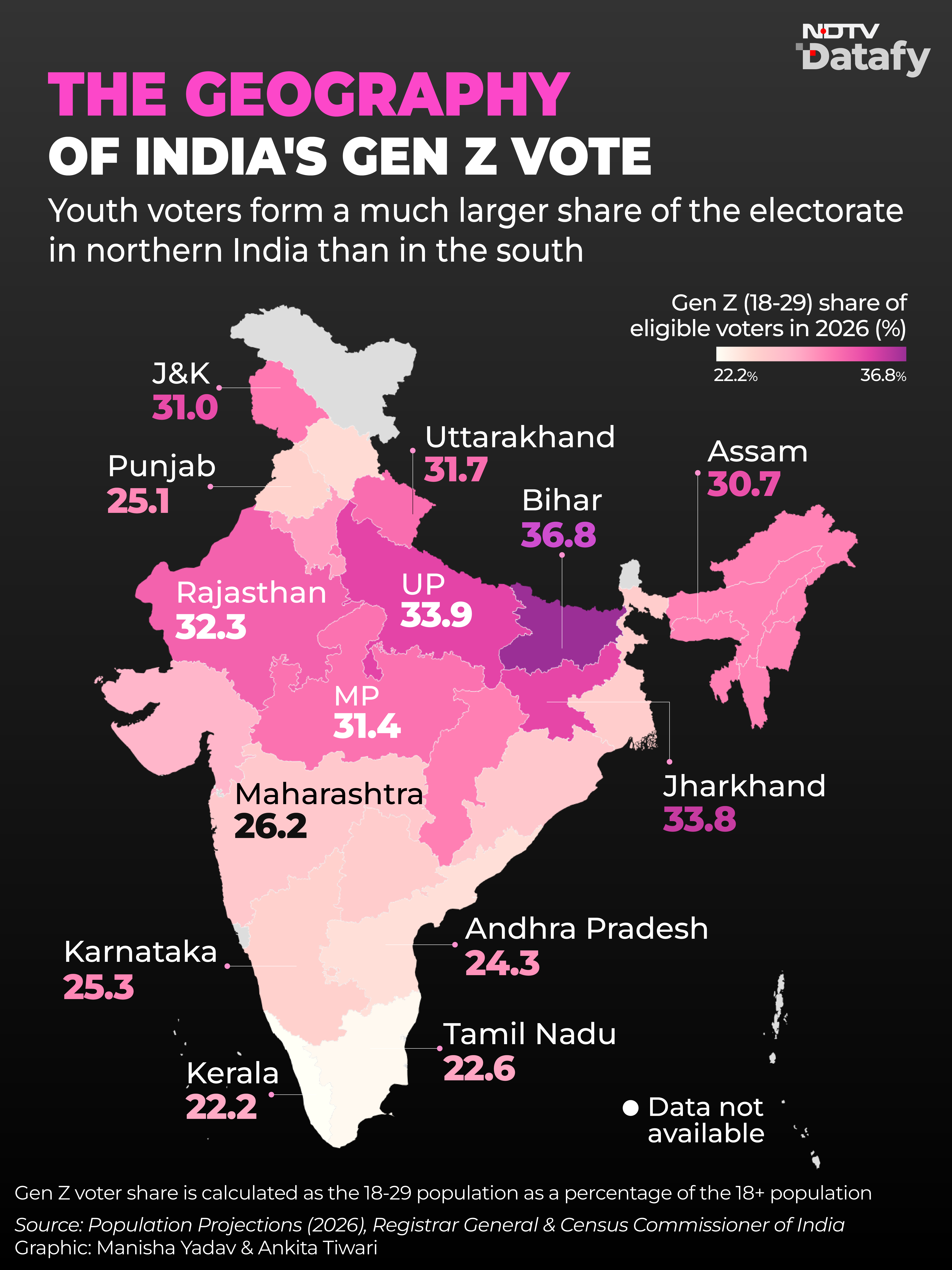
At the other end, southern states have relatively older electorates. Kerala has the lowest Gen Z voter share at 22.2 per cent, followed by Tamil Nadu (22.6 per cent), Andhra Pradesh (24.3 per cent), Himachal Pradesh (24.6 per cent) and Punjab (25.1 per cent). The contrast reflects India's uneven demographic transition, with northern and eastern states continuing to have younger populations than much of southern India.
Track Latest News Live on NDTV.com and get news updates from India and around the world

