




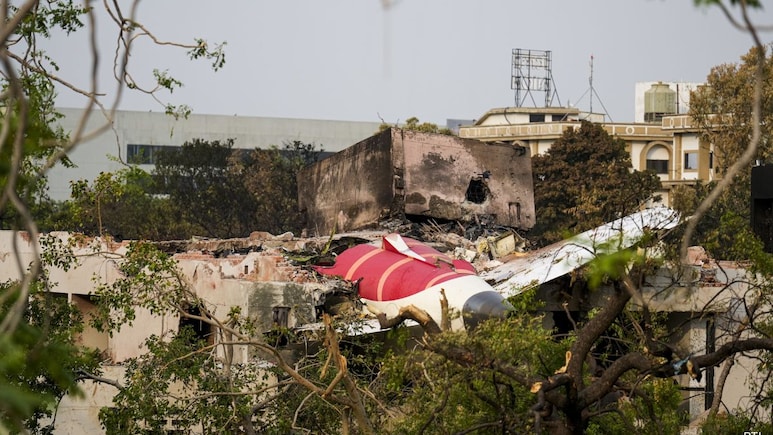
The Federation of Indian Pilots (FIP) has urged the Aircraft Accident Investigation Bureau (AAIB) to undertake a comprehensive evaluation of electrical, electronic and avionics-related evidence in its ongoing investigation into the Air India AI-171 Boeing 787 crash.
In a letter, the FIP President Capt. CS Randhawa stressed that all available technical information should be examined to strengthen aviation safety.
-

-
 Neha Goyal Makes Stunning Asian Games Gold Revelation At NDTV World Summit 2026
-
 Big NDTV Summit Impact: RBI Governor's Tata Sons Listing Remark Makes Top Newspaper Headlines
-
 "Certainty Is A Problem": Nikhil Kamath On Marriage, Children And Future
-
 "High Inflation Is Like Tax On Everyone": RBI Governor At NDTV World Summit
-
 RBI Governor Sanjay Malhotra's Big Hint On Tata Sons Listing Row At NDTV World Summit
-
 The Mystery Of A Bare Nail In Ashwini Vaishnaw's Office
-
 Paris Setback, Asian Games Glory: Lovlina Borgohain's New Perspective
-
 To PM Modi's "Failed Product" Jab At Rahul Gandhi, A Shashi Tharoor Counter
-
 'AI Scares Me': Kriti Sanon On Personality Rights And Need For Laws
-
 'This Time I Wanted Gold': Savita Punia Reflects On Historic Asiad Success
Moreover, the pilots' body referred to multiple letters and technical notes it had previously submitted to the Ministry of Civil Aviation, the Directorate General of Civil Aviation (DGCA) and the investigation agency regarding reported electrical system concerns on Boeing 787 aircraft and possible links to the June 2025 accident involving aircraft VT-ANB.
The investigation should carefully assess technical material submitted by the Foundation for Aviation Safety (FAS) which reportedly contains documentation on the aircraft's operational history, maintenance actions, recurring system anomalies and fault indications, the FIP said.
The pilot association also noted that AAIB had acknowledged receiving and reviewing the information through the UK AAIB expert.
According to the pilots' body, the Boeing 787's highly integrated 'More Electric Aircraft' architecture makes electrical generation, distribution, monitoring and data-network systems central to safe operation.
It argued that recurring technical faults, intermittent failures, power interruptions, software resets, sensor discrepancies and maintenance troubleshooting records could collectively provide important clues to accident causation.
FIP called for a detailed review of historical maintenance and reliability data, including technical log entries, deferred defects, repetitive fault reports, troubleshooting records, component replacements, reliability monitoring data and engineering corrective actions carried out throughout the aircraft's service life.
The federation also sought closer examination of electrical power generation and distribution systems, Integrated Modular Avionics, flight management and flight-control computers, battery systems, power-control units and aircraft data networks.
Investigators should correlate information from flight recorders, Aircraft Health Monitoring (AHM) systems, ACARS transmissions, maintenance databases, Built-In Test Equipment reports and manufacturer service records, it said.
(Except for the headline, this story has not been edited by NDTV staff and is published from a syndicated feed.)
Track Latest News Live on NDTV.com and get news updates from India and around the world

