





The first of every month is a time to celebrate. People get their salaries and life seems manageable. Rent or home EMIs are taken care of, credit card bills are paid, school fees are accounted for, and household budget appears to be under control. Then comes groceries, electricity bills, fuel, food deliveries, weekend outings and various subscriptions. By the third week of the month, salaried people are checking their bank balance more frequently. The question in everyone's mind: How did an entire month's salary disappear so quickly?
Let us try to find the answer to this recurring problem. It doesn't mean that people spend recklessly. The problem could be a combination of rising fixed expenses, lifestyle inflation and financial commitments that have accumulated over time.
Here Are The 7 Possible Reasons Your Salary Disappears
- A large chunk goes to fixed expenses: Rent, EMIs, school fees, insurance premiums, domestic help and utility bills put a dent in your account even before discretionary spending begins.
- The "invisible" micro-leaks: Frequent UPI transactions, daily coffee runs, food delivery apps and digital subscriptions drain your account in small, unnoticeable increments.
- Lifestyle inflation: As salary increases, so does the expectation to scale up, turning old luxuries into new baseline habits. These include a better phone, more expensive holidays, or upgraded restaurants.
- Credit cards and illusion of affordability: Spending becomes less tangible when payments are deferred. Multiple credit card bills and "no-cost" EMIs can eat into the next month's salary.
- Subscription spending goes unnoticed: OTT platforms, music services, apps, memberships and other automatic payments may appear insignificant individually but can give you a shock collectively.
- Absence of emergency fund: An unexpected medical bill, car repair, family function or school expense can force you to dip into money meant for the rest of the month.
- Psychological sentiment: Many users on Reddit note that even with decent pay, regular life expenses simply outpace unbudgeted balances. Behavioural patterns like treating paychecks as disposable income also heavily drive this strain.
The illustration below explains the trap most salaried employees face:
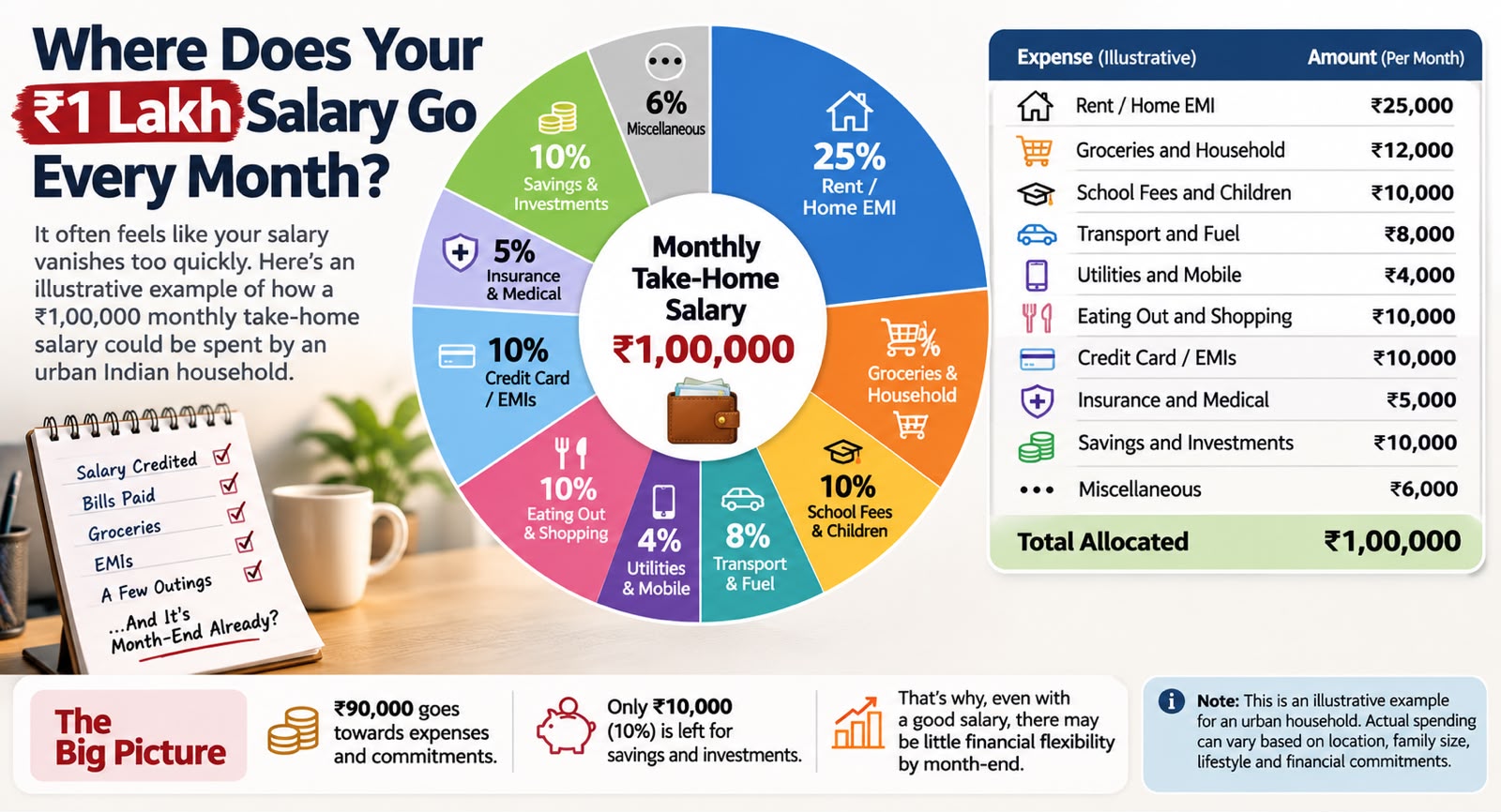
*The figures are illustrative, not actual average household expenditure
How To Stop Running Out Of Money Before Payday
You can introduce small changes in your spending habits and that will help you in long way.
- Pay yourself first: Move a fixed amount into savings immediately after salary credit
- Track spending for 30 days: Identify where the money actually goes
- Review subscriptions: Cancel services you rarely use
- Set a discretionary spending limit: Separate essential expenses from lifestyle spending
- Reduce expensive debt: Pay attention to credit card interest and revolving balances
- Build an emergency fund: Work towards three to six months of essential expenses, adjusting for your circumstances
The problem with a disappearing salary isn't always that people earn too little or spend too much. Sometimes, it is that their financial lives have become more complicated than their incomes can comfortably support.
A salary hike can provide temporary relief, but without understanding where the money goes, the same cycle can repeat itself at a higher income level.
Track Latest News Live on NDTV.com and get news updates from India and around the world

