Opinion | 482 Dead, And Counting: How A Glacier Collapse Became A Himalayan Disaster
What looks like a sudden flood is actually the final link in a chain of events unfolding across an increasingly unstable Himalayas
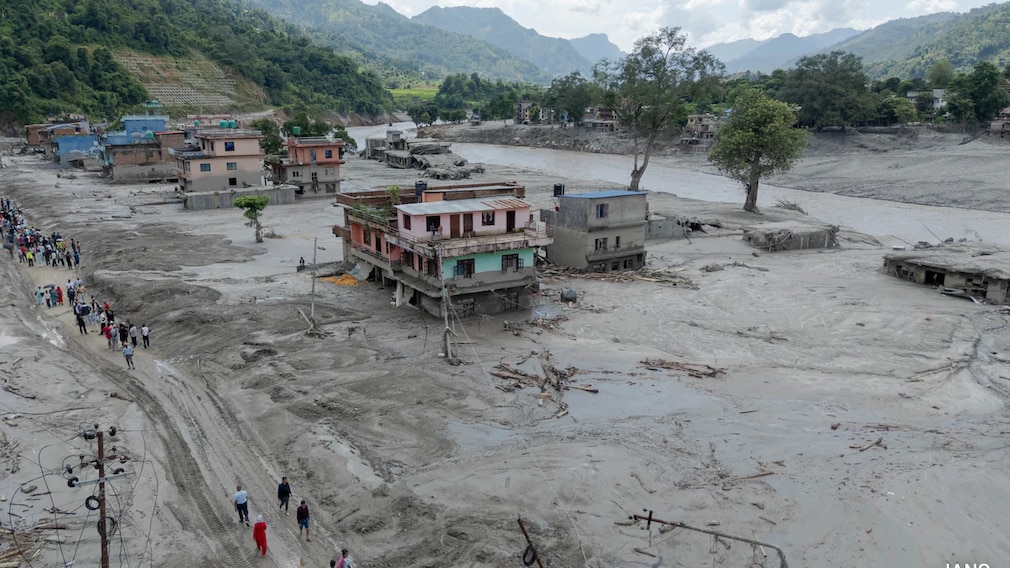
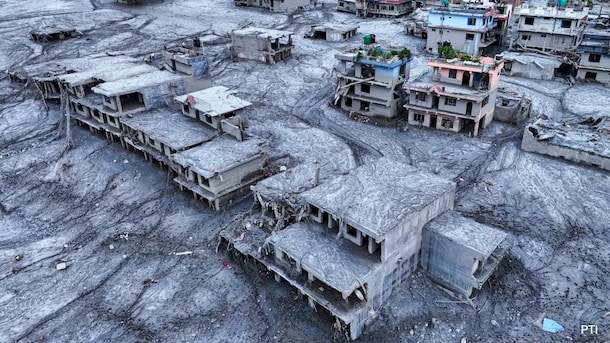
The Himalayas gave us a brutal reminder this week of what climate change looks like when it stops being a graph and becomes a wall of water, ice, rock, and mud. Across the Nepal-Tibet border, a sudden glacier collapse unleashed a catastrophic flood that tore through communities, roads, bridges, and power infrastructure. Rescue operations are still underway, with at least 482 people confirmed dead so far, and the toll expected to change. But one thing is already clear: this was not an ordinary monsoon flash flood.
Early assessments point to an ice-rock avalanche or glacier collapse that turned into a massive debris flow, rather than a conventional glacial lake outburst flood. The US Geological Survey later said the seismic signal first reported as an earthquake was generated by a glacial collapse and debris flow, not by tectonic shaking.
The Tipping Point
Scientifically, the distinction matters. Politically and morally, it changes little. The Himalaya is turning into a more unstable landscape, and climate change is making it worse. The Global Tipping Points Report 2025, led by the University of Exeter's Global Systems Institute and more than 160 researchers, says tipping-point risks rise as warming approaches and exceeds 1.5 degrees Celsius. Mountain glaciers, it notes, are among the systems capable of nonlinear responses under continued warming. Tipping points do not act alone. Most interactions between the systems assessed are destabilising. One shift can make another more likely, pushing ecological and human systems into cascading risk.
The concern, then, goes far beyond the valleys hit this week. A warming glacier does not simply become a smaller glacier. It can become a different kind of threat altogether. As glaciers retreat, meltwater collects in lakes, often held back by unstable walls of ice, rock, and moraine. These lakes can expand quickly. A sudden avalanche, landslide, ice collapse, or breach can release huge volumes of water and sediment downstream. In steep Himalayan valleys, gravity does the rest.
A regional analysis of 5,409 Himalayan glacial lakes found both their number and area increasing between 1990 and 2020, with expansion concentrated in parts of the central and eastern Himalaya. Studies of supraglacial lakes tell a similar story of restless ice and water. These are not abstract risks on a map. They are forming above real villages, roads, bridges, hydropower projects, and pilgrimage routes.
Different Consequences
The danger is already built into the landscape. More than 5,000 glacier lakes exist across the region, and work on Himalayan GLOF hazard suggests that a 100-year outburst flood could send peak flows downstream comparable to major monsoon-fed rivers. The glaciers are shrinking too. A Scientific Reports reconstruction of 14,798 Himalayan glaciers found that they had lost at least 40% of their Little Ice Age area, with recent mass-loss rates roughly an order of magnitude faster than the long-term average since then.
Climate change does not mean every kind of glacial lake outburst flood will become more frequent in a neat, linear way. A Nature Climate Change study found no statistically significant increase in moraine-dammed GLOFs in the Himalaya since the late 1980s. The terrain, however, is changing: its exposure, triggers, weak points, and consequences.
That is a harder problem, and probably the more dangerous one. We are building roads, dams, tunnels, hotels, and settlements in a mountain system that is no longer behaving according to old assumptions. Himalayan valleys are narrow, and they leave little room for engineering arrogance. Traditional climate risk assessment is not built for such nonlinear behaviour. Tipping-point risks involve uncertainty, sudden shifts, and cascading impacts. For South Asia, the stakes are enormous. More than three billion people depend on vulnerable monsoon systems, while Himalayan rivers, glaciers, and mountain ecosystems support farms, towns, hydropower, and economies far downstream.
Asking The Wrong Questions
The ritual question after every disaster is whether climate change "caused" it. That is often the wrong question. The better one is whether climate change is making the landscape more capable of producing disasters that were previously rarer, smaller, or easier to manage. Increasingly, the answer is yes.
This is the choice before us. Tip the energy system away from fossil fuels. Tip infrastructure planning towards climate resilience. Build real-time glacier and glacial-lake monitoring across borders. Create early-warning systems that actually reach the people living downstream. And stop treating Himalayan valleys as empty spaces waiting for another road, dam, or resort.
Regional cooperation, therefore, cannot remain hostage to political weather. Rivers, glaciers, and debris flows do not stop at lines on a map, nor do they wait for diplomatic relations to improve. India, Nepal, Bhutan, Pakistan, Bangladesh, and China need shared glacier data, joint hazard mapping, open hydrological information, and disaster-warning protocols that work even during periods of interstate tension. In the high Himalaya, a warning delayed by suspicion can become a warning delivered too late.
(Shailendra Yashwant is an environmental researcher and adjunct fellow at Sunway Centre for Planetary Health, Malaysia)
Disclaimer: These are the personal opinions of the author
-
Opinion | India Faces A BRICS Challenge. Can It Find A Way Through?

The Delhi Summit is being held at a challenging time. Such circumstances have not been encountered since the BRICS Summits started in 2009 in Russia
-
Opinion | Why The Jauhar Scene In Padmaavat Needs To Be Seen For What It Does
The practice of 'jauhar' was certainly abolished long ago. But that does not mean that it should be romanticised or glorified in mass culture.
-
Opinion | Sachin Pilot's Long Wait Is Over. Can Congress Finally Use Him?
The grand old party is now betting that the man who turned 'waiting' into a virtue can deliver Punjab
-
Ground Report | Sunlight Is A Luxury In Delhi Students' Hub Where Building Collapse Killed 7
The civic infrastructure in Delhi's Satya Niketan hasn't caught up with the pace of development and appears to be crumbling under the weight of the influx of tenants and the greed of landlords.
-
Mayawati's Tough Love: Nephew Akash Anand Benched Again. What It Means For BSP
Akash Anand, the 31-year-old foreign-educated nephew of BSP boss Mayawati, finds himself out of favour, for at least the third time in three years, with the latest turn coming in Lucknow on September 3.
-
Blog | Why You Should Care Whether Schrodinger's Cat Is Dead Or Alive
Imagine going on a romantic Alpine getaway and returning with the equation that runs the modern world. The only snag: nobody can quite agree on what it says about reality.
-
Promote, Punish, Repeat: Decoding Mayawati's Akash Anand Puzzle
The development in the BSP is unprecedented. Never before has any Indian party elevated a family member and dumped him or her unceremoniously thrice within a span of three years.
-
Opinion | Nepal Needs $5 Billion To Rebuild. World's Climate Fund Doesn't Have Even 10% Of It
The fund caps support at USD 20 million per project; Nepal needs two hundred times that. And the board is not scheduled to sit until December.
-
Opinion | The Rise Of Indians In US Is Making Some Americans Very, Very Angry
A new report released yesterday shows how Indians are now among the biggest targets of racist attacks in America.
-
Opinion | China, Pak, A Stalled India Visit: How Signals From Bangladesh Are Getting Louder
A fighter jet deal with China, interest in Pakistan's military bloc, and a 'stalled' visit to India - all in a month. Bangladesh's drift is getting harder to ignore.