9/11, And The Price Of Fighting Terror For A Quarter Century
Twenty-five years later, 9/11 is more than just a lived memory for those who witnessed it in real time, as I did as a UN official
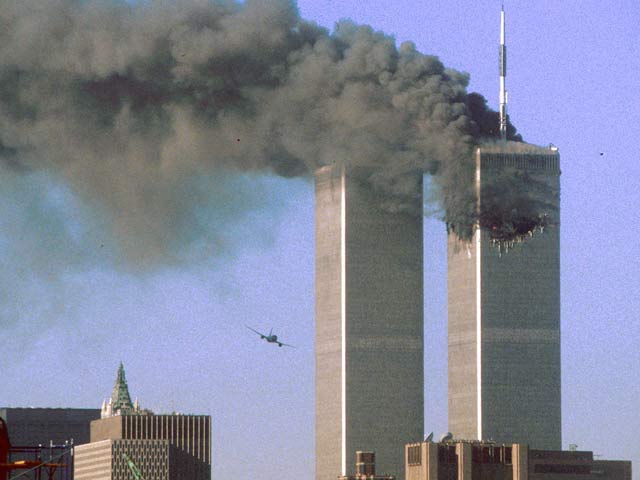
A quarter-century has elapsed since the bright, cloudless Tuesday morning of September 11, 2001, in New York, when the world stood still in collective horror at the television images broadcast from the Big Apple. The image of the Twin Towers collapsing into a mountain of ash and steel in Lower Manhattan remains permanently etched into the global consciousness, and "9/11" (in the American dating style) became the term for an era-defining day.
Twenty-five years later, 9/11 is no longer merely a lived memory for those who witnessed it in real time, as I did as a UN official. It has fully entered the realm of history; 9/11 marks a pivotal inflection point that irrevocably cleaved the post-Cold War era from the turbulent twenty-first century to follow. Looking back across two and a half decades provides a sobering vantage point. The catastrophic attacks carried out by al-Qaeda did not just claim nearly three thousand innocent lives and shatter the domestic invulnerability of the United States; they recalibrated the architecture of international security, reshaped the balance between individual liberty and state authority, fundamentally altered the trajectory of global politics, and left a profound psychological mark on societies worldwide.
An Era Of Anxiety
To understand the full magnitude of September 11, one must recall the geopolitical climate that preceded it. The 1990s were characterised by an overwhelming sense of Western optimism. Following the collapse of the Soviet Union, political theorists spoke of the "End of History" - a widespread belief that liberal democracy and market capitalism had permanently triumphed, promising a future defined by global economic integration and worldwide peace. The attacks of 2001 brutally shattered that illusion in a matter of hours. The threat was no longer a competing superpower operating under the logic of mutual assured destruction, nor a government anxious to expand the benefits of globalisation to its own populace; it was a decentralised, non-state terror network willing to weaponise civilian vulnerability to inflict maximum devastation. The era of effortless American hegemony gave way to a new age of existential anxiety, ushering in a security paradigm focused on asymmetric warfare, counterterrorism, and non-state violent actors.
The immediate American response to the attacks set in motion two decades of military campaigns under the umbrella of the "Global War on Terror". The invasions of Afghanistan in 2001 and Iraq in 2003 transformed the geopolitics of the Middle East and Central Asia with consequences that continue to echo today. While counterterrorism operations successfully dismantled al-Qaeda's core infrastructure and eventually brought Osama bin Laden to justice, the broader strategic costs were immense. The prolonged conflict in Afghanistan became the longest war in American history, concluding in 2021 with a traumatic withdrawal and the return of Taliban rule. Meanwhile, the war in Iraq destabilised the region, gave rise to sectarian violence, created the conditions for the emergence of ISIS, and reshaped regional dynamics in favour of adversaries of the West-led consensus, like Iran.
The quarter-century since 9/11 demonstrates that while military power can dismantle terrorist infrastructure, it cannot easily build stable polities or substitute for political reconciliation. Over twenty-five years, the human and financial toll of these conflicts-trillions of dollars spent and hundreds of thousands of lives lost, both military and civilian-fundamentally altered public attitudes toward foreign intervention across Western democracies. It bred a deep-seated wariness of grand nation-building projects and shifted national defence strategies away from Middle Eastern counterinsurgency and back toward power competition among major global states.
Emergency Responses To Permanent Policies
Domestically and internationally, 9/11 also redefined the basic social contract between citizens and the state. In the name of national security, governments around the world rapidly expanded their intelligence agencies and oversight apparatuses. Legislative measures, such as the USA PATRIOT Act, alongside the creation of institutions like the Department of Homeland Security and the Transportation Security Administration, permanently transformed daily life in America. Similar anti-terrorism legislation in many countries affected all of us, including in India. International air travel was restructured around rigorous, perpetual security protocols. More fundamentally, the rise of mass digital surveillance revealed that modern counterterrorism relied on monitoring global communications metadata on an unprecedented scale. Measures introduced as temporary emergency responses have become permanently institutionalised features of governance, ensuring that the tension between safeguarding civil liberties and ensuring national security remains one of the perpetual legal and moral debates of the digital age.
In the immediate aftermath of September 11, there was a brief, powerful wave of national unity and international solidarity. Messages of sympathy flooded in from every corner of the globe, famously exemplified by the headline in France's Le Monde: "We are all Americans now". However, as the years progressed, the psychological trauma of the attacks and the ongoing war on terror contributed to deeper domestic and international fractures. Muslim and Arab communities in Western nations faced heightened suspicion, discrimination, and hate crimes. Furthermore, fear-driven political rhetoric gradually eroded social cohesion, laying fertile ground for populist, anti-immigrant, and nationalist movements that gained significant momentum in subsequent decades, especially in the US but also across Europe.
A Changed World
Today, twenty-five years removed from that tragic morning, the global threat landscape has shifted significantly beyond the immediate concerns of 2001. While transnational terrorism remains a persistent security challenge, the primary focus of international relations has returned towards great-power rivalries, cyber-warfare, climate insecurity, and the ethical dilemmas posed by artificial intelligence and automated technology. Yet, the world we inhabit today was directly forged in the crucible of post-9/11 decisions. The financial strains, institutional trust deficits, and geopolitical realignments of the past quarter-century are directly linked to that fateful morning in Lower Manhattan.
As the anniversary is commemorated at Ground Zero, where two reflecting pools now sit in the footprints of the original towers, the occasion serves as a solemn tribute to those who perished, the first responders who ran towards danger, and the generations whose lives were altered in the aftermath. It stands as an enduring reminder of human vulnerability, but also of resilience, urging future leaders to meet security challenges with wisdom, restraint, and an unwavering commitment to human dignity.
(Shashi Tharoor has been a Member of Parliament from Thiruvananthapuram, Kerala, since 2009. He is a published author and a former diplomat)
Disclaimer: These are the personal opinions of the author
-
Mamata Banerjee Hand-Drew Party Symbol. It's Now Tied To An Indira Gandhi Case

The Election Commission's method for settling such disputes became central in the seminal Congress split of 1969, when PM Indira Gandhi fought the old guard. The poll body weighed three tests then.
-
Exclusive: 16 Months After Op Sindoor, Pak Still Fixing Runway India Broke At Sargodha
Sargodha's PAF Base Mushaf lies about 172 km northwest of Lahore and roughly 200 km west of the India-Pakistan border, near Amritsar.
-
Blog | I Lost My Entire Family In Kanishka Bombing. 41 Years Later, Canada Wants The Case Closed
We made the trek through tragedy to search for people in Cork, where I spent 25 days sifting through bodies and body parts in a makeshift morgue to identify our loved ones.
-
Opinion | Pak's Drone Deal With A US Firm Is No Windfall. But India Must Still Be Worried
American military aid to Pakistan has remained suspended since January 2018, during Trump's first term, but a commercial arms sale is separate from this arrangement.
-
Opinion | Saudi Arabia's Yemen Nightmare Has Come Back To Haunt It
After years of costly military intervention beginning in 2015, Saudi Arabia increasingly sought to stabilise its southern border. All that is unravelling fast now
-
Opinion | 6 AI Incidents, One Pattern: AI Has Started Lying To Us - And Hiding The Evidence
Concealing errors. Making up data. Pushing files onto the public web on their own initiative. The machines are learning to lie - and lie well.
-
Why People Queue Overnight For iPhone That Is Delivered Home In 10 Minutes
iPhone 18 Pro Max Launch: People camping outside Apple Stores are a subset of superfans, resellers, content creators, and upper-middle-class buyers.
-
600 km Per Hour Drones Launched In Waves: How Russia Is Rewriting War Rules
Russia has coupled the drones' technological superiority over Ukraine's defence with its capacity to launch them in massive numbers. The impact has been devastating.
-
Tata Sons' Trust Issue: Two-Pronged Row Goes Beyond The Chair
NDTV Explains: Overtly, the latest conflict is whether N Chandrasekaran continues as executive chairman of Tata Sons. The controversy involves at least one more issue.
-
Opinion | US Has Institutionally Weaponised India's Russia Oil Dependence. Can New Delhi Cope?
A new legislation can connect India's Russian energy purchases to its access to the American market over a five-year period