Opinion | History Is Repeating Itself In Pakistan's Rawalkot, And India Should Be Worried
This very area had twice been the setting for rebellions in the past, including in 1947. Another one is playing out violently now
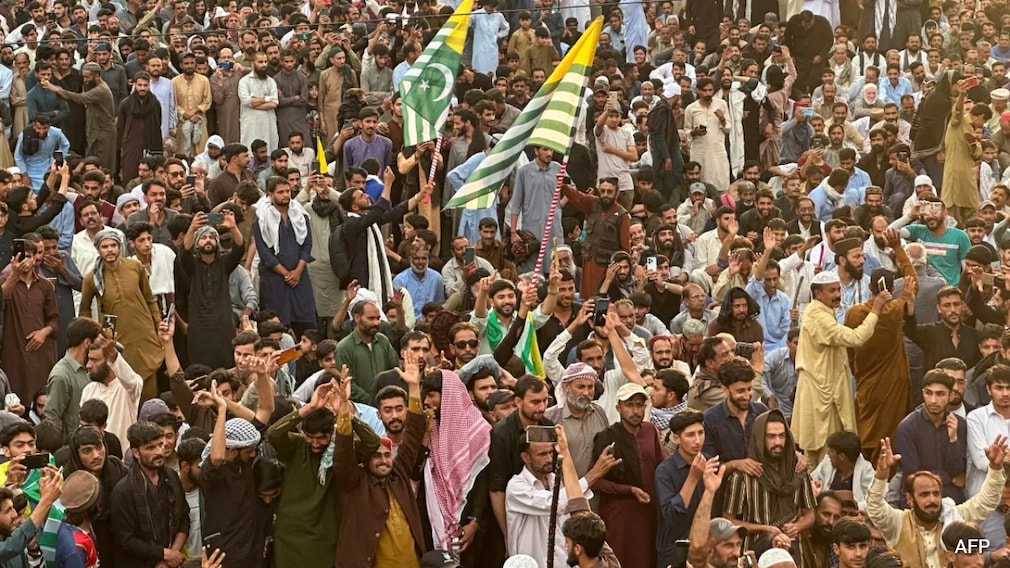
As Delhi and much of north India exploded into a frenzy of fireworks for Diwali, an entirely different type of firing was going on just across the border. Reports showed visuals of houses burnt to the ground in Rawalkot, as security forces fired upon protesters, even as crowds came out in protest as bodies of those killed were brought out. Anger against the military has grown, and rather unusually, even against the United States; protesters condemned Washington for blindly supporting the Pakistani army. It is all rather boiling up unexpectedly, marking yet another periphery of chaos. This is troublesome even for India. It could so easily spill over in unexpected ways.
The seriousness of the situation was underlined when former "Prime Minister" of the ironically named "Azad Kashmir', Raja Muhammad Farooq Haider Khan, called for immediate intervention by the authorities to prevent further bloodshed amid reports of fresh violence. Considering he is a prominent leader of the ruling Pakistan Muslim League (Nawaz), one would assume that people listened to him.
A clutch of political leaders met with the 'President' Dr Najeeb Naqi, heir to a solid political legacy, with solid army backgrounds, and from the Sudhonoti area of the state, which is the core area of unrest. With strong connections to Punjab through his marriage into a prominent Gujranwala political family, he has served several times as an MNA and federal minister. In other words, he is from the elite, with his sons educated in the UK. Incidentally, the UK motif remains very strong in this entire area, given the prominence of Poonch families in that country. And it is this 'son of the soil' who is expected to deal with the unrest in his hometown where the proud and martial race of the Sudhan tribe live. But then, that is why he was chosen as President.
The Whys And Wherefores
The reasons for the clashes are not new, and they follow serious friction in August that was put down brutally by an irate Rawalpindi. That was led by the entirely non-political and civil rights movement of the Joint Awami Action Committee (JAAC) rights group. The backbone of the JAAC leadership are activists, lawyers or those from local merchant associations. For example, Chairman Shaukat Nawaz Mir spent decades as a prominent trade union leader, serving as the head of the Central Anjuman Tajran Muzaffarabad (the central traders' association). Similarly, Sardar Umar Nazir Kashmiri has strong roots in the local business community and trade unionism in Rawalakot. Others are full-time grassroots organisers, human rights defenders, and environmental activists who originally mobilised communities around public utility costs, resource exploitation, and student rights.
The spark for the unrest this year was high electricity bills - that too when much of the area had no power at all in the height of winter. The region with its massive water resources generates roughly 3,000 megawatts of cheap, clean hydroelectric power through major installations like the Mangla Dam, providing a significant portion of Pakistan's total power. Then there was the severe inflation, particularly in terms of flour prices; but what probably brought multiple groups into an alliance, was a strong resentment toward government spending and the "elite culture". That meant mostly Pakistani bureaucracy sprinkled with a bunch of local elites with their luxury official vehicles, pensions, and free utility perks.
Raging Fires
While the government predictably banned the JAAC and jailed most of its leaders, the unrest did not die down for the simple reasons that the violence that killed more than a dozen worsened tensions, an end result which for some reason the Pakistan army refuses to recognise. The whole situation ended up in an 'occupy' mode, with protesters taking over the bus terminal, an important node for a town with poor public infrastructure to begin with. Meanwhile, as tensions spiralled, the government, on the orders of the President, directed all weapon licence holders residing in the region to register their licences at the nearest police stations within 10 days, warning that unregistered licences would be treated as cancelled. Clearly, trigger-happy security forces - not the local police - did not enjoy being fired back at. As of the time of writing, security forces managed to clear the five month old 'occupation' but at considerable cost to themselves and others, in terms of an unknown number of casualties on both sides.
Odd Celebrations
Meanwhile, reporting from Pakistan is virtually unavailable, though it is highly likely that the protests have spread into Muzaffarabad, Kotli and other districts as it did last time, despite the lack of homogeneity on ethnic lines or even geographic connectivity. In simple words, it is the commonality of issues that is forcing the protest, not the usual spread that is seen in troubled areas. Irony of ironies, the Pakistan government is busy 'celebrating' the oddly called 'Jammu Martyrs Day', paying tribute to a reported 2,50,000 Muslims, who, according to unnamed documents, lost their lives in Jammu and its adjoining areas in 1947 while seeking to migrate to Pakistan.
Pakistani urban legend attributes this massacre to the then Maharaja Hari Singh's forces, but more mischievously to a host of Hindu and Sikh groups, including the RSS (Rashtriya Swayemsevak Sangh). None of this has the slightest relation to the popular unrest there, which is apolitical and based on genuine grievances, yet such efforts persist with multiple 'celebrations' - like Kashmir Day - all of which is aimed at cementing the divide between PoK and Kashmir. In other words, there is no intention on the ground in Rawalpindi, of ever allowing a sympathetic coming together of the two Kashmirs, particularly since Rawalpindi is well aware that India's side is well developed, and now reasonably stable. Any churning of shared ambitions will leave Pakistan smaller, not the other way around. And they know it.
This grim reality remains unacknowledged in the valley. Luminaires such as Farooq Abdullah should pay attention to this dyarchy in policy, instead of talking of 'gratitude' to Pakistan. Neither does any of this mean that the protesting groups want to join up with India. Poonch and Mirpur district in particular have little ethnic affiliation, or sympathy with the Valley. They have nothing much in common either, and each has its geographical segmentation, despite a shared history of sorts under the Kashmir Maharaja. In fact, Defence Minister Khwaja Asif said recently that Poonch is hardly 'Kashmiri', sparking an intense backlash.
Apart from all this, Delhi has a job enough in keeping the Valley safe and stable, without having to deal with the rest of 'Azad' Kashmir. While a certain sympathy is natural to expect in Jammu and Kashmir, there can be little conflation between the two. Ideally, Rawalpindi should free up trade across the Line of Control as the only option for economic stability, but that lies at the heart of the conflict. A peaceful relationship with India could widen up other possibilities such dealing with the dangerous and immediate issue of melting glaciers, and even shared power networks. But all this is clearly beyond the ken of Rawalpindi, whose determined securitisation of anything and everything has shackled its own freedom of movement.
Expect more trouble as military repression pushes the region into more regression. Remember this very same area has twice been the setting for rebellions. In 1947, a rebellion here led finally to the division of Kashmir as mainland Pakistan used the local dissatisfaction to launch 'raiders' to unseat the Maharaja. In 1955, another rebellion took more than a year to bring down. That was almost exactly on the same issues as are agitating people now. History here really repeats itself. But no one, not the Pakistani state or even the international media, seem to be paying much attention. Strange, since Poonch has and always has been a powder keg. Wait for the explosion.
(Tara Kartha is a former Director, National Security Council Secretariat)
Disclaimer: These are the personal opinions of the author
-
Asaduddin Owaisi Seals Chandrashekhar Azad Tie-Up, Chief Minister Face. What It Means For UP

Owaisi had, for months, sought space in the Opposition alliance, even issuing ultimatums to the SP and the Congress. However, his overtures failed to find takers.
-
Jensen Huang Controversy Raises Questions About Celebrity CEOs
A flamboyant CEO can build a great company. But a great company should never have to depend on the CEO being infallible.
-
Opinion | Sonia Gandhi Belongs Here, And She Wants Us To Know That
Sonia Gandhi was easily the most misunderstood person in Indian politics. I believe Belonging is her way of telling us who she really was and is, writes Sanjay Jha.
-
4,500 vs 34,000: NASA Scientist Flags Punjab-Haryana Farm Fires Undercount
Dr Hiren Jethva, an aerosol remote sensing scientist associated with Morgan State University and NASA's Goddard Space Flight Centre, stated that his calculations showed 34,000 farm fires in Punjab and Haryana between October 1 and November 9 this year.
-
Analysis | Politics Of Drugs: BJP Looks To Turn Punjab AAP's Biggest Challenge Into Electoral Gains
The BJP is attempting to turn the drug menace into one of its principal political weapons against the AAP government in Punjab, ahead of the assembly election
-
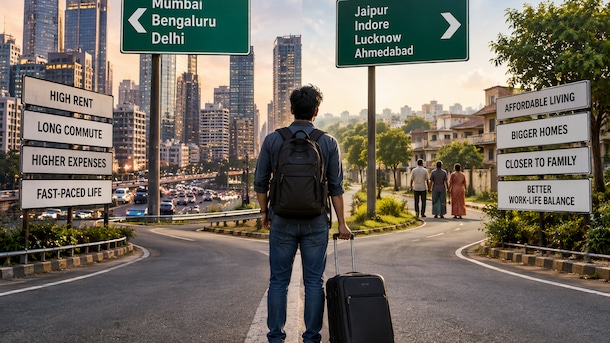
Real Cost Of Moving Out: Low Salary Job In Tier 2 Hometown vs Chasing Big Pay In Metropolitans
The rising cost of urban living is also changing how young couples think about marriage, children and financial independence.
-
Opinion | How Pakistan's Anti-India Obsession Turned Into A $40 Billion Blunder
The country incurred an estimated $40 billion in losses due to trade with India being suspended in 2019, with businesses facing higher sourcing and logistics costs after being forced to import goods from distant markets.