IND vs SA: How The First Test Became A Lesson In Self-Sabotage
The defeat is not an isolated event; it is symptomatic of a worrying trend. This was India's fourth loss in its last eight home Tests, a shocking statistic when measured against our previous dominance - we had only lost four home Tests in the entire twelve-year span from 2012 to 2024.
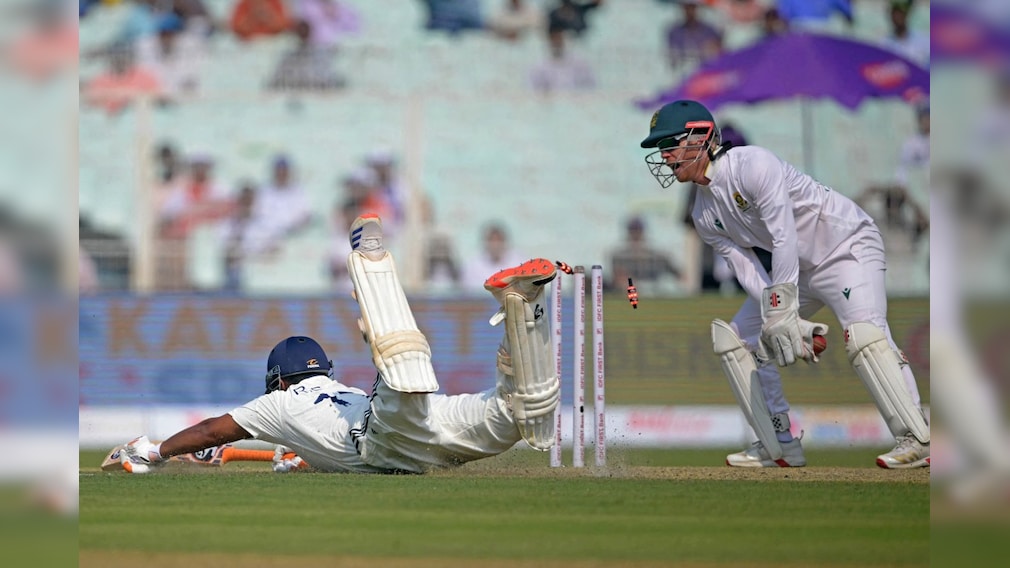
The first Test defeat against South Africa was not merely a loss; it was a profound failure of strategy, execution, and self-awareness. While for the most part of three days it was an exciting contest between two seemingly equally matched sides, the end was more like a collective tactical retreat engineered by the home team itself. India, the undisputed heavyweight champions in their own backyard, were defeated soundly, raising uncomfortable questions about pitch preparation, player selection, and the often-misguided pursuit of home advantage.
The defeat is not an isolated event; it is symptomatic of a worrying trend. This was India's fourth loss in its last eight home Tests, a shocking statistic when measured against our previous dominance - we had only lost four home Tests in the entire twelve-year span from 2012 to 2024. This rapid decay in home invincibility demands a root-cause analysis, and it begins with the surface we chose to play on.
A Masterplan That Backfired
Head coach Gautam Gambhir highlighted the irony: this was precisely the kind of pitch the team management had reportedly requested. The wicket, characterised by inconsistent bounce and aggressive early wear, was intended to be a slow, turning track that would make the opposition's seamers irrelevant on day one and take the toss out of the equation. It was also meant to help India's spinners, whether they were bowling on day one or two. Instead, it delivered a treacherous paradox.
What India got was a surface that crumbled too quickly, offering assistance to the bowlers far sooner and far more unpredictably than any slow-turning track ever would. This volatile surface transformed ordinary seamers into temporary tigers and competent spinners into world-beaters, neutralising the Indian spinners' skills in taking wickets even in unhelpful conditions. The South African quicks found their natural aggression amplified by the random deviations of the ball. The odd one that kept low, or the one that bounced sharply off a crack, introduced enough doubt into the minds of the Indian batsmen to render even technically correct defence meaningless. This unexpected boost to the opposition's pace department was the first major strategic failure.
The Spin Miscalculation
The second failure was the pitch's neutering effect on India's spin attack. A good turning track allows spinners to build pressure and extract subtle assistance over time. This wicket, however, deteriorated too fast, sharply eroding the difference in quality between the two sides' bowling attacks. The very weapon India sought to deploy - spin - was undermined by the extreme nature of the conditions they themselves curated. By trying to achieve maximum advantage, India achieved maximum counter-productivity.
The defeat is made more galling by the statistical reality: on paper, the Indian batting unit is unequivocally superior to the South African line-up. Yet, South Africa managed to compile a third-innings score that, in those conditions, felt like a towering mountain, while India, playing the fourth innings, struggled to cross the foothills. This clearly indicates that we allowed them to score more runs on the third day than the conditions warranted, pointing directly to tactical errors, bowling indiscipline, and debatable selection decisions.
South Africa Merely Capitalised On Our Weakness
The tactical plan seemed oddly conservative. When the wicket was at its most challenging for the batsmen, on day one, the Indian quicks failed to maintain a ruthless, attacking line. The pressure was released far too often, allowing the South African openers to settle and put on 57 with ease. Similarly, resuming on the third morning just 63 ahead, South Africa's Bavuma and Bosch were able to put on 44 vital runs for the 8th wicket, which in the end made all the difference.
This lack of relentless pressure was compounded by poor execution and, critically, by the curious case of Washington Sundar. Sundar was picked in the XI presumably for his potential to exploit the expected turning conditions, having famously claimed a seven-wicket haul in similar circumstances against New Zealand just last year. Yet, he was deployed for just one solitary over across the entire Test match. This non-usage suggests a complete disconnect between the selection committee's expectation for the pitch (a turner) and the captain's reading of the conditions. Why pick a specialist spinner only to render him a bowling passenger? That Sundar was India's most dogged batsman in both innings does not negate the question.
Focus On The Fielding
Furthermore, India's fielding - the often-overlooked third pillar of the game - was subpar. Dropped chances and fumbling opportunities collectively gave the South African batsmen second and third lives, transforming manageable partnerships into match-defining totals. For a team that prides itself on professionalism, the collective lapse in basic standards was both disappointing and costly.
Perhaps the most baffling element of the entire fiasco is the fundamental strategic decision: why ask for a rank turning wicket at all, especially when your batsmen proved their mettle on challenging seam-friendly surfaces just this past summer in England?
Questions About Selection
The current Test squad reflects a significant, and perhaps concerning, shift in personnel. The team selection, featuring a starting XI with an average age of just 26 and only KL Rahul possessing the tenure of a veteran Test batsman, lacks the old-school, single-minded defensive grit of a Cheteshwar Pujara or the unshakeable technique of a prime-era Virat Kohli to simply overcome and nullify these extreme home conditions.
This issue is compounded by the rise of white-ball cricket, which privileges six-hitting over graft. We are witnessing a systemic shift where red-ball teams are increasingly picked based on IPL performance - a format rewarding aggression and risk - rather than Ranji Trophy scores that demonstrate staying power and the capacity for grinding out runs in difficult four-day conditions. This is the T20 hangover that has given the selectors a headache.
A Fear-Driven Strategy
The modern Indian batting template is built on strokeplay, aggression, and rotating the strike with risky singles, not on grinding out 100 balls for 25 runs on a dust bowl. When the conditions are so treacherous that stroke play is impossible and simple survival is the only goal, the team's relatively less-tested defensive mindset is exposed. They are players wired for acceleration, not for abstinence. This was made evident when Axar Patel, having hit two sixes and a four already off Maharaj, tried another lofted stroke unsuccessfully, an error that ended India's chances in the match.
By demanding a wicket that turns sharply from day one, the team management effectively shot their own batsmen in the foot. They created a scenario where the opposition's pace bowlers could extract maximum damage while simultaneously undermining the home team's preferred strategy of spin domination. It was a strategy based on fear - the fear of a strong South African pace attack on a fair wicket - rather than confidence in India's own superior quality.
This defeat must serve as a harsh lesson. India needs to return to trusting its players' abilities on fair, sporting wickets. Home advantage should come from superior skill and tactical nous, not from engineering conditions so extreme that they become a roll of the dice for both teams. When a team loses by playing a strategic hand against itself, it's time for the architects of that strategy to look inward, not outward. The true test of India's Test supremacy is not just winning at home, but understanding how to win without resorting to self-sabotage - and how to foster a generation of Test batsmen who value grit as highly as glory.
(Shashi Tharoor has been a Member of Parliament from Thiruvananthapuram, Kerala, since 2009. He is an author and a former diplomat)
Disclaimer: These are the personal opinions of the author
-
Opinion | As UN Interviews Its Next Chief, The Interviewers Have Some Explaining To Do

On the panel sit governments whose wars, vetoes, and unpaid dues have helped make the organisation ineffective.
-
Opinion | Trump-Xi Meet: What China Can Give America, And What India Could Lose
If Trump can secure some of what he wants directly from Beijing, India's immediate value to Washington could change in particular areas.
-
A New 'Axis'? 87 Years After Pact Of Steel, A New European Far-Right Tie-Up
Nearly nine decades after Nazi Germany and Fascist Italy formalised their alliance, senior figures from Germany and Italy's far-right appeared together at a political rally on Sunday.
-
Opinion | 'Blackmail' Diplomacy: Why India Can't Be A Pawn In US' War On Russia
The new sanctions bill is both blackmail and hypocritical: blackmail because it seeks to change India's principled stand, and hypocritical because the US has provided exemptions to others, and itself.
-
Blog | Katrina Kaif, And The Very Indian Problem Of Too Much 'Audacity'
The remarkable thing about many Indian trolls is not that they have opinions, but that they expect - get this, Katrina Kaif, no less - to care about them.
-
Mamata Banerjee Drew Her Party's Symbol By Hand. It's Now Tied To An Indira Gandhi Case
The Election Commission's method for settling such disputes became central in the seminal Congress split of 1969, when Indira Gandhi fought the old guard. The poll body weighed three tests then.
-
Bruised, Limping, Unbowed: Sia Says She Will Be Back On The Bike Soon
There was pain in Sia's steps, anger in her words, and something else - a quiet determination that the road would not be taken away from her.
-
Exclusive: 16 Months After Op Sindoor, Pak Still Fixing Runway India Broke At Sargodha
Sargodha's PAF Base Mushaf lies about 172 km northwest of Lahore and roughly 200 km west of the India-Pakistan border, near Amritsar.
-
Blog | I Lost My Entire Family In Kanishka Bombing. 41 Years Later, Canada Wants The Case Closed
We made the trek through tragedy to search for people in Cork, where I spent 25 days sifting through bodies and body parts in a makeshift morgue to identify our loved ones.
-
Opinion | Pak's Drone Deal With A US Firm Is No Windfall. But India Must Still Be Worried
American military aid to Pakistan has remained suspended since January 2018, during Trump's first term, but a commercial arms sale is separate from this arrangement.