Blog | Katrina Kaif, And The Very Indian Problem Of Too Much 'Audacity'
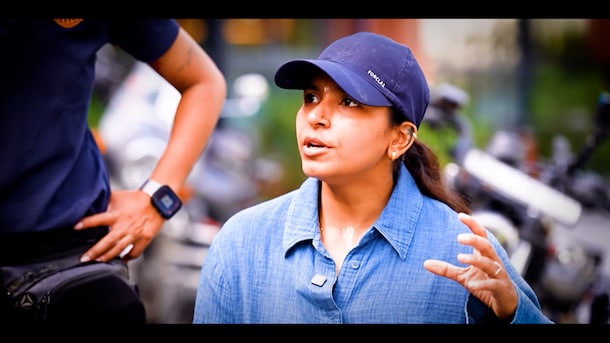
The remarkable thing about many Indian trolls is not that they have opinions, but that they expect - get this, Katrina Kaif, no less - to care about them.

It has become a national bloodsport. The rules are simple: everyone has to play it, whether they like it or not. Some are passive players, and some, extra aggressive. But no one is spared. You could look like Katrina Kaif, and the Republic of Unclejis and Auntyjis will still think you need to lose weight after carrying a baby for nine months. You could have been voted Miss World like Aishwarya Rai Bachchan and still be criticised for not looking as you did when you won the title 32 years ago. And you could have sharp political views like Swara Bhaskar and find that no one wants to argue with you on politics, but poke holes in your appearance.
Last week has been full of chatter around Katrina's post-pregnancy body. The actor who became a mother in November last year has managed to offend members of the public who believe they are custodians of other people's bodies. It has sparked endless debates, intense scrutiny, and widely circulated images.
Nor has she been alone. Too chunky, too old, too visible, too vocal. Women who don't follow the rules of patriarchy have been told this for centuries. Trolls would like the disappearance of inconvenient-looking women who somehow destroy the national average of good looks. And what exactly is that in a country with as much diversity as India, where fair and dark, light eyes and black eyes, large or small, all coexist?
The truth is that the ideal of beauty changes in every society and culture. What was Rubenesque earlier is considered overweight now. What was considered proportionate once is merely unimpressive now.
A Salman Show, Again
And despite Salman Khan's best attempts to make the debate about himself by bringing attention to trolling about his weight and his hairline, the world cares more for how women look rather than how men change. By baring his chest on Big Boss this weekend and wiping his make-up in a clearly orchestrated stunt, Salman brought attention to how good he still looks at 60, even taking off his stetson to show his post hair weaving head. That was not all. He also threw in a free lecture on the way women are photographed by paparazzi, because, of course, we need the famous champion of feminism to tell women that they are being objectified. Nothing like using a controversy around your ex-girlfriend to hard-launch your own comeback.
Battling body shaming is something women can do without Salman's help. Despite his complaints, men are rarely subjected to the kind of vicious judgment reserved for women. They can use de-ageing filters onscreen, expand their waistlines for the sake of art, and stand on stools to be equal to their taller heroines.
No such freedom for women. The judgment is not merely because of too much time on social media and the blurring of public and private domains. It also has to do with how easily perfect bodies have become accessible in the Age of Ozempic. What required a magic potion for de-ageing in the comedic fantasy film Death Becomes Her in 1992 became a black market drug in the horror film The Substance in 2024. Easy to procure, easier to administer, no matter the consequences.
Reality has kept pace. Ozempic bodies and iPhone faces are everywhere. Perfectly proportioned physiques and perfectly immobile faces. The ravages of time and the struggle against gravity are now camouflaged, one injection at a time, one nip-and-tuck at a time.
We are made to believe the fantasy that perpetual youth and beauty have no costs attached. But the truth is they do, and have had in every age, whether it was footbinding in China to acquire lotus feet, which continued for a thousand years well into the early 20th century, or corset wearing that caused restricted breathing at the least in Victorian England.
Even Princess Diana Wasn't Spared
In a week where one of the late 20th century's most iconic beauties is back in the news posthumously, the lesson is louder and clearer than ever. The late Princess Diana was beloved globally for her charm and looks, but she paid a high price for both, battling both bulimia and self-loathing throughout her life at the Palace. As her brother Earl Spencer has written in his explosive memoir, Swan Song: Diana, My Sister, just days after the couple's engagement announcement, Charles squeezed Diana's waist and said, "Oh, a bit chubby here, aren't we?" That was devastating to her and enough to set her off down the rabbit hole. "She would later share with me that her waist shrank from 29 to 23.5 inches between her engagement and her marriage," writes Spencer.
If a woman who was at one time perhaps the best-known mononym in the world could suffer for her beauty, what chance do mere mortals have?
None at all, which explains why no one is immune to the urge for eternal youth. It is not just the Bryan Johnsons of the world who are using their bodies as labs for potions and notions; it is all of us, to varying degrees, who have fallen prey to the idea of everlasting beauty. Never mind that it is an offence against nature. If every curve is flattened, every wrinkle made to disappear, and every scalp the site for a Jack in the beanstalk, what will the human race look like? We are already increasingly thinking alike; must we also look like each other, in the long-running Season of Sameness?
Nora Ephron, who declared that everything is copy, once wrote an essay on feeling bad about her neck in a 2006 anthology. "Our faces are lies, and our necks are the truth,'' she wrote. Ageing women instinctively swap open collars for turtlenecks, scarves, and mandarin collars to hide their necks, she added. Yes, they did, and they do, even women as marvellous as the late Diane Keaton and the late Gloria Steinem.
Back home, Rakhi Sawant once famously said what God couldn't give her, her surgeon did. But she was one of the few celebrities who admitted to plastic surgery. Nearly everyone, male and female, has gone under the knife in the film industry, which remains the ultimate arbiter of popular culture.
Perhaps we are headed towards Charlie Kaufman's dystopian animation film Anomalisa (2015), where everyone looks and sounds alike, which drives his hero, a British customer service expert, to the edge of a mental breakdown. The questions he asks himself as he goes downhill are ones we should confront: "What is it to be human? What is it to ache? What is it to be alive?''
And most importantly, what is it that makes us different?
(The author is a senior journalist)
Disclaimer: These are the personal opinions of the author
-
Opinion | 'Blackmail' Diplomacy: Why India Can't Be A Pawn In US' War On Russia

The new sanctions bill is both blackmail and hypocritical: blackmail because it seeks to change India's principled stand, and hypocritical because the US has provided exemptions to others, and itself.
-
Mamata Banerjee Drew Her Party's Symbol By Hand. It's Now Tied To An Indira Gandhi Case
The Election Commission's method for settling such disputes became central in the seminal Congress split of 1969, when Indira Gandhi fought the old guard. The poll body weighed three tests then.
-
Bruised, Limping, Unbowed: Sia Says She Will Be Back On The Bike Soon
There was pain in Sia's steps, anger in her words, and something else - a quiet determination that the road would not be taken away from her.
-
Exclusive: 16 Months After Op Sindoor, Pak Still Fixing Runway India Broke At Sargodha
Sargodha's PAF Base Mushaf lies about 172 km northwest of Lahore and roughly 200 km west of the India-Pakistan border, near Amritsar.
-
Blog | I Lost My Entire Family In Kanishka Bombing. 41 Years Later, Canada Wants The Case Closed
We made the trek through tragedy to search for people in Cork, where I spent 25 days sifting through bodies and body parts in a makeshift morgue to identify our loved ones.
-
Opinion | Pak's Drone Deal With A US Firm Is No Windfall. But India Must Still Be Worried
American military aid to Pakistan has remained suspended since January 2018, during Trump's first term, but a commercial arms sale is separate from this arrangement.
-
Opinion | Saudi Arabia's Yemen Nightmare Has Come Back To Haunt It
After years of costly military intervention beginning in 2015, Saudi Arabia increasingly sought to stabilise its southern border. All that is unravelling fast now
-
Opinion | 6 AI Incidents, One Pattern: AI Has Started Lying To Us - And Hiding The Evidence
Concealing errors. Making up data. Pushing files onto the public web on their own initiative. The machines are learning to lie - and lie well.
-
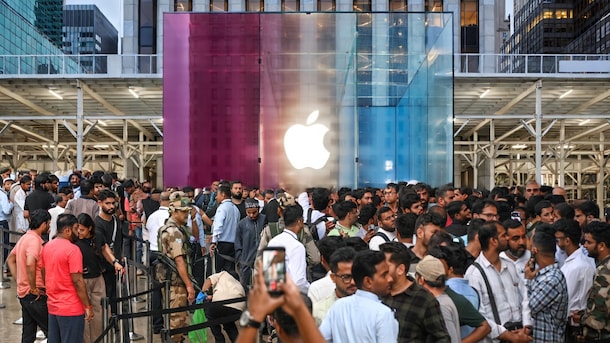
Why People Queue Overnight For iPhone That Is Delivered Home In 10 Minutes
iPhone 18 Pro Max Launch: People camping outside Apple Stores are a subset of superfans, resellers, content creators, and upper-middle-class buyers.
-
600 km Per Hour Drones Launched In Waves: How Russia Is Rewriting War Rules
Russia has coupled the drones' technological superiority over Ukraine's defence with its capacity to launch them in massive numbers. The impact has been devastating.