Opinion | Saudi Arabia Has Money, Missiles, And America. Why Is It Still So Scared?
What the NATO-like pact essentially points to, under its modest packaging of 'Islamic brotherhood', are growing fears of the Saudi Kingdom.
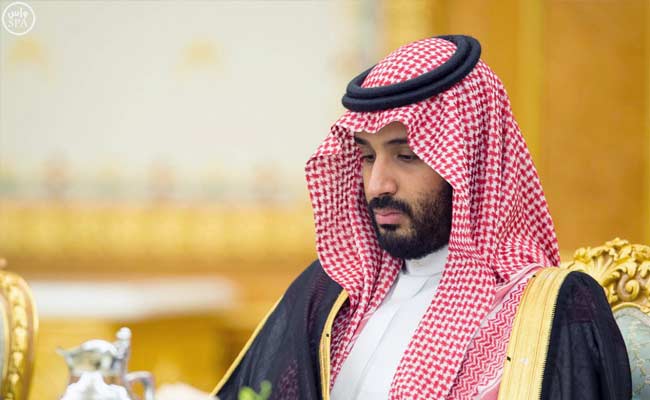
It has finally happened. After months of meetings, news conferences, bold statements, and speculation, Saudi Arabia, Turkey, and Pakistan signed a joint defence agreement in Mecca last week. Turkish President Recep Tayyip Erdogan, Saudi Crown Prince Mohammed bin Salman, and Pakistani Prime Minister Shehbaz Sharif signed the deal, an alliance many had been likening to an "Islamic NATO", though the term hasn't been formalised.
The key provision in this pact is that an attack on any one of the signatories will be regarded as an attack on all. "The agreement is intended to strengthen collective deterrence against any act of aggression, and stipulates that any armed attack against any one of the three states shall be regarded as an attack against them all. It further provides for the enhancement of "all aspects of defence cooperation among the three states", the joint statement said.
Unsurprisingly, the agreement comes against the backdrop of the Iran conflict, where Saudi Arabia has been one of the worst-hit nations. Turkey, a NATO member already that has the bloc's second-largest standing army, has said that this new agreement does not clash with its commitments to NATO. In a post on X, the Turkish government's anti-disinformation service said, "The agreement is not in contradiction with the commitments of Turkey's existing international alliances, including those at the heart of NATO." In fact, Turkey had probably been waiting for a green signal from the US, which is why it did not sign the agreement before the NATO summit it convened in July.
Why The Bloc Works
By itself, the bloc is a formidable one, with enormous potential. Saudi Arabia is an energy and economic powerhouse, which can bankroll military innovation and R&D. Turkey has a highly developed military industrial complex, given its proximity to NATO'S cutting-edge technology. It has made a name for itself in the drone industry and is an emerging defence exporter, accounting for 1.6% of global arms exports. Pakistan is the only nuclear-armed Muslim country in the world with a battle-hardened army and an impressive military arsenal. Both Pakistan and Turkey have close defence cooperation; in 2023, Saudi Arabia had made one of Turkey's largest drone purchases. All three countries lie on major shipping and trade routes, controlling ports, shipping, and maritime trade. Pakistan and Turkey also stand to benefit handsomely through defence cooperation and arms sales.
But the genesis of the pact goes back almost a year, when in September 2025, Saudi Arabia and its long-time client state, Pakistan, signed a Strategic Mutual Defence Agreement. That had come in the aftermath of Israel's unprecedented attack on Qatar, a close, non-NATO American ally, which also hosts the largest US Central Command base in the region. The pact had been a signal to not just Israel, but also to longtime rival Iran. Building on the Saudi-Pakistan pact, the security partnership has now extended to include Turkey - another major Sunni but non-Arab power in the region, and one that had earlier directly challenged the Saudi leadership.
The Saudi-Turkish Rivalry
The Saudi-Turkish rivalry ran deep, especially over the support given to the Muslim Brotherhood and its allies by the current Turkish administration under Erdogan. In 2014, the Saudis had banned the Muslim Brotherhood, viewing it as a direct challenge to their hereditary rule. This was the same challenge that the Islamic Revolution in Iran had brought, and which the Arab Spring had exacerbated. The Turks and the Saudis have engaged in proxy warfare in places like Libya and Syria. They had also snapped ties with Qatar once for the same reason. Matters came to a head over the murder of Saudi dissident and journalist Jamal Khasshogji in Istanbul, allegedly by the Saudis. In 2019, Turkey, together with Pakistan and Malaysia, had directly challenged Saudi Arabia's leadership of the Muslim world by trying to float an alternative platform to the Saudi-led Organization of Islamic Cooperation (OIC). Therefore, while Pakistan has had a history of defence cooperation with the Saudis for years now, with Turkey, it is a very nascent one.
Therefore, what the pact essentially underscores under its packaging of Islamic brotherhood - signed as it was on Friday, the Muslim sabbath in Mecca - is deep Saudi vulnerability.
In the ensuing US-Israel war on Iran, the Saudis have found themselves vulnerable in spite of the intricate and expensive layer of US security deterrence they had invested in for years. They have been targeted by both Iran and Iraqi militias loyal to Iran. Saudi Arabia's stockpile of Patriot interceptor missiles has been reduced by 86% since the start of the war, according to reports. The Kingdom's economic lifeline has been disrupted by the closure of the Strait of Hormuz. More recently, the Iran-backed Houthis, with whom the Saudis had entered a ceasefire in 2022 after a brutal intervention, started attacks on them, besides throttling the other chokepoint on the Bab al-Mandab and the Red Sea, the only other critical waterway open to Saudi Arabia to ship energy exports to its main Asian markets. Just days ago, the Houthis wounded 11 civilians in the south of the Kingdom.
Where The 'Islamic NATO' Is Headed
As Iran pummeled US bases and critical infrastructure in Gulf countries, Pakistan deployed around 13,000 troops in the Kingdom together with a squadron of JF-17 fighter jets, drone units, and Chinese-made HQ-9 air defence systems in Saudi Arabia. Even so, it did not engage in any combat against Iran, and rather attempted mediation. Neither was any Saudi involvement seen in the border conflict that has been raging between Pakistan and Afghanistan since last October. This may set the compass for where the now-expanded defence bloc may be headed.
Indeed, as the text itself says, the "agreement is intended to strengthen collective deterrence against any act of aggression". It is, therefore, a signal to first and foremost Iran, whose Houthi- and Iraqi-backed militias now constitute the greatest threat to the Kingdom. It is also a signal to Israel, which has increasingly come to see its one-time partner, Turkey, as its greatest security challenge in the region, as well as to countries like Qatar and the UAE, with whom the Saudis have strained relations under a friendly facade.
The inclusion of Muslim heavyweights like Pakistan and Turkey also means that any threat to Saudi leadership of the Muslim world can be neutralised Muslim Brotherhood activities in the region can be kept in check.
The war has already derailed the ambitious Neom project of Crown Prince Mohammed bin Salman's Vision 2030. The war has shaken investor confidence, and security and economic expediency have caused many projects to be put on hold. The Saudis need stability and security for the implementation of these projects, part of which is also meant to help them transition to a post-oil economy. And this is imperative for domestic security, as of all the Gulf monarchies, it is Saudi Arabia that is most vulnerable to a Gen Z uprising. This pact is, therefore, meant to be yet another hedge for the ruling House of Saud.
(The author is a senior journalist)
Disclaimer: These are the personal opinions of the author
-
Opinion | The Last Bet? What Trump's 'Mother Of All Bombs' Could Actually Do To Iran

Can an MOAB deliver a decisive blow to Iran that may force it to surrender immediately, as Japan did after Hiroshima and Nagasaki in World War 2?
-
Hit Songs, Empty Pockets: The Hidden Math Behind India's Viral Music Boom
Over 80,000 brands and five lakh creators in India make branded content. The opportunity is worth around Rs 1,500 crore.
-
Opinion | Great 'Exceptions': How The Oil India Was Attacked For Is The Oil Trump Now Seeks
A law written to punish the buyers of Russian oil was suspended by the US to protect a purchase of Russian oil. India spent fourteen months being lectured for less.
-
Opinion | Louis Vuitton Loot, Torched Cars: France Protests Have An Unlikely Beneficiary
It's an unbelievable moment. Crowds looting the most exclusive stores in Paris, including the famed Luis Vuitton. But what's behind this meltdown?
-
Blog: Kolkata Didn't Learn From 2015. Eleven Years Later, It Proved To Be Fatal
The City of Joy isn't a stranger to crowd control. Be it during Pujo or Christmas at Park Street, Eden Gardens cricket matches, or Derbies between Mohun Bagan and East Bengal. But during Pujo, the entire city is on alert.
-
Opinion | Slurs, Threats, Now A Temple Attack Plot: When Did America Become So Hostile To Indians?
The rising tide of anti-India, anti-Hindu, and racist attacks serves as a stark reminder that economic prosperity does not automatically guarantee social immunity from bigotry.
-
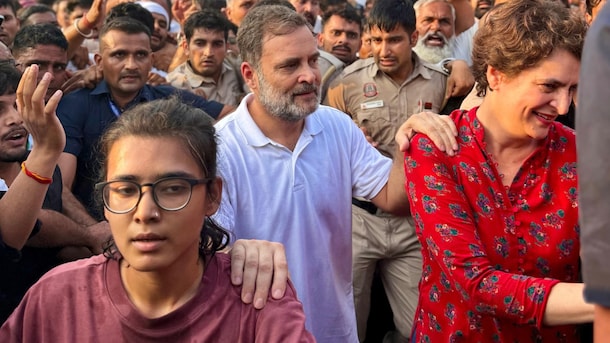
A Step Behind Neha Bora: What Rahul Gandhi's Gesture Says About Congress' Gen-Z Pitch
At INDIA bloc's march to Supreme Court, Rahul Gandhi placed himself a step behind two women, hands resting on their shoulders. One was his sister Priyanka. The one on his right was Neha Bora. Here's what the image means for the protest wave now, and for Rahul's politics in general.
-
Opinion | Imran Khan, And The Perils Of Having An 'Opinion' In Bollywood
The reality of the industry is quite grimy. More often than not, its inhabitants have been fairweather friends, happy to sing the praises of whoever is in a position of authority.
-
Exclusive: India's Food Safety Problem Goes Beyond Just Dirty Kitchens - By Tukaram Mundhe
On World Food Day, Maharashtra's Commissioner of Food Safety explains why instead of taking stopgap measures, the entire supply chain in India needs to be held accountable and made transparent.
-
Opinion | India Has Enough Coal. So Why Are Power Plants Running Short? A 76 Million 'Crunch'
As of October 5, as many as 82 of the 191 thermal plants monitored by the Central Electricity Authority were in the 'critical' category