Opinion | Trump-Xi Meet: What China Can Give America, And What India Could Lose
If Trump can secure some of what he wants directly from Beijing, India's immediate value to Washington could change in particular areas.
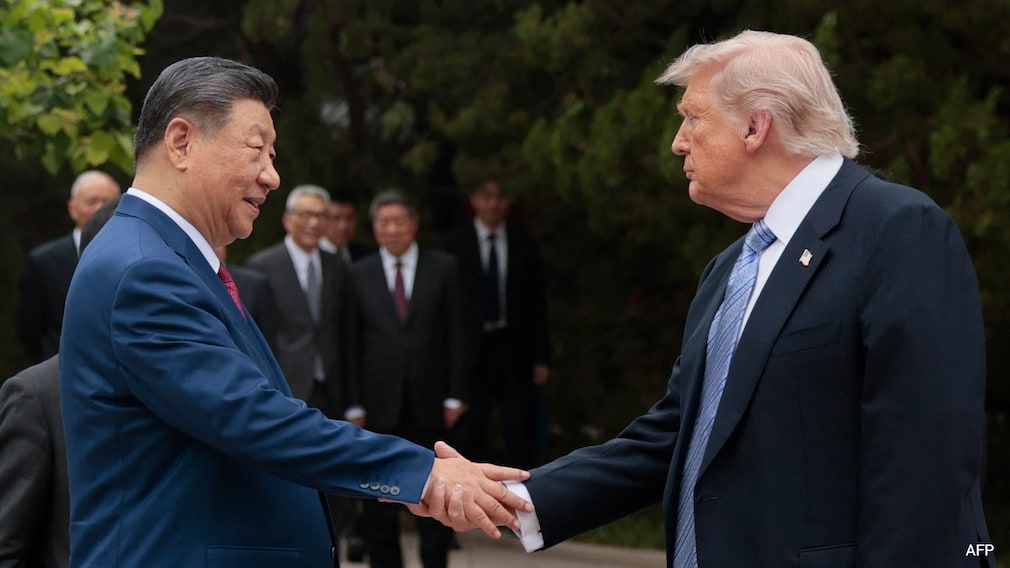
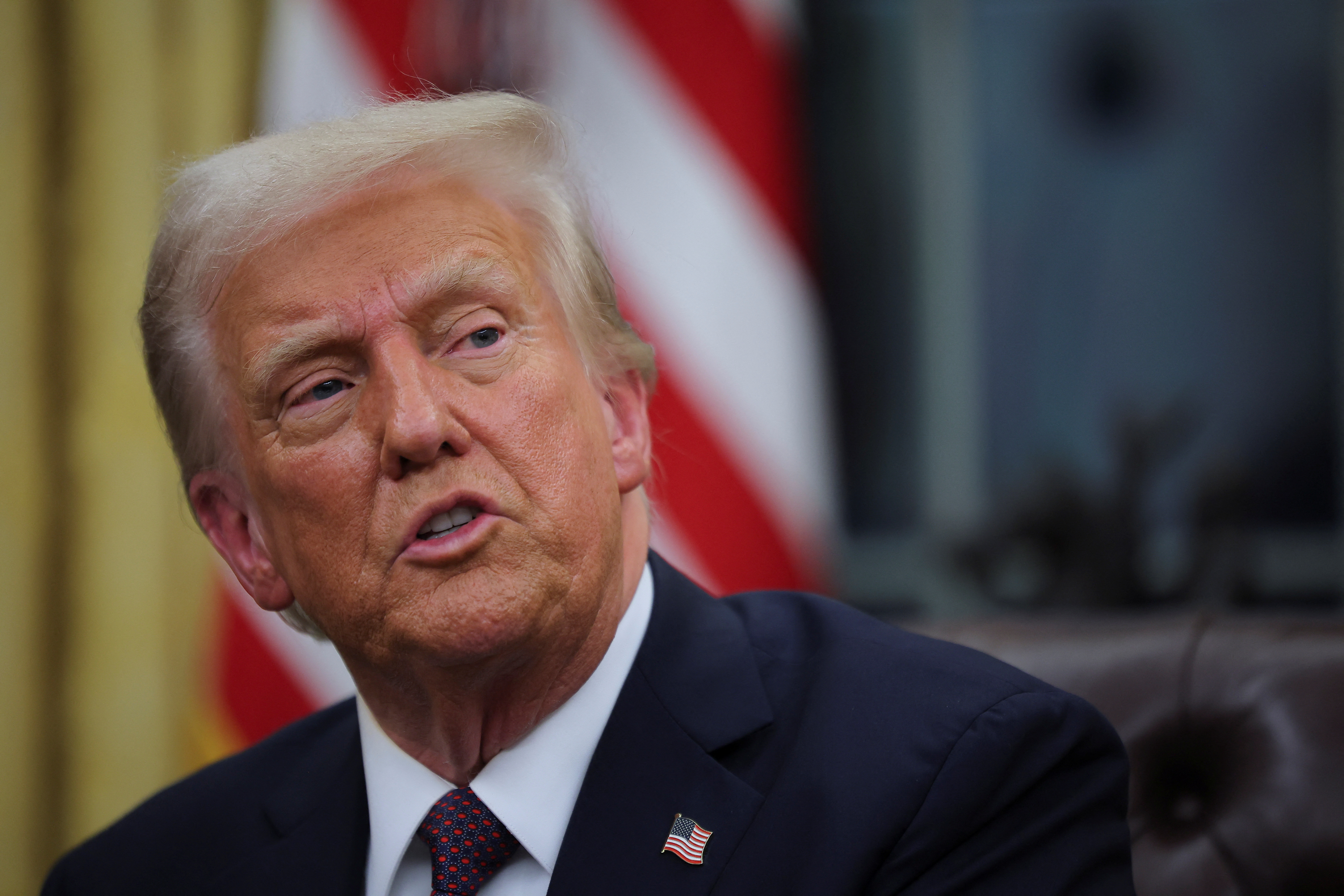
When Donald Trump meets Xi Jinping in Washington on September 24, the important questions for India are what Trump wants from China, what Xi is prepared to offer, and how the outcome changes Washington's calculation of what it needs from India. India need not worry about a grand bargain; that is not happening.
The meeting follows months of negotiations over trade, rare earths, technology, and other economic issues. Financial links between China and Iran have also entered the discussions. The United States and China are trying to manage parts of their economic relationship while their strategic competition continues.
For India, this provides a useful test of an assumption that has shaped much of its thinking about Washington. India's importance to the United States has grown partly because of the economic and military challenge posed by China. If Trump can secure some of what he wants directly from Beijing, India's immediate value to Washington could change in particular areas. If negotiations produce little, India's importance could increase. But a frustrated Trump could also respond by increasing pressure on India.
What Washington Wants From Beijing
Trade remains central to the negotiations. Washington wants better access for American goods, greater balance in bilateral trade, and compliance with Chinese commitments. Beijing wants tariff relief and greater certainty for Chinese exporters. The two governments are also discussing mechanisms to manage trade in selected areas under the arrangements established during their May understanding.
Rare earths and other critical minerals have become particularly important. China dominates their processing and has shown it can use export controls as an economic instrument. Washington wants China to honour its commitments and provide greater reliability for American industry. This directly connects to India.
Delhi has been developing its own critical-mineral capabilities and positioning India as part of the diversification of global supply chains. Greater reliability in the US-China mineral trade would not remove the American interest in alternative suppliers. Still, it could reduce the immediate pressure to develop them and alter their economic value. Technology presents a more difficult area. Washington continues to regard China as its principal technological competitor in several fields, particularly advanced semiconductors and artificial intelligence. At the same time, both governments have an interest in managing the risks created by intense technological competition. AI has consequently entered the wider US-China dialogue, although the underlying competition remains substantial.
For India, the issue is access and relevance. India has benefited from expanding US technology partnerships and American efforts to build trusted supply chains outside China. If Washington and Beijing establish mechanisms to manage parts of their technology competition, India will need to show that its technological and industrial capabilities provide value that Washington cannot readily obtain elsewhere.
Enter Iran
Iran adds another dimension to the negotiations. The Trump administration has been using financial sanctions and other measures to constrain Tehran, while China remains an important economic partner for Iran. US Treasury officials have said China's financial links with Iran are part of discussions with Beijing. This matters directly to India. India's interests in Iran extend across energy, connectivity, and the security of the Gulf. Chabahar is an important example, while the security of shipping through the Strait of Hormuz has wider implications for India's economy and energy supplies. If Washington obtains Chinese cooperation on Iran, Beijing becomes useful to the United States on an issue in which India also has significant interests.
Taiwan remains the strategic constraint on any wider agreement. The United States and China continue to have fundamentally different positions on Taiwan. And neither a trade understanding nor cooperation on individual issues changes the fundamental strategic competition.
If Trump Gets What He Wants...
A successful meeting would not end US-China strategic competition. It could, however, give Washington greater predictability in trade, more reliable access to critical minerals, and greater Chinese cooperation on issues such as Iran. It would also let Trump show that direct negotiation and economic pressure can produce results. For India, the consequences would be mixed. Greater stability in the US-China economic relationship could reduce global uncertainty. At the same time, China could become more useful to Washington on specific problems. That could affect the value the US assigns to particular Indian capabilities.
India's importance to Washington will not disappear. Its geography, military capabilities, market, economic potential, and role in the Indo-Pacific remain significant. But the bargaining value of a particular Indian capability depends partly on whether Washington can obtain the same outcome elsewhere. For example, if China becomes a more reliable supplier of critical minerals, India's role in diversifying those supplies becomes less urgent, from Washington's perspective.
If The Talks Produce Little
A limited agreement would preserve much of the current pattern. Washington and Beijing would continue to manage economic tensions while competing over technology, military power, and the future balance of Asia.
For India, this would preserve opportunities in technology, manufacturing, defence, and supply-chain diversification. It would also mean that Washington would continue negotiating directly with Beijing whenever Chinese cooperation could serve an American objective.
India has practised strategic autonomy for decades. It has maintained relationships with the US, Russia, Europe, Japan, Israel, the Gulf, and others, while managing competition with China. Maintaining multiple relationships is thus not a new Indian strategy.
What is changing is the behaviour of the major powers themselves. Washington and Beijing now increasingly separate individual issues from the overall condition of their relationship. They can compete in technology, negotiate over trade, discuss Iran, and maintain military deterrence at the same time. India has operated this way for years. But the major powers now possess much greater economic and strategic capacity to use the same approach.
If Trump Doesn't Get What He Wants
Failing to secure Chinese concessions could increase India's importance to Washington. Continued US-China friction would strengthen American interest in alternative supply chains, technology partnerships, and security relationships in the Indo-Pacific.
But Trump's response to a difficult negotiation may not be straightforward. His approach relies heavily on tariffs, public pressure, and demands for concessions. A failure with Beijing could thus lead Washington to seek additional concessions from other countries.
India has already experienced this tension. The strategic relationship with Washington has continued while disagreements over trade, market access, immigration, and India's relationship with Russia have produced significant friction. Strategic convergence has not eliminated transactional bargaining.
A failure in Washington thus does not automatically mean a more accommodating American policy towards Delhi. Trump could decide that India has become more valuable as China becomes harder to deal with. He could also decide that India's increased strategic importance gives Washington greater reason to demand more from it.
The Test For India
This makes the Trump-Xi meeting particularly important for India. The outcome will indicate how Washington values India after negotiating with its principal strategic competitor.
If Trump secures substantial concessions from Beijing, Washington may have greater room to manage China directly and less immediate need for some Indian capabilities. If he obtains only a limited understanding, the existing pattern of competition and selective cooperation will continue. If the talks fail, China will remain a more immediate strategic problem for Washington, potentially increasing India's value as a partner. Trump's response to the talks' failure would be especially crucial for India. If Trump turns to India for greater cooperation, it would reinforce the proposition that Chinese resistance increases India's importance to Washington. If he responds by demanding greater concessions from India, it would demonstrate that strategic convergence does not necessarily produce policy accommodation under Trump.
For India, the important question is thus not whether Trump and Xi reach an agreement. It is what the outcome tells us about what America will need from India next. India has spent decades building relationships across the major centres of power. The next phase will require ensuring that its economic, technological, and military capabilities give those relationships continuing strategic value.
The Trump-Xi meeting will provide a useful indication of how Trump bargains with a country that has considerable leverage over the United States. How he responds to Chinese cooperation or resistance will also provide clues about how he is likely to approach India.
(The author is a Research Fellow in the Geostrategy Program at the Takshashila Institution)
Disclaimer: These are the personal opinions of the author
-
Opinion | As UN Interviews Its Next Chief, The Interviewers Have Some Explaining To Do

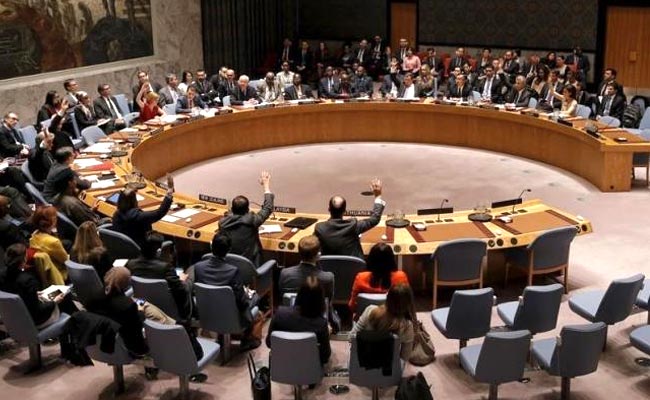
On the panel sit governments whose wars, vetoes, and unpaid dues have helped make the organisation ineffective.
-
A New 'Axis'? 87 Years After Pact Of Steel, A New European Far-Right Tie-Up
Nearly nine decades after Nazi Germany and Fascist Italy formalised their alliance, senior figures from Germany and Italy's far-right appeared together at a political rally on Sunday.
-
Opinion | 'Blackmail' Diplomacy: Why India Can't Be A Pawn In US' War On Russia
The new sanctions bill is both blackmail and hypocritical: blackmail because it seeks to change India's principled stand, and hypocritical because the US has provided exemptions to others, and itself.
-
Blog | Katrina Kaif, And The Very Indian Problem Of Too Much 'Audacity'
The remarkable thing about many Indian trolls is not that they have opinions, but that they expect - get this, Katrina Kaif, no less - to care about them.
-
Mamata Banerjee Drew Her Party's Symbol By Hand. It's Now Tied To An Indira Gandhi Case
The Election Commission's method for settling such disputes became central in the seminal Congress split of 1969, when Indira Gandhi fought the old guard. The poll body weighed three tests then.
-
Bruised, Limping, Unbowed: Sia Says She Will Be Back On The Bike Soon
There was pain in Sia's steps, anger in her words, and something else - a quiet determination that the road would not be taken away from her.
-
Exclusive: 16 Months After Op Sindoor, Pak Still Fixing Runway India Broke At Sargodha
Sargodha's PAF Base Mushaf lies about 172 km northwest of Lahore and roughly 200 km west of the India-Pakistan border, near Amritsar.
-
Blog | I Lost My Entire Family In Kanishka Bombing. 41 Years Later, Canada Wants The Case Closed
We made the trek through tragedy to search for people in Cork, where I spent 25 days sifting through bodies and body parts in a makeshift morgue to identify our loved ones.
-
Opinion | Pak's Drone Deal With A US Firm Is No Windfall. But India Must Still Be Worried
American military aid to Pakistan has remained suspended since January 2018, during Trump's first term, but a commercial arms sale is separate from this arrangement.
-
Opinion | Saudi Arabia's Yemen Nightmare Has Come Back To Haunt It
After years of costly military intervention beginning in 2015, Saudi Arabia increasingly sought to stabilise its southern border. All that is unravelling fast now