Opinion | The 'Munir Doctrine' That Drove Pak's US-Iran Brokering Project
The spate of calls, social media messaging, and diplomatic efforts from Pakistan in recent weeks, especially involving PM Shehbaz Sharif and Field Marshal Asim Munir, raises many questions.
Pakistan's re-emergence as a diplomatic conduit in the ongoing West Asian conflict nudges us to revisit an age-old question: Who really conducts Pakistan's foreign policy? The spate of calls, social media messaging, and diplomatic signals coming from Pakistan in recent weeks, especially involving Pakistan Prime Minister Shehbaz Sharif and Army Chief Field Marshal Asim Munir, offers a window into the country's prevailing civil-military dynamics.
When Yahya Khan Mediated Between US And China
In 1971, former US President Richard Nixon persuaded General Yahya Khan to secretly mediate between China and the US - the channel through which Henry Kissinger met with Mao Zedong. Its architecture was similar to the present circumstances, where a civilian government held the official line, with the military managing the geometry of negotiations. Pakistan's dual-track foreign policy can also be traced to the erstwhile Soviet Union and Afghan war, where the government under Zia-ul-Haq coordinated with the US and Saudi Arabia, and Pakistan's security establishment, the Inter-Services Intelligence (ISI), was covertly arming the Afghan mujahideen.
In the current scenario, Pakistan relayed proposals between Iran and the US, including a 15-point plan from Washington and a 10-point plan from Iran. Tehran has now agreed to a two-week ceasefire with the US, with its National Security Council stating the commencement of talks in Islamabad on April 10.
Twin-Track Diplomacy
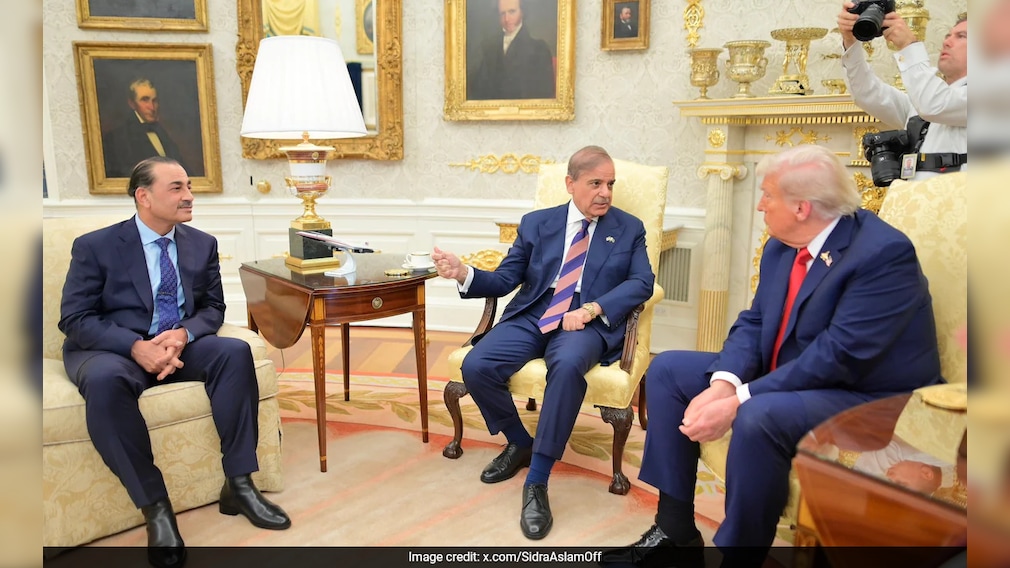
US President Donald Trump and Iran both acknowledged the role of Munir and Sharif in pausing strikes against Iran. Meanwhile, Sharif urged the US to extend its negotiation timeline while pressing Tehran to reopen the Strait of Hormuz. However, the mechanics of this mediation bring to light something more structurally significant. Pakistan's diplomacy continues to unfold through a dual-track civil-military arrangement, with the civilian government conducting public diplomacy while the military manages strategic ties and back-channel communication. Understanding this blueprint requires situating it within its long history of civil-military dynamics.
Pakistan's civil-military dynamics have always been a spectrum of overt military rule or hybrid co-governance. While former army chief Qamar Javed Bajwa only spoke of geoeconomics, Munir's position informs an intent where Pakistan refuses to project itself as a soft state. Since the early decades of the state, the military held influence over strategic decisions, especially in matters of security and strategic policy with major powers. Munir's direct engagements with Gulf monarchies and Washington suggest that the strategic brokering is in the hands of the army. The civilian government essentially inherits, rather than controls, these foreign ties that are established by the military. Even now, Munir's engagement with the White House has reportedly been crucial to transmitting messages and negotiating deadlines in the conflict. To put it simply, Munir manages the backchannel, while Sharif is the face of the front desk.
The Munir Framework
The Munir doctrine can be perceived through three aspects: projecting a softer image of Pakistan, positioning itself as a middle power in the region, while also prioritising geoeconomics. The soft power portrayal of Munir is for foreign projection, while his hard approach is employed for consolidating domestic power. After decades of being associated with links to extremist elements and grey-list sanctions, the military has managed to reposition Pakistan's place in the world as a responsible state capable of effective diplomacy. Pakistan's emergence as a regional middle power is essentially rooted in the country's geography - strategically located between the Indian subcontinent, Central Asia, and West Asia.
Pakistan's future is also positioned in the context of geoeconomics, instead of geopolitics. This includes using diplomatic ties to gain economic opportunities - more recently involving a mineral deal with the US, and a security agreement with Saudi Arabia. The closure of the Strait of Hormuz and associated disruptions to energy flow from the Gulf are also a domestic issue for an economically fragile Pakistan. Rising oil prices could worsen its trade deficit and debt burden, exacerbating domestic pressures for Munir.
Another crucial element is diplomatic acceptability. Unlike other regional actors, Pakistan maintains a relationship with all stakeholders in the conflict: brotherly ties with the Gulf, which is also enshrined in its Constitution, its ethnic and border ties with Iran, and an economic relationship with the US. As such, the intermediary role fits well within this framework. Acting as a diplomatic messenger allows Pakistan to deepen trust within the Trump administration, especially after ties with the US saw a low following the latter's withdrawal from Afghanistan. It further signals to China and the Gulf that Pakistan remains a crucial strategic partner. To be clear, Pakistan's role still fits more as a facilitator between hostile nations that enables communication as a middleman when formal negotiations are untenable.
As the world's second-largest Muslim-populated country and a nuclear-armed Islamic state, or, as Zulfikar Ali Bhutto said, an "Islamic bomb", Pakistan holds symbolic relevance. While this may not translate to influence, it offers credibility.
A Big Day For Pak Military
For the Pakistani military to sustain its dominance, a successful mediation effort also elevates its global standing, thereby contradicting the Indian narrative and global profile. Similarly, the military establishment gains from appearing indispensable to Pakistan's foreign policy, in a way legitimising its position against the civilian government.
Ultimately, while the Islamabad Accord will find its place in the history books, the decisions that will determine the trajectory of the West Asian conflict will be made in Tehran and Washington/Tel Aviv. In that light, Pakistan's ability to influence outcomes remains limited, despite its credibility as a messenger.
As for Pakistan's foreign policy, it will remain inseparable from its civil-military equation, a dual-track system that will shape the country's diplomacy for the foreseeable future. For Munir, in the immediate term, this means providing cover for Pakistan's military campaign in Afghanistan, maintaining an international stature against India's global image, and distracting from former Prime Minister Imran Khan, who continues to be ignored if not forgotten.
The front desk is helpful, but the back room is indispensable.
(Aishwaria Sonavane is a research analyst at the Takshashila Institution)
Disclaimer: These are the personal opinions of the author
-
A Step Behind Neha Bora: What Rahul Gandhi's Gesture Says About Congress' Gen-Z Pitch

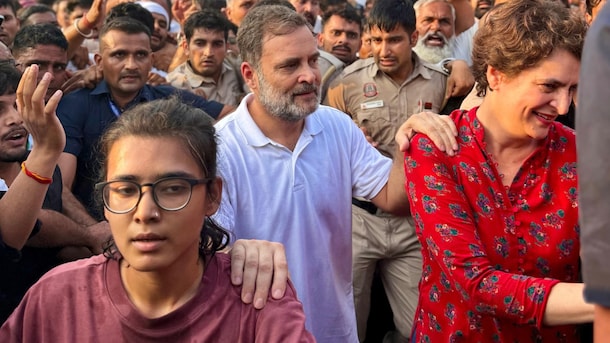
At INDIA bloc's march to Supreme Court, Rahul Gandhi placed himself a step behind two women, hands resting on their shoulders. One was his sister Priyanka. The one on his right was Neha Bora. Here's what the image means for the protest wave now, and for Rahul's politics in general.
-
Opinion | Slurs, Threats, Now A Temple Attack Plot: When Did America Become So Hostile Indians?
The rising tide of anti-India, anti-Hindu, and racist attacks serves as a stark reminder that economic prosperity does not automatically guarantee social immunity from bigotry.
-
Opinion | Imran Khan, And The Perils Of Having An 'Opinion' In Bollywood
The reality of the industry is quite grimy. More often than not, its inhabitants have been fairweather friends, happy to sing the praises of whoever is in a position of authority.
-
Exclusive: India's Food Safety Problem Goes Beyond Just Dirty Kitchens - By Tukaram Mundhe
On World Food Day, Maharashtra's Commissioner of Food Safety explains why instead of taking stopgap measures, the entire supply chain in India needs to be held accountable and made transparent.
-
Opinion | India Has Enough Coal. So Why Are Power Plants Running Short? A 76 Million 'Crunch'
As of October 5, as many as 82 of the 191 thermal plants monitored by the Central Electricity Authority were in the 'critical' category
-
Opinion | Starlink, India, And Why Elon Musk Must Know His Billionaire Tantrums Won't Work
India should neither be intimidated by Musk's global influence nor distracted by his theatrics.
-
Blog | 'Baap Da Brat': Kerala Mini Cooper Crash, And Why 'Daddy' Can't Keep Saving You
There are three things you should never underestimate in India: the power of 'jugaad', the elasticity of the law, and the confidence of a 'Baap da Brat' who believes his Papa Posh can fix absolutely anything.
-
Opinion | 'Say Our Name': Why A Tiny Island Nation Wants The World To Get Its Name Right
Standing before the UN hall of nations, Naoero President David Adeang asked the world to unlearn its comfortable habits and speak a restored truth.
-
TVS Succession Row Explained: Why Venu Srinivasan's Family Is Divided Over Wealth
TVS Family Dispute: TVS Holdings is a key entity because it owns a controlling stake in TVS Motor Company. It owns 50.26% of TVS Motor.
-
Opinion | The US Is Showing India Just How Cheap Its 'Friendship' Is
Can local talent fully replace Indian contribution? Why is the US leading in setting up Global Capability Centres in India - over 60% - and pocketing the IP?