Opinion | We Are Indian. Can We Please Say That In Any Language We Like?
Some people still see English as a marker of privilege. Some see it as a barrier. But when you try to shame people for speaking it, you disregard the aspirations of millions who see English as their best chance to create opportunities.
In the previous column, your columnist shared how greats like Gandhi, Ambedkar, Azad, Savitribai Phule, Vajpayee and others saw the English language as a liberating force. Today, let us continue the conversation, drawing on different voices to emphasise how English remains a vital thread in our national fabric, in spite of what Mr Amit Shah feels.
Maybe Messrs. Modi and Shah might have missed what Dr Syama Prasad Mookerjee - whose 125th birth anniversary was a few days ago - had said in the Constituent Assembly: "You have got some time, fifteen years, within which English will have to be replaced. How is it to be replaced? It will have to be replaced progressively. We will have to decide realistically whether for certain special purposes, English should continued to be used in India. As some of my friends have already stated, we might have rid India of British rule-we had reasons for doing so-but that is no reason why you should get rid of the English language. ...After all, it is on account of that language that we have been able to achieve many things. Apart from the role that English has played in unifying India politically, and thus in our attaining political freedom, it opened to us civilisations from large parts of the world. It opened to us knowledge, especially in the realm of science and technology, which it would have been difficult to achieve otherwise."
The 'Mortar Of Unity'
In the 1960s, there were many attempts to impose Hindi as the sole official language. Frank Anthony, a fierce advocate against this view, called English the "mortar of unity". The Member of Parliament and leader of the Anglo-Indian community, fought against attempts to undermine English. Speaking during the 1961 Language Convention in Madras, he stressed that English-medium schools were the only all-India system of secondary education. His efforts, alongside leaders like C Rajagopalachari and K Subba Rao, ensured English's place in post-independent India, preventing what Rajaji called a "Split-India charter".
In 1961, K Subba Rao, who went on to become Chief Justice of India, warned: "To force Hindi down the throats of unwilling people will certainly lead to the disintegration of the country. The best course is to maintain the status quo and to continue with English as the official language". These were pages from history. What about today.
Suresh Gopi, a minister in Narendra Modi's team, reflecting on his teacher Zita Fernandez at Infant Jesus Anglo-Indian High School in Kerala, said: "You enriched us with your talents, culture, and English language skills". His words express the gratitude of millions of Indians - including many in the current Union Cabinet - who benefited from being educated in an English-medium school.
Here is what Dr Neiphiu Rio, Chief Minister of Nagaland and staunch ally of the BJP, said: "In the context of Nagaland, English is the officially declared language of the State. This designation is not recent, it is rooted in our history, where English has played a pivotal role for over a century, particularly in the domains of education, governance, and religion. English serves as vital bridges, linking us beyond our borders to the rest of India and to the wider global community."
The Language We Made Our Own
English is no longer a foreign tongue, it's an Indian language, spoken with our own accents and idioms. As linguist Peggy Mohan observes, it was Dr BR Ambedkar's vision that ensured English remained "equidistant from all communities", preventing linguistic dominance. Knowing English can change the economic and social trajectory of an entire family.
Yes, some people still see English as a marker of privilege. Some see it as a barrier. But when you try to shame people for speaking it, you don't just ignore history, you disregard the aspirations of millions who see English as their best chance to create opportunities, to connect, to be a part of a global language.
So again, India doesn't need less English. It needs more multilingualism. It needs more respect for Tamil, Bengali, Marathi, Hindi, Manipuri, Urdu. And alongside all this, it needs more confidence in speaking English too - without shame, without apology.
We are Indian. And we should be able to say that in any language we choose.
(Research credit: Barry O'Brien's book "The Anglo-Indians: A Portrait of a Community". Additional research: Amit Ghosh and Chahat Mangtani.)
(Derek O'Brien, MP, leads the Trinamool Congress in the Rajya Sabha)
Disclaimer: These are the personal opinions of the author
-
Census Asks 40 Questions. Why Number 10 Is A Battleground | NDTV Explains

The caste question is a fill-in-the-blank for everyone other than SCs and STs. But there's a case for making it a dropdown with set options. Let's decode the history and math behind the politics.
-
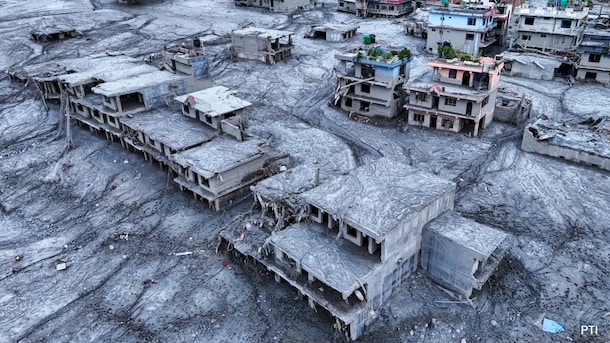
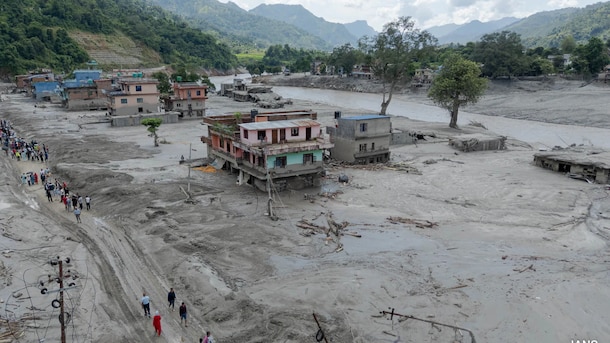
Before The Nepal Flood, A Glacial Fall: Tracing The Trigger, And A 100-km Killer Surge
A glacier came off a ridge on the Nepal-China border and travelled 100 km down multiple rivers, the longest part of the run being in the Trishuli.
-
Opinion | China To Pak To America, The Growing Dilemmas Of The 'General'
Recent civil military turmoil in the United States, China and Pakistan can be understood through two lenses.
-
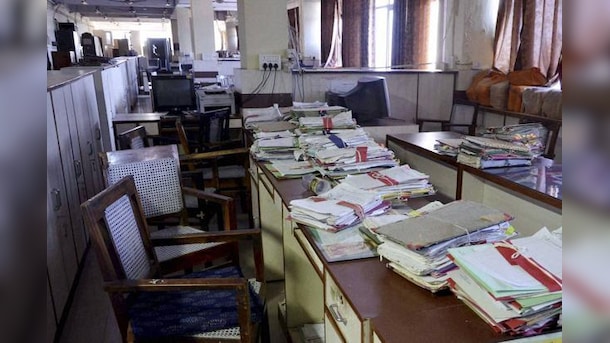
Opinion | Why India's Bureaucrats Have Learnt That Doing 'Nothing' Is Safer
India's bureaucracy has perfected a peculiar survival strategy: make a decision, you may be punished; make none, and you are usually safe.
-
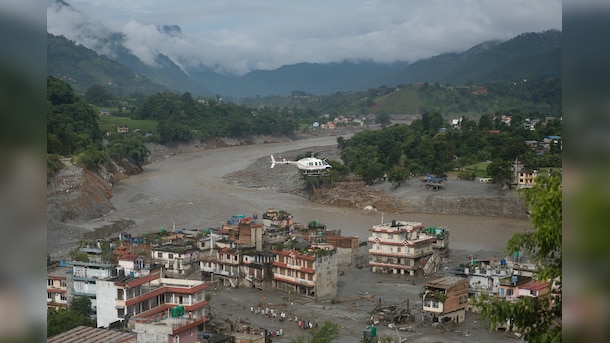
Opinion | 482 Dead, And Counting: How A Glacier Collapse Became A Himalayan Disaster
What looks like a sudden flood is actually the final link in a chain of events unfolding across an increasingly unstable Himalayas
-
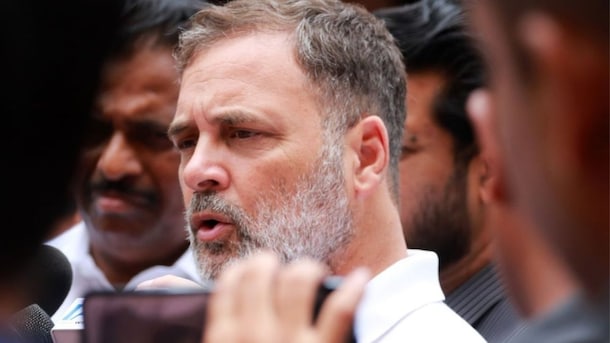
Opinion | Rahul Gandhi Is Cleaning House - But At The Cost Of The Congress
In his search for a new organisation, Rahul Gandhi is making the big mistake of treating the Congress he inherited as dead weight.
-
One-Day Disaster, Multi-Season Economic Shock: Nepal's Sisyphean Curse
Nepal Flash Floods: Nepal cannot prevent every earthquake, landslide or glacial collapse. But it can reduce how much each disaster costs.
-
Meta Pays Billions Over Teen Harms In US. In India, Algo Runs Unchecked
The US Surgeon General has separately warned that heavy social media use roughly doubles adolescents' risk of depression and anxiety, and that nearly half of teens surveyed said it made them feel worse about their bodies.
-
Blog | 'No Calls, People Scanning Banks For Bodies': Nepal Journalist Describes Flood Aftermath
As of Thursday evening, it was still impossible to get through to mobile phones in Dhunche, the district headquarters, or the flood-ravaged towns of Syabru Bensi or Timure.