Opinion | A 'Snub' Gone Too Far? The Story Of Bangladesh PM's Stalled India Visit
The abrupt cancellation of Prime Minister Tarique Rahman's scheduled visit to New Delhi this month raises many questions.
It is quite unprecedented for the ceremonial welcome reception for a visiting Head of Government or Head of State to be cancelled at the rehearsal stage. In all likelihood, this happened because the dignitary for whom the ceremony was intended had not cared to convey - through the designated channels of communication - that he had no intention of visiting India on the dates that were under discussion. This is what transpired over the visit of Prime Minister Tarique Rahman, scheduled for August 23-25, 2026.
Not Just 'Diplomatic Inexperience'
It is difficult to attribute this to the 'diplomatic inexperience' of a newly elected government. The personalised letter of invitation from Prime Minister Narendra Modi to Prime Minister Tarique Rahman to pay a state visit to India was extended immediately after the Bangladesh Prime Minister's swearing-in on February 17, 2026, handed over by India's Lok Sabha Speaker, Hon'ble Shri Om Birla. There was the assurance India received that New Delhi would be Rahman's first port of call. However, the letter of invitation remains unacknowledged. In early August, a second letter of invitation was sent to him, this time inviting his participation, as Chairperson of BIMSTEC, in the Outreach Session of the BRICS Summit being hosted by India on September 12-13. These are two separate tracks.
Instead of a formal reply confirming or declining these invitations, Bangladesh has chosen diplomacy through the media, with interviews granted by those known to be close to the Prime Minister. This can throw up its own contradictions, creating misunderstandings and painting an incorrect picture. Thus, through the interview published on August 20, India has been asked to "understand the reality of Bangladesh's July Mass Uprising", even as we know that PM Rahman had himself termed as "unconstitutional" the second oath planned (on February 17) for creating the Constitution Reform Council to change Bangladesh's constitution in line with the July Charter.
A Matter Of Principle
India has been asked, in the August 20 interview given to BSS (Bangladesh Sangbad Sangstha) by the then Foreign Affairs Advisor to the Prime Minister of Bangladesh, to create "a conducive environment", or elsewhere, an "appropriate environment" for the visit of PM Tarique Rahman to India, referencing the stay in India by former PM Sheikh Hasina. However, all of us in India very well recall the words of Hon'ble Mirza Fakhrul Islam Alamgir (then General Secretary of the BNP, recently elected President of Bangladesh), on February 17, 2026, when he said that "...not handing over Sheikh Hasina to Bangladesh will not be a deterrent to build broader relations, including trade and commercial ties. We want to build even better ties." He emphasised that the broader India-Bangladesh relationship should not be "captive" to one issue. We respect the views of the Hon'ble President of Bangladesh, and hope that these will continue to prevail. The Government of Bangladesh is very well aware that extradition is a legal process that can take years to complete. Are they saying that till the process is complete, there can be no visit to India? Sheikh Hasina has now declared (first through an interview to Reuters, and subsequently in an online press conference in Delhi) that she would like to return to Bangladesh and join the legal process, including by filing an appeal over the death sentence handed out to her. The process for her speedy return to Dhaka can easily be discussed and worked out between the governments of India and Bangladesh. Once Sheikh Hasina has expressed her readiness to return, it seems contradictory to continue the focus on extradition, a lengthy process.
Two further references in the interview given to BSS by the person who is now the Bangladesh Minister of State for Foreign Affairs, are quite inexplicable. There is a reference to the need for a "dignified invitation", and there is a direct reference that all would depend on a change in the "mindset" or approach of India's current leadership. Are these the expressions of someone who is not interested in developing the bilateral relationship with India, or are they just immature utterances?
India's Response
The Government of India has extended the hand of friendship to the BNP government led by PM Tarique Rahman from the moment of its election. It has shown utmost restraint, even strategic patience, in its interactions with the BNP government, at all times keeping supply chains moving to meet the requirements of the people of Bangladesh, even as we observe with growing dismay the sharp increase in the presence and activities of Islamist extremist groups throughout the country, and the continuing (with apparent impunity), unabated attacks on minority communities. Earlier restrictions on the issue of tourist visas have been lifted. India is willing to hold discussions on a range of issues, including water resources, border management, and restoring the pre-2024 pattern of trade and connectivity between India and Bangladesh.
Among issues of major concern to the people and government of Bangladesh is the energy sector, and the persistent shortfall of power in urban and rural Bangladesh for industrial and agricultural use, as well as for public lighting and for individual homes.
This crisis has become a political flashpoint in Bangladesh in the face of spiralling public anger. As of mid-August, all shops and malls have been ordered to shut an hour earlier than usual, billboards have to be switched off at 7 pm, and decorative lighting is completely banned. This is over and above the massive load-shedding being experienced every day, at great distress to factory owners and public-transport suppliers. Shortfall in power-generation and inadequate supplies of CNG from domestic sources and foreign suppliers have combined to create this catastrophic situation.
What Dhaka Must Be Focusing On
In response to the request from Bangladesh, India has quietly shown its sincerity in helping out. In what was a totally under-reported visit, especially in the Bangladesh media, Secretary (Power Division) of the Bangladesh Government visited New Delhi in early August to hold meetings with her counterpart, combining this with visits to Mumbai and Visakhapatnam for solar energy and other renewables. This was the first such exchange since 2024. India currently supplies 2500 MW of power to Bangladesh, from four different suppliers, including the Maitree and Rampal plants. In 2024-25, Bangladesh imported 8,030 million kWh of electricity from just one plant: the Adani Group's Jharkhand plant. Bangladesh is now looking to increase cross-border power trade and is seeking investment from India in additional power plants in Bangladesh.
These are the very real sectors of cooperation that Bangladesh should be focused on, rather than indulging in meaningless recriminations. One gets the distinct impression that the overtones of a deliberate anti-India animosity are being generated for local popularity, while quietly counting on India's help where it really matters. Visit or no visit, such games can be played only up to a point. The people of Bangladesh are mature enough to know where their real interests lie.
India is more than ready to respond positively to any sincere effort to seek common ground on the basis of mutual benefit, mutual trust, and reciprocity.
(The author was India's Ambassador to Bangladesh)
Disclaimer: These are the personal opinions of the author
-
Opinion | India Faces A BRICS Challenge. Can It Find A Way Through?

The Delhi Summit is being held at a challenging time. Such circumstances have not been encountered since the BRICS Summits started in 2009 in Russia
-
Opinion | Why The Jauhar Scene In Padmaavat Needs To Be Seen For What It Does
The practice of 'jauhar' was certainly abolished long ago. But that does not mean that it should be romanticised or glorified in mass culture.
-
Opinion | Sachin Pilot's Long Wait Is Over. Can Congress Finally Use Him?
The grand old party is now betting that the man who turned 'waiting' into a virtue can deliver Punjab
-
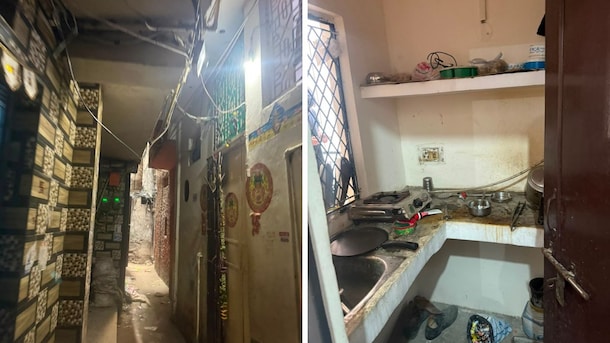
Ground Report | Sunlight Is A Luxury In Delhi Students' Hub Where Building Collapse Killed 7
The civic infrastructure in Delhi's Satya Niketan hasn't caught up with the pace of development and appears to be crumbling under the weight of the influx of tenants and the greed of landlords.
-
Mayawati's Tough Love: Nephew Akash Anand Benched Again. What It Means For BSP
Akash Anand, the 31-year-old foreign-educated nephew of BSP boss Mayawati, finds himself out of favour, for at least the third time in three years, with the latest turn coming in Lucknow on September 3.
-
Blog | Why You Should Care Whether Schrodinger's Cat Is Dead Or Alive
Imagine going on a romantic Alpine getaway and returning with the equation that runs the modern world. The only snag: nobody can quite agree on what it says about reality.
-
Promote, Punish, Repeat: Decoding Mayawati's Akash Anand Puzzle
The development in the BSP is unprecedented. Never before has any Indian party elevated a family member and dumped him or her unceremoniously thrice within a span of three years.
-
Opinion | Nepal Needs $5 Billion To Rebuild. World's Climate Fund Doesn't Have Even 10% Of It
The fund caps support at USD 20 million per project; Nepal needs two hundred times that. And the board is not scheduled to sit until December.
-
Opinion | The Rise Of Indians In US Is Making Some Americans Very, Very Angry
A new report released yesterday shows how Indians are now among the biggest targets of racist attacks in America.
-
Opinion | China, Pak, A Stalled India Visit: How Signals From Bangladesh Are Getting Louder
A fighter jet deal with China, interest in Pakistan's military bloc, and a 'stalled' visit to India - all in a month. Bangladesh's drift is getting harder to ignore.