Why India's Bureaucrats Have Learnt That Doing 'Nothing' Is Safer
India's bureaucracy has perfected a peculiar survival strategy: make a decision, you may be punished; make none, and you are usually safe.
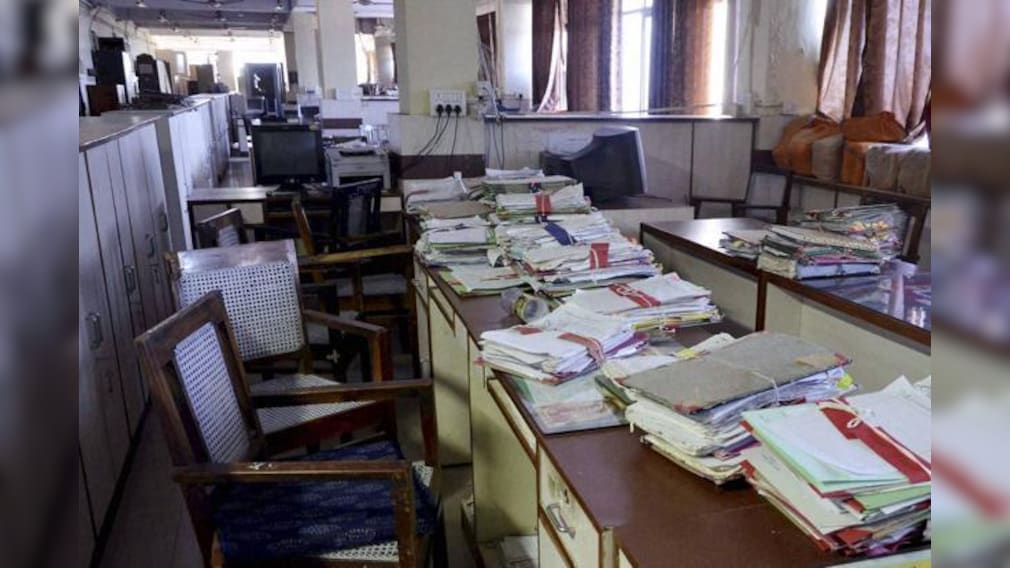
For decades, the analytical discourse surrounding the institutional labyrinth of the Indian state has been confined to a somewhat sterile duality. We are routinely informed that our administrative failures are the byproduct of either the venality of the corrupt or the vacuity of the incompetent. While these elements undeniably persist within the sprawling architecture of our governance, they fail to account for a far more pervasive, yet curiously invisible, quagmire: the vast, silent arena of administrative inaction.
In his new book Decision Velocity: Rational Abdication, the Fear Tax, and the Road to Viksit Bharat, retired IPS officer OP Singh, a man who has traversed the arduous landscapes of field policing and the intricate corridors of the Haryana State Secretariat with equal distinction, proposes a startlingly original third lens with which to view our administrative shortcomings. He identifies a phenomenon that is as pervasive as it is pernicious: a " fear tax" not levied by any formal exchequer, but extracted from the lifeblood of the citizen, in the form of unconscionable delay.
The Risk With Acting
Singh's "Fear Tax" is the price society pays when decision-makers conclude that the safest course is not to decide at all. It is the outcome of a sclerotic system where, for the desk-bound officer, the risk of a decisive signature far outweighs the perceived safety of a prolonged silence. As Singh so eloquently demonstrates, our current accountability frameworks audit the traceable action with inquisitorial rigour, yet remain blissfully indifferent to the absent decision. Hence, it's safer not to act at all.
This is the central paradox of modern bureaucracy. We have inherited, and subsequently ossified, a colonial-era machinery designed for control, not for velocity. In such a framework, a file that moves is a file that invites scrutiny; a file that rests in a dark corner of a cabinet is a file that poses no threat to its custodian. The result is a Kafkaesque reality where the paralysis of the pen is too often mistaken for the prudence of the professional. This is not merely an inconvenience; it is a profound failure of the social contract. When the state abdicates its responsibility to act, it does not merely delay a project or a permit; it stifles the latent potential of a citizenry waiting for the basic friction of governance to be removed.
To understand why this inertia persists, we must venture beyond procedural critiques and into the psychology of the "Iron Frame". The fear of the "audit" - the retrospective, often punitive investigation of administrative decisions, such as happened over the so-called "Coal Scam" that turned out not to be a scam at all - has created an environment of profound risk-aversion. When an officer knows that a decision, however well-intentioned or logical, can be second-guessed by an auditor years later with the benefit of perfect hindsight, especially after a change of government, the most rational individual response is to build a wall of paper, process, and precedent.
Rational Abdication
This is the "rational abdication" to which Singh refers. It is a survival strategy. If you decide and fail, you are accountable. If you defer, consult a committee, request further studies, or simply wait for a transfer, you are safe. This culture of institutionalised indecision creates a feedback loop: because decision-makers are penalised for errors of commission but rarely for errors of omission, the entire system evolves to prize stability over progress, and caution over courage.
As we set our sights on the ambitious horizon of Viksit Bharat 2047, we must recognise that a nation aspiring to become a leading global economic power cannot afford systems that reward hesitation more than initiative. In the global race for capital, technology, and talent, speed is not merely a virtue; it is a competitive necessity. The cost of delay is not just a line item in a budget; it is the opportunity cost of growth.
When a policy-induced delay pushes a manufacturing plant to a neighbouring state or another nation, or when a bureaucratic bottleneck forces an entrepreneur to abandon an innovation, the "Fear Tax" has been paid in full by the Indian economy. We are essentially taxing our own development. The "velocity" that Singh advocates is the antidote to this malaise. It requires a fundamental shift in how we define administrative success. We must move from an obsession with compliance to an obsession with outcomes.
Mistakes vs Negligence
How? It starts with a reconfiguration of accountability. We must evolve our oversight mechanisms to distinguish between honest mistakes (the byproduct of necessary risk-taking in a complex environment) and true negligence. A system that does not tolerate the possibility of a wrong decision will rarely produce a right one.
Furthermore, we must incentivise administrative courage. This involves creating "safe spaces" for decision-making, where the rationale for action is documented and respected, and where the institutional culture shifts from "How can I avoid this?" to "How can this be made to happen?" It requires a re-embrace of the professional ethos of the civil servant as an agent of progress, not merely a guardian of rules.
Decision Velocity is a clarion call for a new era of administrative clarity. It reminds us that, in our pursuit of national excellence, the most expensive decision is often the one that is never taken. The future of India depends on our collective ability to move the pen with confidence and purpose. We must build a system where the "Fear Tax" is repealed, and where the machinery of the state serves not to impede the citizen, but to accelerate the nation's journey toward the prosperity it so richly deserves.
OP Singh's work is more than a diagnosis; it is a map for the road ahead. It is a seminal contribution to the literature of Indian governance, and I commend it to every administrator, policymaker, and citizen who believes that India's best days are not behind us, but are waiting to be realised - if only we have the courage to decide.
(Shashi Tharoor has been a Member of Parliament from Thiruvananthapuram, Kerala, since 2009. He is a celebrated author and a former diplomat)
Disclaimer: These are the personal opinions of the author
-
Opinion | India Faces A BRICS Challenge. Can It Find A Way Through?

The Delhi Summit is being held at a challenging time. Such circumstances have not been encountered since the BRICS Summits started in 2009 in Russia
-
Opinion | Why The Jauhar Scene In Padmaavat Needs To Be Seen For What It Does
The practice of 'jauhar' was certainly abolished long ago. But that does not mean that it should be romanticised or glorified in mass culture.
-
Opinion | Sachin Pilot's Long Wait Is Over. Can Congress Finally Use Him?
The grand old party is now betting that the man who turned 'waiting' into a virtue can deliver Punjab
-
Ground Report | Sunlight Is A Luxury In Delhi Students' Hub Where Building Collapse Killed 7
The civic infrastructure in Delhi's Satya Niketan hasn't caught up with the pace of development and appears to be crumbling under the weight of the influx of tenants and the greed of landlords.
-
Mayawati's Tough Love: Nephew Akash Anand Benched Again. What It Means For BSP
Akash Anand, the 31-year-old foreign-educated nephew of BSP boss Mayawati, finds himself out of favour, for at least the third time in three years, with the latest turn coming in Lucknow on September 3.
-
Blog | Why You Should Care Whether Schrodinger's Cat Is Dead Or Alive
Imagine going on a romantic Alpine getaway and returning with the equation that runs the modern world. The only snag: nobody can quite agree on what it says about reality.
-
Promote, Punish, Repeat: Decoding Mayawati's Akash Anand Puzzle
The development in the BSP is unprecedented. Never before has any Indian party elevated a family member and dumped him or her unceremoniously thrice within a span of three years.
-
Opinion | Nepal Needs $5 Billion To Rebuild. World's Climate Fund Doesn't Have Even 10% Of It
The fund caps support at USD 20 million per project; Nepal needs two hundred times that. And the board is not scheduled to sit until December.
-
Opinion | The Rise Of Indians In US Is Making Some Americans Very, Very Angry
A new report released yesterday shows how Indians are now among the biggest targets of racist attacks in America.
-
Opinion | China, Pak, A Stalled India Visit: How Signals From Bangladesh Are Getting Louder
A fighter jet deal with China, interest in Pakistan's military bloc, and a 'stalled' visit to India - all in a month. Bangladesh's drift is getting harder to ignore.