



Magnetosphere
-
{
- All
- News
-

Sun Unleashes Triple Solar Flare Blast, Triggering G3 Geomagnetic Storm Alert
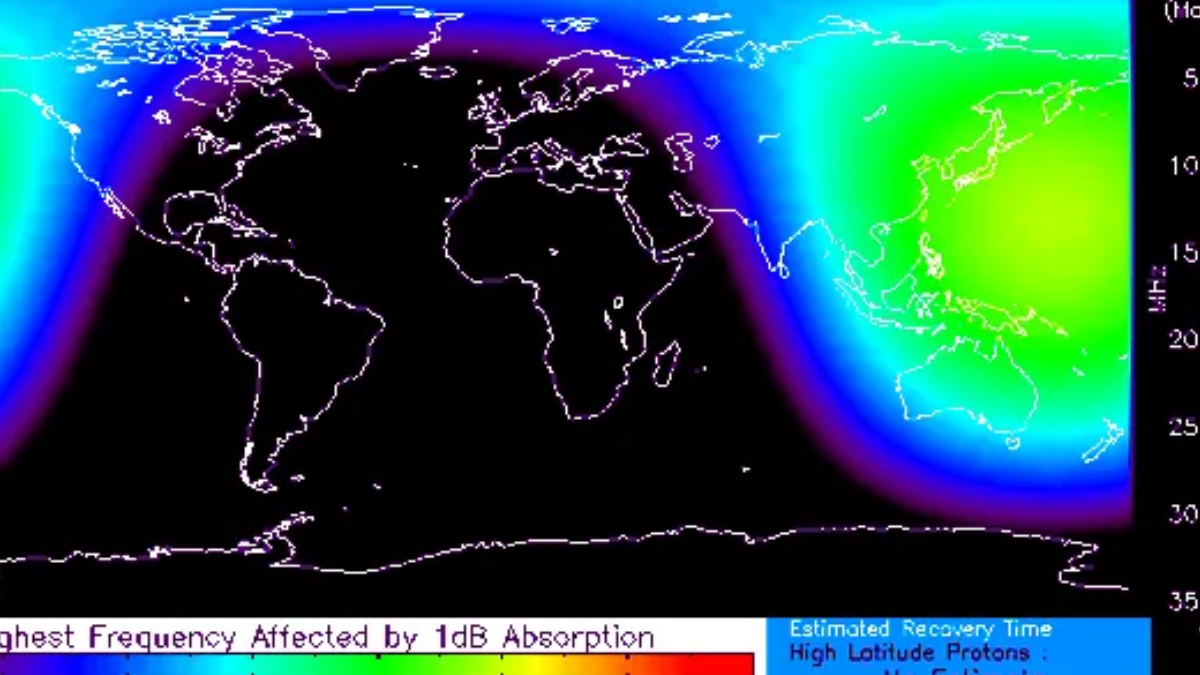
Three powerful solar flares erupted from active sunspot AR 4455, sending Earth-directed plasma clouds into space. NOAA has issued a G3 geomagnetic storm watch, increasing the chances of widespread auroras.
-
Small NASA Satellite Could Reveal How Lightning Impacts Space Weather
NASA’s CANVAS CubeSat will study very-low-frequency radio waves from lightning and human transmitters, tracking how energy moves through the ionosphere into the magnetosphere to improve space weather models and protect satellites.
-
Scientists Stunned as Earth’s Magnetosphere Shows Reversed Electric Charge Patterns
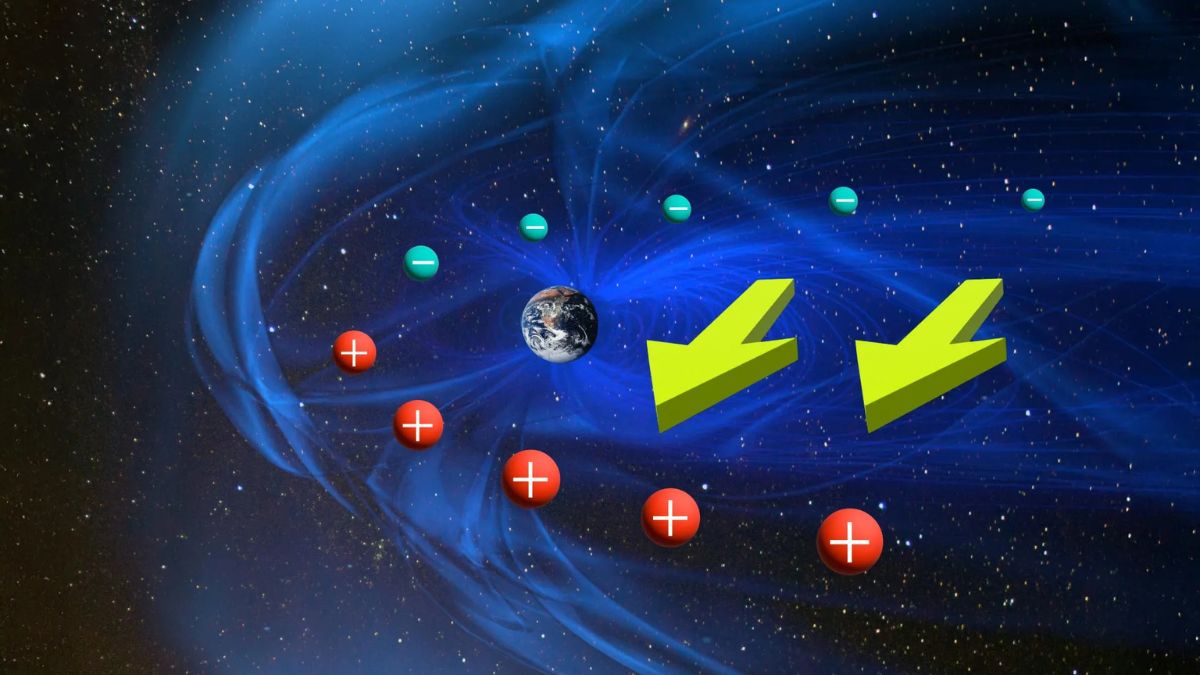
Scientists have discovered that Earth’s morning-side magnetosphere is negatively charged, overturning decades of assumptions about space electricity. Satellite data and simulations show the charge pattern flips near the equator but remains traditional at the poles. The breakthrough reshapes understanding of space weather and may also clarify elec...
-
NASA’s Twin TRACERS Satellites Will Monitor Space Weather to Shield Earth from Solar Storms
NASA’s TRACERS satellites will fly in tandem through Earth’s polar cusps to study magnetic storms and solar wind effects. The mission aims to improve predictions of space weather events that threaten satellites, power grids, and astronauts, offering new insight into magnetic reconnection and helping protect vital systems from the hazards of int...
-
NASA’s EZIE Satellites Begin Mission to Study Auroral Electrojets and Space Weather
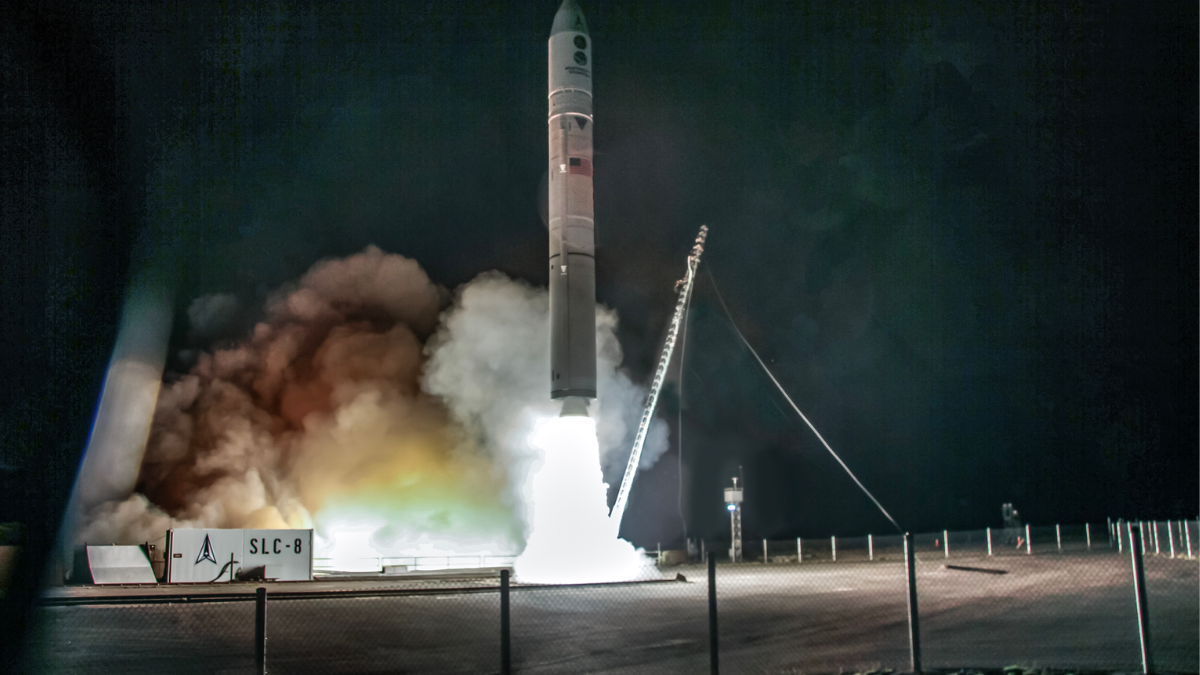
NASA’s Electrojet Zeeman Imaging Explorer (EZIE) mission has been launched aboard a SpaceX Falcon 9 from Vandenberg Space Force Base. The trio of small satellites will map auroral electrojets, powerful currents in Earth’s atmosphere linked to solar storms. Their data will enhance space weather prediction models and help understand planetary mag...
-
May 2024 Solar Storm Triggers Unusual Radiation Belts, Raising Space Safety Concerns
A significant solar storm in May 2024 led to the creation of two temporary radiation belts, detected by the CIRBE satellite in June. One belt contained high-energy electrons, while the other was rich in protons, a rare occurrence. While the electron belt dissipated in three months, the proton-dominated belt remains, potentially affecting space miss...
-
Chorus Waves Found Far From Earth Raise Concerns for Space Exploration
Chorus waves, energetic electromagnetic bursts resembling bird chirps, have been detected 100,000 miles from Earth, far beyond their usual range. NASA's Magnetospheric Multiscale satellites observed these waves in a flatter region of Earth's magnetosphere, contradicting prior assumptions about their formation near strong magnetic gradients. The wav...
-
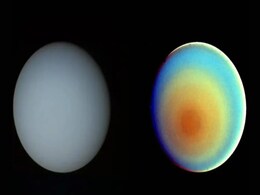
Voyager 2's Historic Flyby of Uranus Exposes Rare Magnetic Distortion
A new analysis of Voyager 2’s flyby of Uranus in 1986 reveals a unique magnetic anomaly caused by a rare solar wind event. Scientists from NASA's Jet Propulsion Laboratory and Caltech found that the solar wind’s impact on Uranus’s magnetosphere was a unique occurrence, influencing measurements of the planet’s magnetic field. The study also ...
-
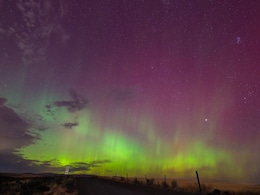
After A Solar Storm, A Stunning Pink Aurora Spotted In Earth's Night Skies
On November 3, after a solar storm caused a temporary crack in the Earth's magnetic field, unusual pink aurora borealis swarmed the skies above Norway.
-
NASA's MMS Creates New Guinness World Record
NASA has said its Magnetospheric Multiscale mission, or MMS -- that is giving scientists new insight into Earths magnetosphere -- now holds the Guinness World Record for highest altitude fix of a GPS signal.
-
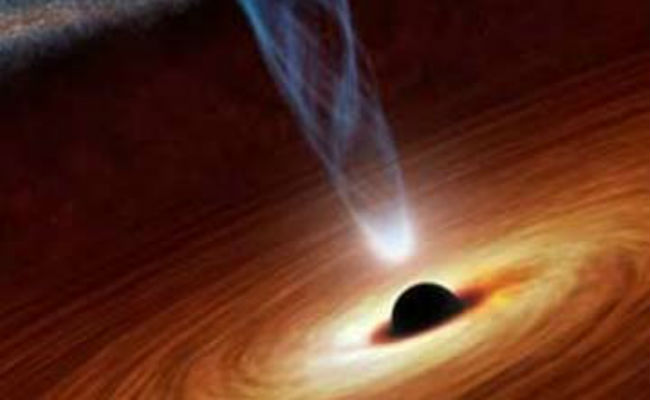
NASA Finding Bolsters Indian Theory on Black Hole
An Indian astrophysicist says the recent observation by NASA scientists of giant flares of X-rays from a black hole confirms his theory that the so-called black holes are not "true" black holes but actually ultra hot balls of fire like our Sun.
-
Nasa's MMS Mission to Decode Explosive Interplay of the Earth and Sun
The $1.1 billion mission is set to beam back valuable data beginning September this year.
-
Nasa Launches Satellites for Magnetospheric Multiscale Project
"The MMS mission will conduct a definitive experiment in space that will finally allow us to understand how magnetic reconnection works."
-
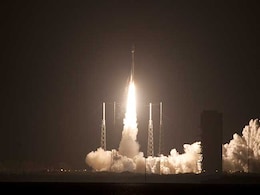
NASA Launches Satellites to Track 'Magnetosphere'
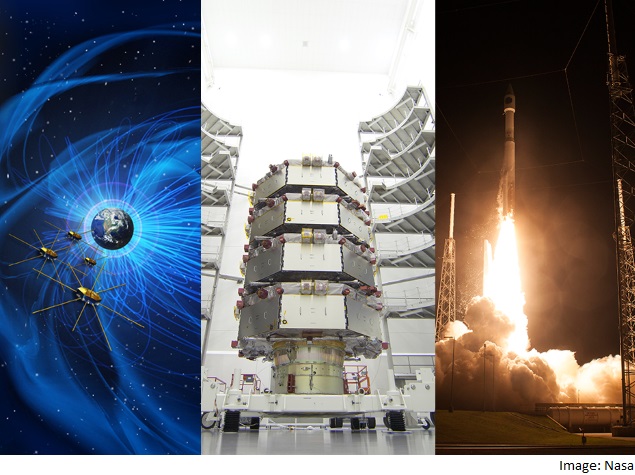
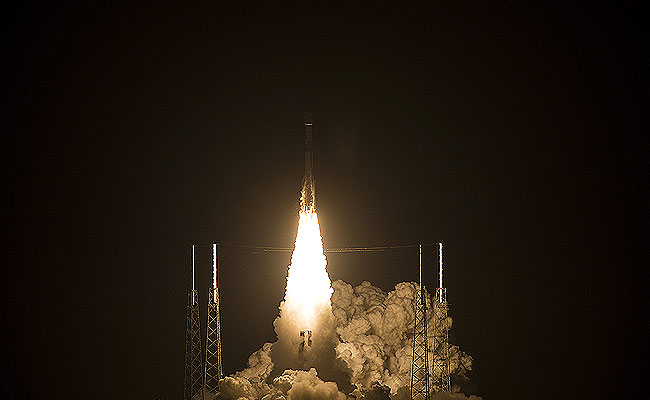
Four identical satellites which will study the interactions between solar winds and the Earth's magnetic fields blasted off into Space on yesterday to begin a two-year study of the phenomenon, US space agency NASA said.




-
Sun Unleashes Triple Solar Flare Blast, Triggering G3 Geomagnetic Storm Alert
Three powerful solar flares erupted from active sunspot AR 4455, sending Earth-directed plasma clouds into space. NOAA has issued a G3 geomagnetic storm watch, increasing the chances of widespread auroras.
-
Small NASA Satellite Could Reveal How Lightning Impacts Space Weather
NASA’s CANVAS CubeSat will study very-low-frequency radio waves from lightning and human transmitters, tracking how energy moves through the ionosphere into the magnetosphere to improve space weather models and protect satellites.
-
Scientists Stunned as Earth’s Magnetosphere Shows Reversed Electric Charge Patterns
Scientists have discovered that Earth’s morning-side magnetosphere is negatively charged, overturning decades of assumptions about space electricity. Satellite data and simulations show the charge pattern flips near the equator but remains traditional at the poles. The breakthrough reshapes understanding of space weather and may also clarify elec...
-
NASA’s Twin TRACERS Satellites Will Monitor Space Weather to Shield Earth from Solar Storms
NASA’s TRACERS satellites will fly in tandem through Earth’s polar cusps to study magnetic storms and solar wind effects. The mission aims to improve predictions of space weather events that threaten satellites, power grids, and astronauts, offering new insight into magnetic reconnection and helping protect vital systems from the hazards of int...
-
NASA’s EZIE Satellites Begin Mission to Study Auroral Electrojets and Space Weather
NASA’s Electrojet Zeeman Imaging Explorer (EZIE) mission has been launched aboard a SpaceX Falcon 9 from Vandenberg Space Force Base. The trio of small satellites will map auroral electrojets, powerful currents in Earth’s atmosphere linked to solar storms. Their data will enhance space weather prediction models and help understand planetary mag...
-
May 2024 Solar Storm Triggers Unusual Radiation Belts, Raising Space Safety Concerns
A significant solar storm in May 2024 led to the creation of two temporary radiation belts, detected by the CIRBE satellite in June. One belt contained high-energy electrons, while the other was rich in protons, a rare occurrence. While the electron belt dissipated in three months, the proton-dominated belt remains, potentially affecting space miss...
-
Chorus Waves Found Far From Earth Raise Concerns for Space Exploration
Chorus waves, energetic electromagnetic bursts resembling bird chirps, have been detected 100,000 miles from Earth, far beyond their usual range. NASA's Magnetospheric Multiscale satellites observed these waves in a flatter region of Earth's magnetosphere, contradicting prior assumptions about their formation near strong magnetic gradients. The wav...
-
Voyager 2's Historic Flyby of Uranus Exposes Rare Magnetic Distortion
A new analysis of Voyager 2’s flyby of Uranus in 1986 reveals a unique magnetic anomaly caused by a rare solar wind event. Scientists from NASA's Jet Propulsion Laboratory and Caltech found that the solar wind’s impact on Uranus’s magnetosphere was a unique occurrence, influencing measurements of the planet’s magnetic field. The study also ...
-
After A Solar Storm, A Stunning Pink Aurora Spotted In Earth's Night Skies
On November 3, after a solar storm caused a temporary crack in the Earth's magnetic field, unusual pink aurora borealis swarmed the skies above Norway.
-
NASA's MMS Creates New Guinness World Record
NASA has said its Magnetospheric Multiscale mission, or MMS -- that is giving scientists new insight into Earths magnetosphere -- now holds the Guinness World Record for highest altitude fix of a GPS signal.
-
NASA Finding Bolsters Indian Theory on Black Hole
An Indian astrophysicist says the recent observation by NASA scientists of giant flares of X-rays from a black hole confirms his theory that the so-called black holes are not "true" black holes but actually ultra hot balls of fire like our Sun.
-
Nasa's MMS Mission to Decode Explosive Interplay of the Earth and Sun
The $1.1 billion mission is set to beam back valuable data beginning September this year.
-
Nasa Launches Satellites for Magnetospheric Multiscale Project
"The MMS mission will conduct a definitive experiment in space that will finally allow us to understand how magnetic reconnection works."
-
NASA Launches Satellites to Track 'Magnetosphere'
Four identical satellites which will study the interactions between solar winds and the Earth's magnetic fields blasted off into Space on yesterday to begin a two-year study of the phenomenon, US space agency NASA said.

