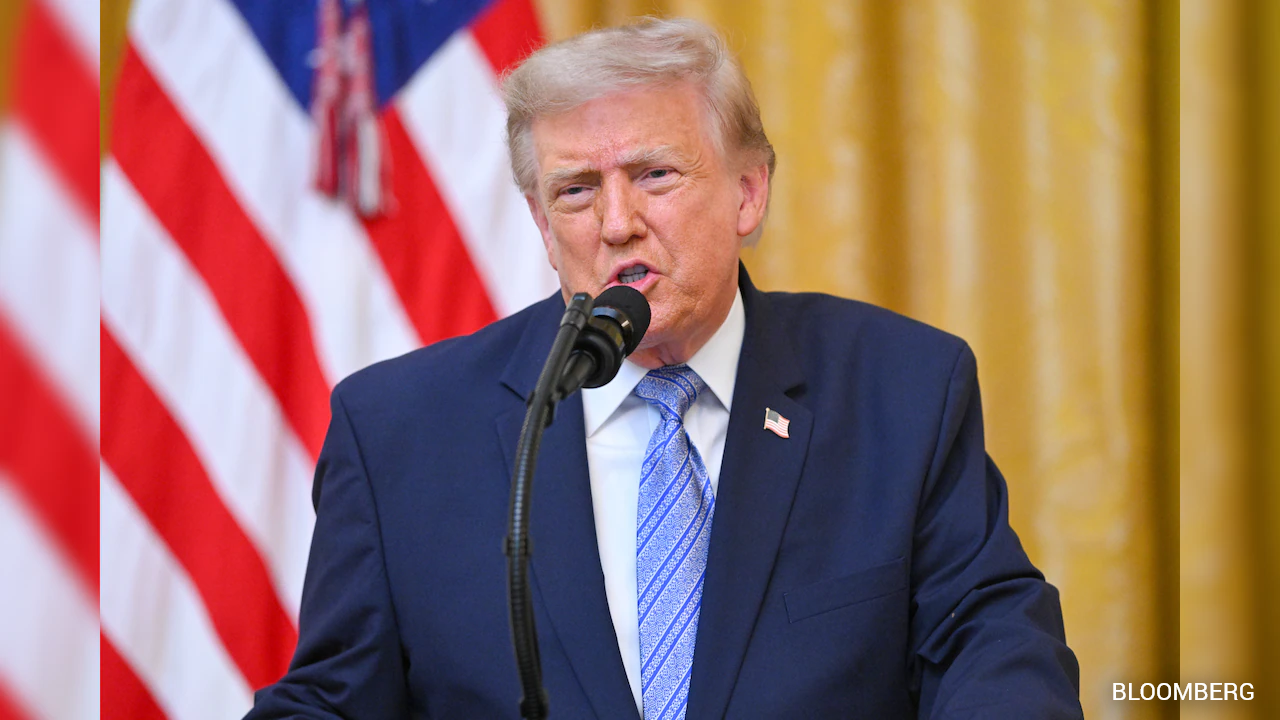
- President Trump remains publicly silent on next steps in the escalating Iran conflict.
- US deaths rise to 17 amid ongoing missile and drone attacks from both sides.
- Trump called for new Iran sanctions but avoided ordering major military escalation.
If President Donald Trump knows where he wants to take the war in Iran, he's giving little sign of it publicly.
The conflict continued to spiral over the weekend, with both sides trading attacks in the aftermath of an Iranian strike that killed two US service-members in Jordan and injured others. Both Iran and the US have largely abandoned the tentative peace deal the president had touted.
The week of escalating missile and drone strikes underscored the risk that the conflict will reignite in full again even as the man who started it stayed largely silent on what if anything he'll do next. US Central Command announced Sunday that a third service member died the day before during a controlled detonation of an unexploded Iranian drone in northern Iraq. And the US said unidentified remains of another victim in Friday's Jordan strike were being examined.
As the conflict turns deadly again for the US military, where Trump will take the fight now is not clear.
Trump did acknowledge the fallen soldiers while speaking to reporters Sunday evening after the World Cup finale.
"Those great patriots were out there fighting so that Iran cannot have a nuclear weapon," he said when he arrived back in Washington from New Jersey.
"Iran is just very, very badly damaged. They've lost everything almost militarily," he said. "So we'll see what happens, but we hit it very hard again tonight, and we did that in honor" of the servicemembers.
He has so far stopped short of ordering a substantial escalation, and called earlier on Sunday for Congress to roll new Iran penalties into a Russian sanctions bill. He invoked the wishes of the late Senator Lindsey Graham, although Jeanne Shaheen, a Democrat, said Graham didn't want the two combined.
Trump kept a low profile on Saturday and spent much of Sunday celebrating the World Cup finale in New Jersey. Meanwhile, his administration signaled it would simply maintain the status quo in the Middle East: striking Iran while attempting to continue to ferry tankers through the Strait of Hormuz, but the weekend's exchanges showed the risk the fighting could spiral.
"I think in the short term, unfortunately, we're in an escalatory cycle," said Mona Yacoubian, director of the Middle East Program at the Center for Strategic and International Studies, a Washington-based think tank.
The US response after Friday's fatal strike indicated an attempt at restraint, but the broken trust on both sides makes deescalation difficult, she said. "This is a more dangerous moment than we've had in the past."
With the on-and-off conflict now in its 21st week, the endgame for either side is as unclear as ever - a warning sign both for the global economy and for Trump, who said one reason he agreed to a ceasefire is that he did not want to become the next Herbert Hoover, the US president during the 1929 stock market crash that triggered the Great Depression.
The administration sent a mix of messages over the weekend, as the US death count hit 17 since the war began on Feb. 28. Central Command announced the deaths and retaliatory strikes, while Defense Secretary Pete Hegseth said the soldiers' deaths will only strengthen US resolve.
Trump aide Dan Scavino posted a cryptic video of a B-2 bomber in flight, set to the tune of the Nessun dorma aria, while the US is reportedly moving more refueling planes to the region, teasing a potential escalation. The White House declined to address the report.
The president spent the weekend occupied by other matters he didn't make any public appearances Saturday at his New Jersey golf club before attending the World Cup Final in person on Sunday. He made no mention of Iran during a pregame interview on the Fox broadcast, and a flurry of social media posts focused more on a recent economic announcement and renovation projects in Washington, DC.
Instead, it was Energy Secretary Chris Wright who took to the airwaves Sunday morning on the administration's behalf, attempting to calm concerns and pledge that the Strait of Hormuz had not yet ground again to a de facto halt.
"It's tragic to lose American lives, but this is a mission that will save countless lives going forward," Wright said on ABC's This Week. "His focus is on degrading the Iranian ability to terrorize the world, to hold world commerce hostage as they are doing right now, and to prevent Iran from getting nuclear weapons - that is unchanged."
Wright held open the door to a detente: "The president is always looking for the diplomatic off-ramp. President Trump wants to end it with a peaceful agreement with Iran, but it takes two parties to do that."
Total shipments out of the Gulf, both through the Strait of Hormuz and pipelines used to avoid it, are at about two-thirds of pre-conflict levels, Wright said.
Michael O'Hanlon, director of research in the Foreign Policy program at the Brookings Institution, said he worried Trump may be repeating mistakes of Vietnam and other past American conflicts.
"If you try to create just the right amount of psychological and strategic pressure - not too hot and not too cold - history suggests it's very hard to do that," he said, adding that Iran appears to be betting on Trump's desire to reach a deal to buoy his midterm election prospects.
"Right now they think that he's desperate for a deal and they're tougher than he is," O'Hanlon said. "He may have to, just as a matter of legacy, accept that he very well may lose those chambers, start acknowledging that and say 'if that means I have to keep pressure on Iran for six more months, I'll do it.'"
Representative Michael McCaul, a Texas Republican and former chair of the Foreign Affairs Committee, said he expected Trump to simply resume the military campaign that was paused with the ceasefire.
"Now we're going to move forward with plan A again," McCaul said on Fox News Sunday. "The military is going to move in, take out their launch pads, take out their ability to send Shahed drones, to hit tankers." Degrading Iran's ability to control the strait "has to be the fundamental objective, key objective right now," he added.
The spiraling conflict underscores the quagmire risk of foreign interventions - the type of which Trump and Vice President JD Vance have long criticized.
Trump has mused previously about ramping up American efforts, including potentially attempting to seize Kharg Island, the crucial oil export hub. And each passing week puts further strain on US military supplies and crews of ships that continue to stretch their time away from port.
For Trump, "there are no good options right now. There are only bad and less-bad options," Yacoubian said. "We are in something that is potentially a phase change in this conflict and unfortunately there may need to be more pain inflicted before both sides once again relent."
(Except for the headline, this story has not been edited by NDTV staff and is published from a syndicated feed.)
Track Latest News Live on NDTV.com and get news updates from India and around the world


