President Donald Trump pressed US oil refiners to boost domestic production of gasoline or petrol and diesel during a closed-door meeting Tuesday, as he contends with high prices and mounting cost-of-living concerns before November's midterm elections.
Trump made clear he wants lower gas prices at the pump for Americans and asked executives how to increase refining capacity, according to a White House official who provided details on condition of anonymity. The official said industry representatives were aligned with that goal and that the discussion touched on regulatory changes, faster permitting and additional investments.
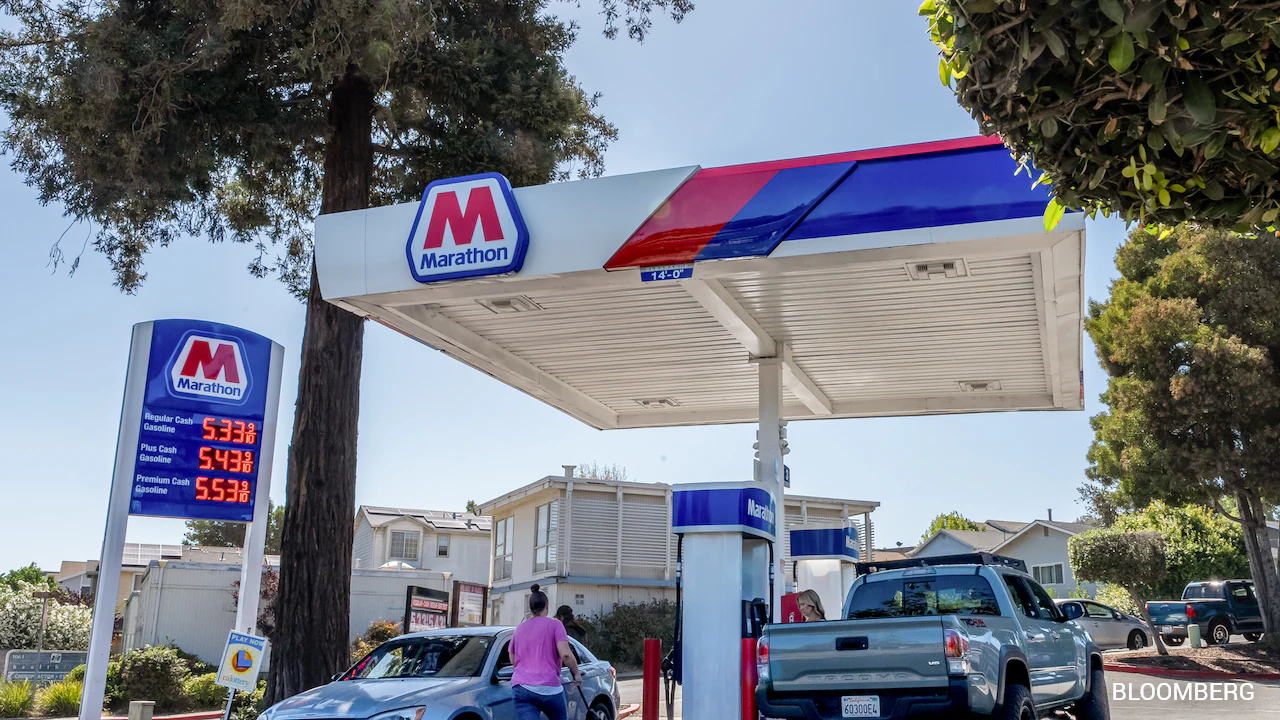
The face-to-face pressure highlighted the political peril for a president who campaigned on reining in energy costs only to see them spiral amid the US war on Iran. US fuel prices are at the highest seasonal level ever with gasoline (also called petrol in most parts of the world) now fetching more than $4 a gallon and diesel nearly $6 a gallon on average nationwide, according to the American Automobile Association.
In return, Trump got an earful about federal biofuel-blending requirements, as some refining executives used the hour-long meeting to argue that quotas compelling them to mix alternative fuels into gasoline are raising pump prices, according to people familiar with the conversation who asked not to be named because it was private.
Roughly a dozen executives from fuel refining and distribution companies joined Trump in the White House Cabinet Room for the discussion, followed by a quick visit to the Oval Office, some of the people said. They reflected a who's who of industry, with leaders of smaller independent fuel makers such as Delek US Holdings Inc. alongside representatives from large refiners, including PBF Energy Inc., Marathon Petroleum Corp., and Valero Energy Corp.
Energy Secretary Chris Wright and Interior Secretary Doug Burgum, who heads Trump's National Energy Dominance Council, were in the session alongside other officials.
The gathering was dominated by talk about the Renewable Fuel Standard, the federal law that compels refiners to blend corn-based ethanol, soy-based biodiesel and other alternative fuels into gasoline and diesel, people said. Industry representatives took aim at the administration's decision to set record-high biofuel-blending quotas, with some casting the targets as unattainable and describing them as driving up gasoline costs, some of the people said.
Tensions on the issue were heightened after Trump's Environmental Protection Agency on Monday granted a host of small refineries exemptions from some of those mandates. At the same time, in a blow to the owners of large refineries, the administration also said it would seek to ensure other, non-exempted facilities are on the hook to blend those waived volumes in their stead.
Renewable fuel quotas are a particularly thorny subject for Trump, dividing the agriculture and oil industries, two key constituencies. Administration officials on Tuesday acknowledged the political dynamic in suggesting their hands were tied on the issue, some of the people said.
Trump convened the meeting as the Iran war continues to disrupt the flow of crude and refined petroleum products, feeding higher costs for gasoline and diesel. It's a pressing concern for Trump, who has struggled to allay voters' pocketbook concerns ahead of elections to determine which party controls Congress for the next two years.
While gasoline prices have fallen from this year's peak of more than $4.50 a gallon in May, they remain about $1 higher than at the Feb. 28 start of the war — much less the $2.79 low Trump notched in January. Trump says prices will eventually ease and that Americans understand his stated aim of preventing Iran from obtaining nuclear weapons. He told reporters Monday he could not say with certainty prices would drop before the election.
After the meeting, Wright said he expected "downward pressure" on gas and diesel prices in the next few weeks. "We're doing everything we can to help them increase the production of gasoline and diesel," Wright told reporters in Caracas.
The Trump administration is seeking to unlock more crude flows from Venezuela, tapping a guaranteed share of at-cost production from North American Blue Energy Partners, a privately held company that's been granted 100-year concessions on 17 oil fields. Any increased Venezuelan output would likely flow to US Gulf Coast refineries that are optimized to process the nation's particularly heavy crude, though significant increases in production are unlikely in the short term.
Refiners in Tuesday's meeting were asked how the US can process more Venezuelan crude — and how the administration can make that easier, people familiar with the conversation said. While some refiners are already importing volumes from Venezuela — particularly Valero and Chevron Corp. — taking on more won't make geographical sense for some facilities across the US, industry representatives said.
Participants also praised Trump for a Jones Act waiver that's allowed foreign ships to transport oil and other commodities around the US. Trump initially issued a broad waiver to ensure adequate fuel supplies and lower costs amid the war, but pared its reach in August.
(This story has not been edited by NDTV staff and is auto-generated from a syndicated feed.)
Track Latest News Live on NDTV.com and get news updates from India and around the world


