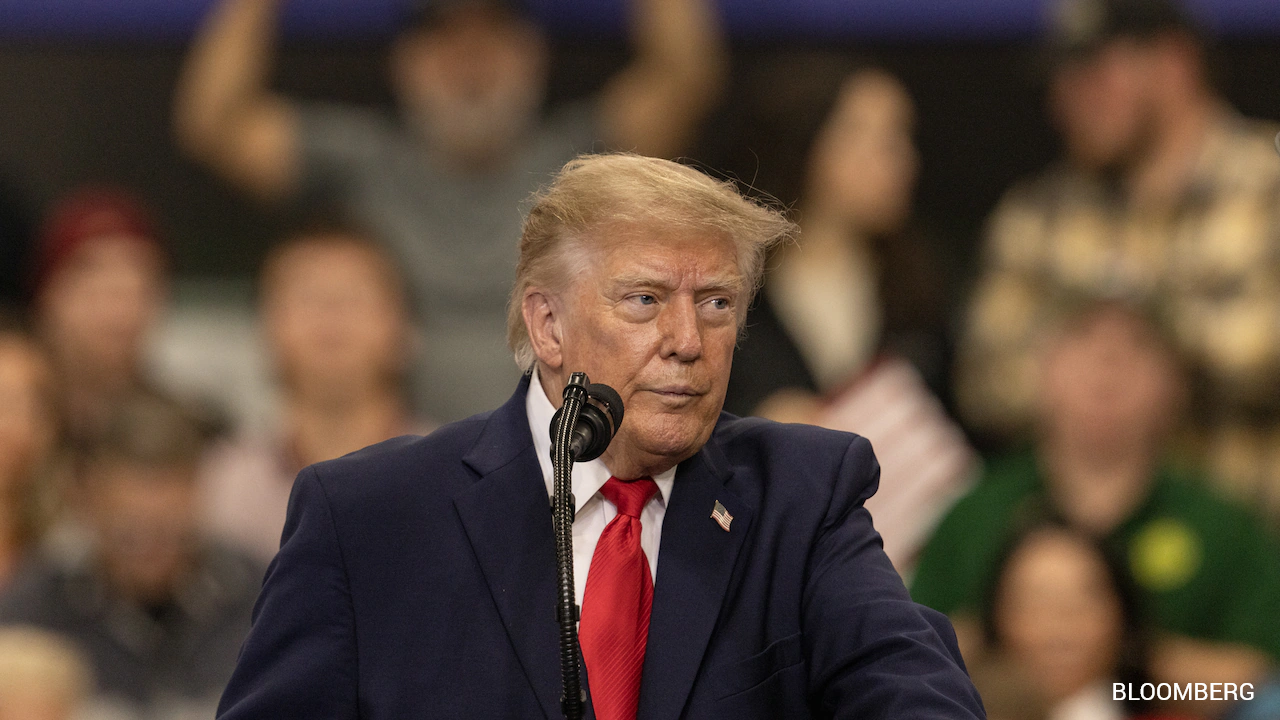
President Donald Trump's artificial intelligence task force in its first meeting agreed on Thursday to address risks related to cybersecurity, biosecurity and "model control and accountability" as fears rise over the potential dangers posed by the technology.
The panel known as the Super Intelligence Force - using the president's preferred term for artificial intelligence - will commission a report from the President's Council of Advisers on Science and Technology to evaluate those and other concerns, according to a White House account of the meeting.
-

-
 'AI Scares Me': Kriti Sanon On Personality Rights And Need For Laws
-
 'This Time I Wanted Gold': Savita Punia Reflects On Historic Asiad Success
-
 Favourite Bollywood Actor To 5-Year Plan, Kriti Sanon Interviews AI Actor Tilly Norwood
-
 Neeru Dhanda Carried Homemade Churma To Asiad, Returned With Two Gold Medals
-
 Inside The Mind Of Archer Kumkum Mohod, Who Dared To Challenge South Korea
-
 "High Inflation Is Like Tax On Everyone": RBI Governor At NDTV World Summit
-
 Ashwini Vaishnaw Explains Semiconductor Complexity: 'Everything On This Tiny Nail'
-
 Indian-Branded Mobile Phones By October 23, 2028, Says Ashwini Vaishnaw
-
 AI Law In India Soon? What Ashwini Vaishnaw Said At NDTV World Summit
-
 World's 1st AI Actor Tilly Norwood Was Asked If She Knew Hindi. A Conversation Followed
The task force will also "develop protocols and mechanisms for labs to provide early warnings and systemized notifications to the government of breaches, hacks, jailbreaks, and other issues," it said.
In addition, the group, led by Director of National Intelligence Jay Clayton, plans to "establish a law enforcement and consumer protection coordination committee including the Department of Justice, Federal Trade Commission, and various agencies," the White House said.
AI has emerged as a volatile issue in the midterm elections that will decide control of both houses of Congress. Lawmakers of both parties have particularly taken notice of the widespread opposition around the country to data centers, which have been associated with surging electricity costs.
Alarm over the possibility of widespread job losses and the potential for disaster if humans lose control of AI have largely drowned out promises of its benefits.
Even so, Trump has rejected pleas for more government regulation of AI, insisting that would hinder the US in its AI competition with China.
He instead forged a voluntary agreement with industry executives that uses outside auditors to assess AI system safety. Under the accord, which Trump brokered with top technology leaders at the White House last month, AI executives pledged to regularly meet to set best industry practices.
The task force, according to the White House account, did not discuss any new laws or rules, but "will engage with frontier model developers and other SI companies, consumer protection groups and civil liberties advocates, industry stakeholders, and federal and state law enforcement agencies to inform and implement its efforts."
(Except for the headline, this story has not been edited by NDTV staff and is published from a syndicated feed.)
Track Latest News Live on NDTV.com and get news updates from India and around the world


