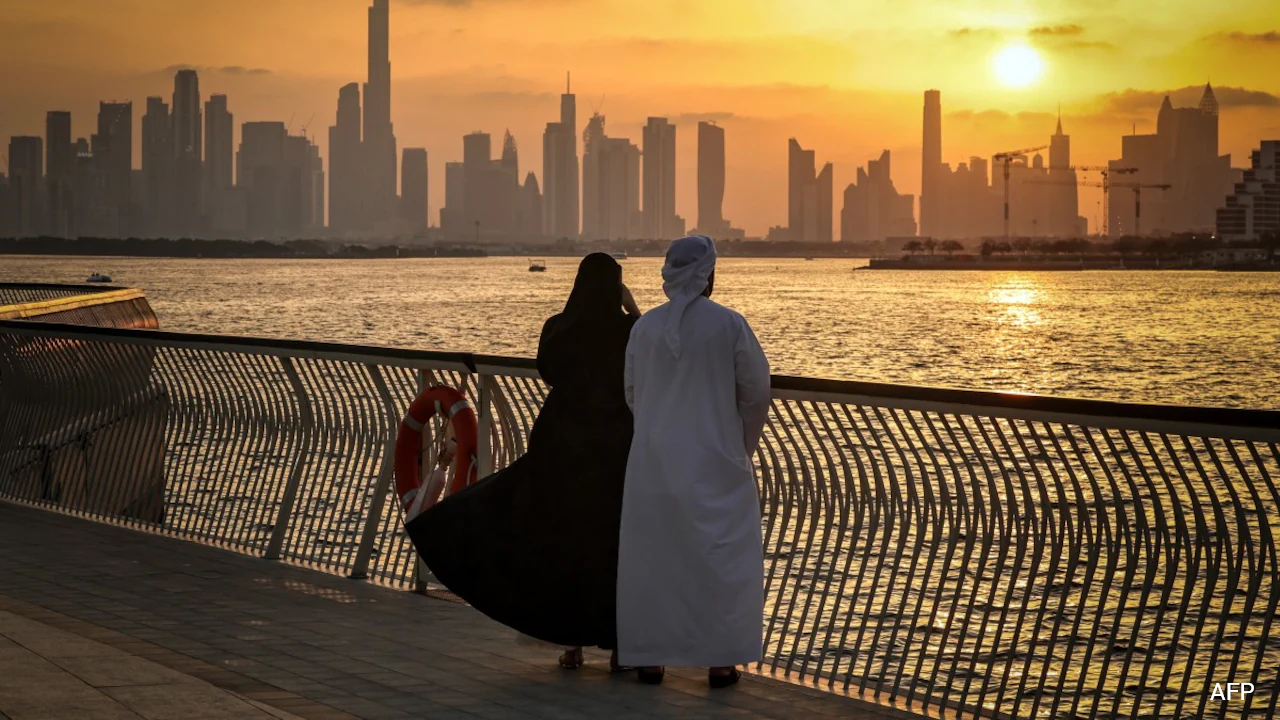
- Thousands of migrant workers in Dubai face job losses and salary cuts amid the Iran war
- Tourism, aviation, and foreign visitor-dependent businesses have been disrupted by Iran-US tensions
- UAE government offers $680 million support but calls economic impact a temporary "glitch"
For thousands of migrant workers, Dubai's promise of opportunity is beginning to fade.
Months after the US-Israeli war with Iran spilt across the Gulf, many workers say jobs have disappeared, salaries have been cut and finding new employment has become increasingly difficult. The conflict, which saw Iranian missiles and drones strike the UAE, has disrupted tourism, aviation and several businesses that rely on foreign visitors.
While Emirati officials insist the slowdown is temporary, many workers on the ground describe a very different reality, according to a report by The New York Times.
Searching For Work Every Day
For 44-year-old Filipina domestic worker Joy Vivanda, every morning begins the same way, walking through Dubai in scorching heat, checking notice boards for vacancies and asking strangers if they need a nanny or housemaid.
"I have been doing this almost every single day for the last four months, but with no luck," she said.
Vivanda lost her job in March after the Russian family she worked for suddenly left Dubai during the conflict and never returned. Returning to the Philippines is not an option, she says, as she supports four children with the money she earns in the UAE.
Across several working-class neighbourhoods, similar scenes are playing out, with migrant workers going door to door carrying resumes in the hope of finding work.
'There Is Simply No Business'
The slowdown has affected workers across industries.
Indian accountant Mujeeb Rahman said he and his colleagues were laid off after the catering company they worked for saw business collapse.
"There is simply no business," Rahman said. "The company does not have enough cash flow to pay employees and suppliers."
He fears the job market has become even tougher.
"Many companies are not hiring anymore," Rahman said. "Everyone is trying to survive."
A recent ManpowerGroup survey of 546 employers in the UAE found that one in four companies expects to reduce jobs in the third quarter of 2026, while nearly one-third have no recruitment plans.
Salary Cuts Add To Workers' Worries
Even those who have managed to keep their jobs say they are earning much less.
Egyptian saleswoman Zekra Elsa said tourist arrivals dropped sharply during the conflict, hurting sales at the retail kiosk where she works. Her employer stopped paying a fixed salary and shifted her to commission-based earnings, but she says her daily sales now fail to reach even $150.
Welder Yanick Obi from Cameroon says he still reports to work every day, but projects have almost disappeared as maintenance contracts have dried up.
"I go to work every day," Obi said, "but there is no work."
Government Downplays Impact
The UAE government has announced economic support packages worth more than $680 million to help businesses cope with the fallout.
In an interview with CNBC Africa in April, Economy and Tourism Minister Abdulla Bin Touq al-Marri earlier described the impact of the war as a temporary "glitch".
"We are built on agility," he said. "We are built on resilience."
Dubai Investments CEO Khalid Jassim Mohamed bin Kalban also struck an optimistic tone, saying the slowdown is unlikely to last.
"You don't see an exodus of people, you don't see businesses being abandoned," he said. "That is because we have the strength, we have the wealth, people and knowledge."
Families Back Home Feel The Pain Too
For many migrant workers, losing a job in Dubai affects families thousands of kilometres away.
Venkat, an Indian hotel housekeeper who lost his job and returned home in April, said his income had paid for his children's education.
"I am doing whatever I can to manage," he said. "If I cannot come back to Dubai, my children's future is at stake."
Although a ceasefire framework between the US and Iran briefly raised hopes of recovery, renewed exchanges between Washington and Tehran have kept uncertainty alive. For workers like Joy Vivanda, hope remains the only thing keeping them in Dubai as they wait for better days to return.
Track Latest News Live on NDTV.com and get news updates from India and around the world


