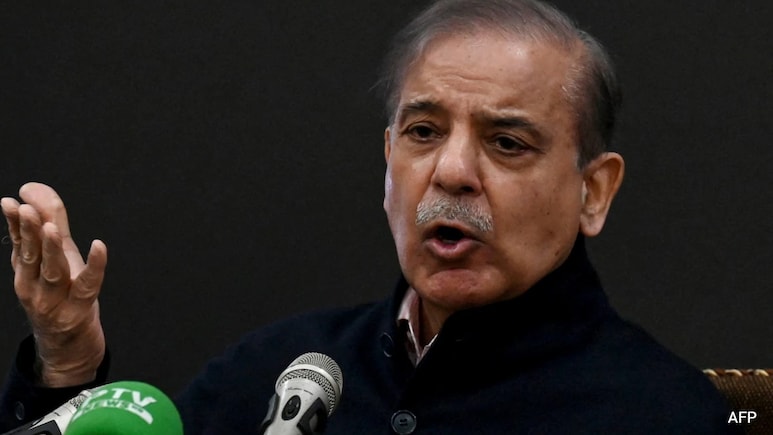
- Pakistan PM Shehbaz Sharif warned India against affecting Pakistan's water rights under the treaty
- Sharif called the Indus Waters Treaty suspension illegal and labelled India an enemy of peace
- The 1960 Indus Waters Treaty allocates 80% water to Pakistan, 20% to India, with specific river rights
Pakistan has once again tried to provoke India over its decision to place the 1960 Indus Waters Treaty (IWT) between New Delhi and Islamabad in abeyance. Pakistan Prime Minister Shehbaz Sharif, during an event in Islamabad, threatened India, warning it against taking any steps that could affect Islamabad's water rights under the suspended treaty, saying "every single drop" of Pakistan's water is a "red line."
Sharif projected Pakistan as an advocate of peace but claimed its desire for peace should not be seen as weakness and that Islamabad would respond strongly to any challenge to its sovereignty.
"I declare in clear terms that every single drop of Pakistan's water is our red line. If India does not come to its senses, it will be responded to directly,' the Pakistani premier said.
Pakistan's PM Shehbaz Sharif on India:
— Clash Report (@clashreport) August 13, 2026
After the defeat in the war last year, India proved itself an enemy of peace by unilaterally and illegally suspending the Indus Waters Treaty.
I declare in clear terms that every single drop of Pakistan's water is our red line.
If India… pic.twitter.com/ZvBLJDkr3s
He also labelled New Delhi as an "enemy of peace" for "unilaterally and illegally suspending the Indus Waters Treaty.
About The Indus Waters Treaty
Beginning in Tibet, the Indus River flows through Kashmir before traversing the entire length of Pakistan. The Indus Water Treaty, brokered by the World Bank in 1960, has governed the use of the Indus River and its tributaries between India and Pakistan since then.
The treaty gives India 20 per cent of the water from the Indus River System and the remaining 80 per cent to Pakistan. It allocates the western rivers (Indus, Jhelum, and Chenab) to Pakistan and the eastern rivers (Ravi, Beas, and Sutlej) to India. At the same time, it allows each country certain uses of the rivers allocated to the other.
The treaty was put into "abeyance" by New Delhi after the Pahalgam terror attack in April 2025 that killed 26 civilians as a punitive measure, as it blamed Pakistan-sponsored terrorists for the attack.
With the suspension of the treaty, India has stopped sharing the water level data in the three rivers with Pakistan. During monsoons, India's early warnings about rising waters in the three rivers had helped Pakistan issue timely evacuation warnings to people living in low-lying areas in the Punjab and Sindh provinces.
Due to this, the suspension of the treaty has remained at the centre of tensions between the two nuclear-armed countries, with Pakistan insisting that the treaty remains legally in force and has repeatedly raised the issue at international forums.
Track Latest News Live on NDTV.com and get news updates from India and around the world


